


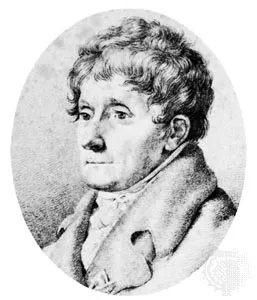
Antonio Salieri, born in 1750 in Legnago, Republic of Venice, was the real-life composer whose supposed rivalry with Mozart spawned centuries of legend. While pop culture has painted him as a jealous villain, historical records show a respected figure who dominated European opera for decades. He died in Vienna in 1825, leaving behind a career that overshadowed many of his contemporaries.
How Did Salieri Become a Court Composer in Vienna?
Salieri moved to Vienna at age 16, brought by imperial court composer F.L. Gassmann. There, he was introduced to Emperor Joseph II and built key relationships with Pietro Metastasio and Christoph Gluck. His first opera, Le donne letterate, premiered at the Burgtheater in 1770. Four years later, the emperor appointed him court composer. By 1788, Salieri became Hofkapellmeister, a role he held for 36 years.
During this tenure, he wrote operas for theaters across Austria, France, and Italy. From 1783, he collaborated frequently with Lorenzo Da Ponte, the same librettist who worked with Mozart. Salieri’s most famous work, the French opera Tarare (1787), was translated into Italian as Axur, re d’Ormus. Viennese audiences actually preferred this piece over Mozart’s Don Giovanni.
Why Is the “Poisoning” Story About Mozart and Salieri a Lie?
There is no evidence that Salieri tried to poison Mozart. This dramatic narrative traces back to Alexander Pushkin’s 1830 short story, which later inspired Nikolay Rimsky-Korsakov’s 1898 opera Mozart et Salieri. Peter Shaffer’s 1980 play Amadeus (filmed in 1984) further cemented this false rivalry in the public imagination.
Historical facts contradict the legend. Mozart and Salieri were not bitter enemies. In a letter, Mozart noted that Salieri gave a favorable review of The Magic Flute. Salieri also maintained friendly ties with Joseph Haydn and Beethoven. He even taught counterpoint to Beethoven, who dedicated the Three Violin Sonatas, Op. 12 (1797), to him.
Where Did Salieri’s Legacy Extend Beyond Opera?
Salieri’s last opera was performed in 1804. After that, he focused on sacred music and teaching. His student list includes major figures like Franz Schubert and Franz Liszt. He wasn’t just a rival to Mozart; he was a foundational figure in Viennese musical education and production.
The real Salieri was a successful, well-connected, and influential composer. The “Amadeus” version is fiction. The man who actually shaped the European stage was far more complex than the angry antagonist in popular memory.


