


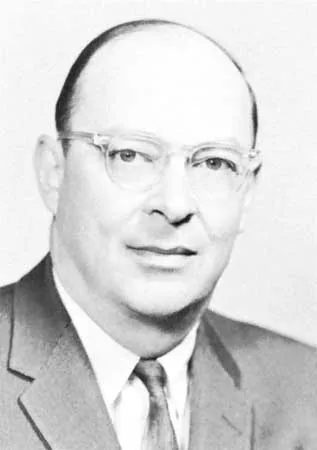

John Bardeen didn’t just change physics. He rebuilt reality. Born May 23, 1908 in Madison, Wisconsin and died January 30, 1991 in Boston, he held a record that will never be broken. He is the only person in history to win the Nobel Prize in Physics twice.
Most people think of transistors as small switches. That’s true, but it’s also the reason smartphones exist. Before Bardeen and his colleagues came along, electronics took up space. They relied on vacuum tubes. These things generate heat. They broke. they are huge.
Bardeen helped invent the transistor. He completed this research with William B. Shockley and Walter H. Brattain of Bell Telephone Laboratories, New Jersey. They introduced this device on December 23, 1947. It is small. It was efficient. It started the electronic revolution. This invention replaced vacuum tubes and made it possible to make computer components smaller. Almost any digital device can be traced back to a specific moment in Murray Hill, New Jersey.
But Bardeen didn’t stop there.
He received his bachelor’s and master’s degrees in electrical engineering from the University of Wisconsin. In 1936, he went to Princeton University to earn a doctorate in mathematical physics. He worked at the University of Minnesota and then served as chief physicist at the US Naval Weapons Laboratory in Washington during World War II.
After the war he went to Bell Laboratories. This is where the transistor was born. But in the early 1950s, his attitude changed. He focused on another matter. Superconductivity.
Theoretical explanation of BCS
Superconductivity is a strange state of matter. It occurs at temperatures close to absolute zero. In this mode, the resistance disappears completely. Electric current flows without losing energy. Sounds like magic. This is physics.
In 1957, Bardeen, along with Leon N. Cooper and John R. Schrieffer, published a theory that explained how it worked. Scientists call this the BCS theory. This acronym stands for Bardeen, Cooper and Schrieffer.
The BCS theory became the basis for all subsequent theoretical research on superconductivity.
This is not just abstract mathematics. This explains why a material can conduct electricity without loss if it is cool enough. This theoretical framework allows researchers to understand and predict the behavior of superconductivity. It lays the foundation for everything from MRI machines to the quantum computers of the future.
For this work, Bardeen received his second Nobel Prize in 1972. He shared the prize with Cooper and Schrieffer. The first prize in 1956 was shared between Shockley and Brattain. No other physicist can match this feat.
Why his work matters today
You may wonder why the 1957 theory is relevant now. This is important because superconductors are still a cutting-edge field. These are used in medical imaging. These are necessary for particle accelerators. As we move further into technology, it is important to understand how electrons move without resistance.
Bardeen also wrote theories about the properties of semiconductors. from 1951 to 1972 he taught at the University of Illinois at Urbana-Champaign.