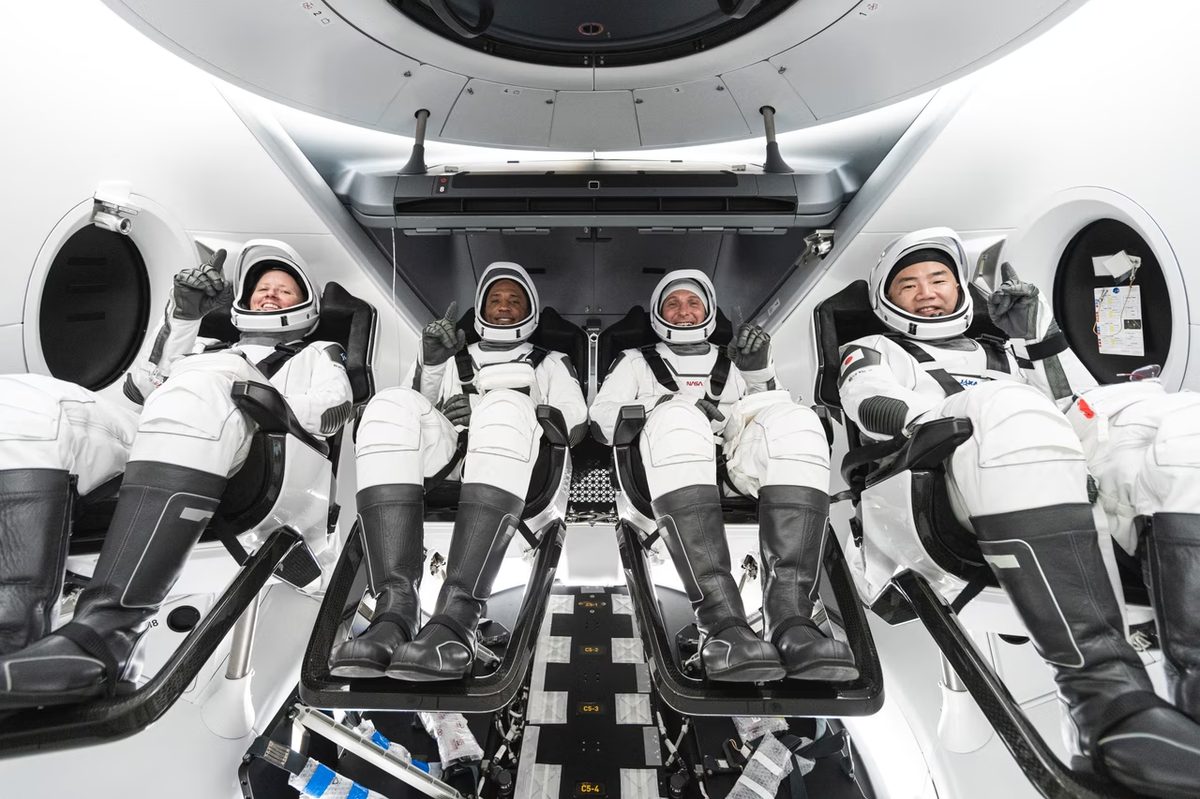
SpaceX’s Crew Dragon capsule is finally leaving the ground for its first real commercial mission. The launch is scheduled for November 14 at 7:49 p.m. Local time in Florida. This means it will leave on November 15 at 00:49 Paris time. NASA confirmed the timeline. This is no longer a test flight. It is the start of regular operations.
The four astronauts on board have a name for their home away from Earth: Resilience. The crew named the ship themselves. It feels appropriate for the job ahead. They will head to the International Space Station (ISS) and stay there for about six months.
Who is going to the ISS on Crew-1?
The crew is a mix of experience and new faces. Shannon Walker and Michael Hopkins are veterans of space travel. They know what the silence of orbit feels like. Victor Glover was a Navy test pilot with a different focus. Next up is Soichi Noguchi of the Japan Aerospace Exploration Agency (JAXA). He’s been to space before.
Their job is not just to sit. They are doing experiments. They will fix things. Sometimes we perform extravehicular operations outside the space station. a lot of work. But now that there are four people instead of the usual three, things have changed. More and more people can easily perform tasks without the burden of gravity.
Meeting the residents of Expedition 64
When Resilience docks, they’re not alone. The space station is currently home to Expedition 64. The welcoming committee includes NASA astronaut Kate Rubins. She is joined by two Russian cosmonauts from Roscosmos, Sergey Ryzhikov and Sergei Kud-Sverchkov.
Rubins is a scientist who actually played the violin in space. This is an impressive detail. It reminds us that this is a workplace for artists and engineers. The handover will be hectic. New crew members must learn these systems. Senior crew members must pass on information.
Long journey and return
Six months is a long time in space. The days merge into one. The view never gets old, but everyday routines can get boring. They are very busy. But eventually, they will have visitors of their own.
The second operational Crew Dragon mission is coming. One of the future passengers is Thomas Pesquet. He is an astronaut with the European Space Agency and has been on the International Space Station. He knows the drill. He will arrive to take over some of the duties. The four members of Crew-1 eventually return home. Resilience will splash down.
Timing is critical. This launch confirms that SpaceX is ready for the long haul. It is not just about getting up there. It means staying there. And coming back safely.
“Crew-1, Crew Dragon Mission Commercial Premiere at SpaceX Decorella Finally…Original thread Nov 14”
This schedule was announced on 1 October 2020. From then on, the wait was over. The rocket is fueled. The crew is ready. Resilience is ready.
what
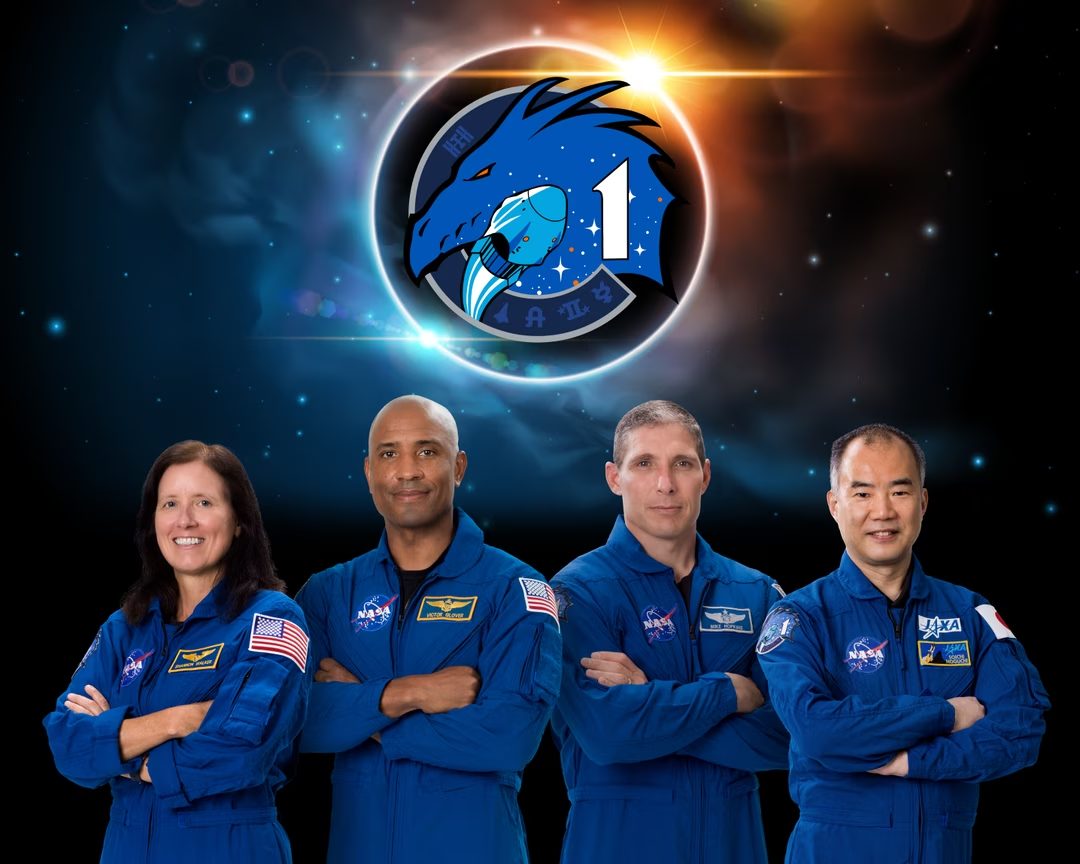

The countdown is official. NASA has confirmed that the first commercial flight to the International Space Station with the SpaceX Crew Dragon capsule will launch on Halloween, October 31st. This wasn’t just a launch. This was the period when American astronauts returned to space, but with the retirement of the space shuttle in 2011, America lost this ability.
The name of the ship chosen for this historic mission says everything about our current moment: Resilience.
Resilience’s crew includes three Americans, Michael Hopkins, Victor Glover and Shannon Walker, and Japanese astronaut Soichi Noguchi from JAXA. The four will live and conduct research in the traveling laboratory for about six months and plan to return in the spring.
Why “Resilience”?
名字的选择是经过深思熟虑的。 根据任务声明,选择“韧性”是为了强调参与任务的团队的奉献精神。 它表明,当人们跨越国界和组织共同努力时,可以取得的成就是无限的。 考虑到导致这一点的地缘政治和后勤障碍,这种情绪显得尤为重要。
The Hardware and the Route
For those wondering “how” to get there, the answer lies in Florida. The Crew Dragon spacecraft is launched into orbit by a SpaceX Falcon 9 rocket. The launch site is also special: NASA’s Kennedy Space Center Complex 39A. This is the same historic launch site that was used during the Apollo program and the space shuttle era, and is now being used for the new era of commercial spaceflight.
The flight follows a successful demonstration mission earlier this summer involving astronauts Robert Behnken and Douglas Hurley. This demonstration flight demonstrated the effectiveness of the technology. This system is proven to be safe. Crew-1 has now demonstrated this system.
Restoring Independence
The significance of this launch is more than cargo and crew. For the first time since 2011, the United States no longer has to rely on foreign partners to carry its own astronauts to the International Space Station. The dependence of US personnel on Russian Soyuz capsules is over.
Restoring full independence means a major change in global spatial dynamics. SpaceX has effectively validated its commercial crew program. Resilience Missions aren’t just about getting to the space station. This is a demonstration of the idea of turning the prototype into a regular service.
The taxi is already booked. Passengers are ready. Hardware tested. All that’s left is to light the fire.


No article content is intended to be rewritten. The feed consists only of social media follow requests for a French science news site.