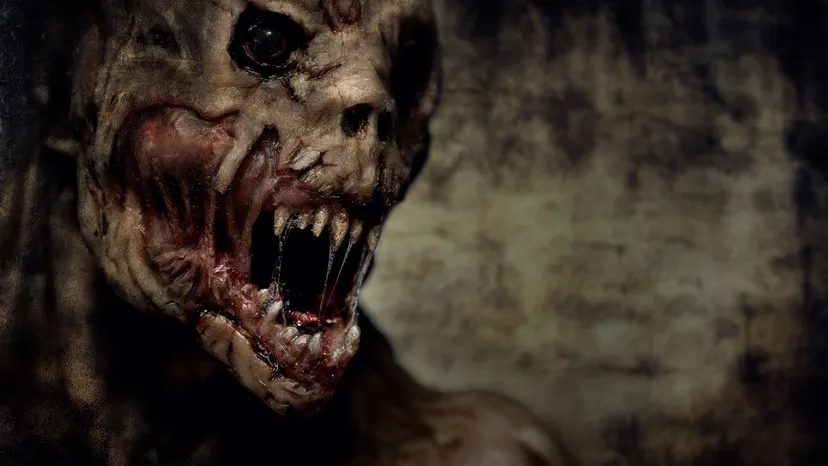
The monster genre isn’t dying. It just keeps coming back to haunt us. Hollywood loves a reboot. Or a remake. Look at the recent Godzilla and King Kong films. Or consider Stranger Things. It’s Netflix’s love letter to 80s nostalgia wrapped in a monster thriller package.
Sure, some entries are pure cheese. Big, dumb, fun cheese. But when done right? It’s scary. Suspenseful. Exciting. Sometimes even funny. The goal is simple: keep you on the edge of your seat. Waiting. Watching.
With The Invisible Man hitting theaters, the mood is right. Time to look back at the classics. These aren’t just scares. They’re cultural touchstones. Here are 23 must-see monster movies. Let’s start with the weird ones.
23. Little Shop of Horrors (1986)
We’re kicking off with a comedy-horror musical. It sounds absurd. It works.
Frank Oz directed this adaptation of the off-Broadway hit. Rick Moranis and Ellen Greene lead the cast. But the supporting lineup is a who’s who of 80s comedy. Steve Martin. Jim Belushi. John Candy. Bill Murray. They’re all there.
Seymour (Moranis) runs a failing flower shop in a rough part of New York City. He’s a nice guy. Desperate. He finds a weird plant. Looks like a Venus Flytrap. Calls it Audrey II.
The plant needs human blood to survive. Seymour makes bad choices. He gets rich. He gets the girl (Audrey). But Audrey II grows. Fast. It starts eating people. Whole.
It threatens to take over the world when it starts reproducing saplings. The theatrical release has a happy ending. The director’s cut goes full doomsday. Both are great. Audrey II earns its spot on any list of great movie monsters.
Screenshot via Warner Bros.
22. Pan’s Labyrinth (2006)
Guillermo del Toro’s Pan’s Labyrinth is different. It’s not pure horror. It’s a dark fantasy. A dramatic fairy tale. Set against the backdrop of 1940s Spanish political rebellion.
It’s weird. Yes. But it’s brilliantly directed. Won three Oscars.
The real monster here is the Pale Man. Ofelia meets him during her second task. He’s described as a “child eater.” Creepy.
She eats the grapes in his lair. Awakens him. Escapes. But the two fairies with her? Dinner.
The Pale Man doesn’t have much screen time. But that image? Eyeballs in the palms of his hands? It sticks. Haunts audiences. Longer than most gore.
Screenshot via Warner Bros.
21. Alien and Aliens (1979 and 1986)
Ridley Scott’s 1979 masterpiece spawned a franchise. Three direct sequels. Alien vs. Predator spin-offs. A prequel series. Comics. Games. Novels. Merch.
But the first two are the best. Why? The Xenomorph.
Some argue it’s not a “monster” because it’s an alien. That’s splitting hairs. Does it matter? It hugs your face. Bursts out of your chest. Has a second mouth. Sharp teeth. Acidic green blood.
It’s terrifying. It has haunted nightmares for generations.
Sigourney Weaver’s Ripley is equally iconic. Badass. Determined. Trying to stop it. Alien and Aliens are worthy additions to any monster movie list. Even if you have to argue the definition a bit.
Screenshot via 20th Century Fox
20. The Blob (1958)
A 1988 remake existed. It failed. Critically. Financially.
We’re sticking to the original. 1958. Made for the drive-in. Actually, it was part of a double feature with I Married a Monster from Outer Space. Paramount Pictures marketed it explicitly for teenagers. Drive-ins were huge then.
Steve McQueen stars as Steve Andrews. A teenager. He sees a crash in rural Pennsylvania. It’s the Blob. An all-consuming mass.
It attacks a diner. A movie theater. Stops only when faced with carbon dioxide fire extinguishers. It hates cold.
It’s a silly B-movie. For sure. But the special effects? Good for the 50s. The color film? Stunning.
The Blob is now a classic. An icon. One of cinema’s most recognizable monsters.
Screenshot via Paramount Pictures
19. Colossal (2016)
A monster movie with a twist, Colossal flips the script on the kaiju genre. Instead of military jets blasting away at a beast destroying Seoul, we’re watching Anne Hathaway’s character, Gloria, an alcoholic single woman in New England. She realizes, quite unexpectedly, that she is controlling the creature’s every move. When her friend Oscar tries to help, he manifests a giant robot in South Korea. It creates a strange Pacific Rim vibe, but with human puppeteers pulling the strings.
It’s a weird tale of alcoholism, relationships, jealousy, and emotional manipulation. And monsters. Don’t forget about the monsters.
Pinpointing the genre is tough. It’s part sci-fi, part romantic comedy, part black comedy, and part classic monster movie. Audiences loved it when it debuted at the Toronto International Film Festival in 2016. We think you’ll like it too.
Screenshot via NEON
18. The Descent (2005)
The Descent came out of nowhere in 2005 to become one of the year’s best horror movies. The concept was simple enough — a bunch of friends get lost during a spelunking adventure and encounter strange, pale, humanoid creatures. While the monsters themselves are undoubtedly creepy and looking to tear apart human flesh while they eat their victims alive, there’s more to this movie than just scary creatures.
The combination of a clever script and excellent directing by Neil Marshall (who did both jobs) produces a movie filled with relatable characters, realistic dialogue, and a ton of intense moments that leaves audiences on the edge of their seats. It’s also worth pointing out that North American audiences actually saw a different ending than the rest of the world. The UK (and other places) received a much darker ending, one that is worth seeking out if you haven’t seen it yet.
Screenshot via Pathe Distribution
17. Cabin in the Woods (2012)
When done right, comedy horror movies are downright incredible. Few films have blended the genres as perfectly as 2012’s Cabin in the Woods. The undeniable nod to previous films like Evil Dead and Friday the 13th is right there in the name of the movie.
Since this is a list of monsters, let’s discuss the various monsters who show up in this movie. The Ancient Ones demand an annual sacrifice, so a mysterious team lures a bunch of attractive teens to a rigged cabin, with deadly monsters ready to pop out of every crack. There are zombies, werewolves, aliens, reanimated serial killers, evil clowns, creepy dolls, giant snakes, the Mummy, a Sasquatch, witches, vampires, a cyclops, a giant alligator, ghosts, the Kraken, and dozens of others. And of course, the Mer-Man.
Most of the damage is done by the Zombie Redneck Torture Family (aka the Buckners), but when a mass release of monsters is triggered, chaos reigns supreme. The Ancient Ones are represented by a giant hand, that presumably takes out the entire human race once the ritual fails. Talk about a twist ending!
Screenshot via Lionsgate
16. The Mummy (1999)
It’s hard to pin down an exact favorite movie about everyone’s favorite Egyptian monster because there are dozens. So we’re lumping them all together into one. From the classic comedy Abbott and Costello Meet The Mummy to the very strange Bubba Ho-Tep, to the five (five!) different movies called The Mummy between 1911 and now. Plus those Scorpion King spin-offs. It’s hard to keep track of them all.
There’s something alluring about a mummy. Typically, it’s an ancient member of Egyptian royalty, wrapped in clean bandages, and placed inside of a tomb (or pyramid) as a final resting place. And because scientists and treasure hunters can’t help themselves from disturbing said tombs, the mummy awakens and spreads their curse.
The most recent film attempt was 2017’s The Mummy, starring Tom Cruise. It was the first installment of Universal Pictures’ new “Dark Universe” series, which is supposed to eventually include Frankenstein, Jekyll/Hyde, Wolf Man, Creature of the Black Lagoon, and many more. Sounds ambitious, so we’ll have to wait and see how this shared cinematic universe plays out.
Screenshot via Universal Pictures
15. Swamp Thing (1982)
Swamp Thing was one of horror legend Wes Craven’s earliest movies — released two years before A Nightmare on Elm Street hit theaters and made everyone afraid to fall asleep. Although some have dismissed it for being a bit cheesy, Swamp Thing remains a classic monster movie.
The story, loosely based on the comic book series of the same name, involves a scientist who is tragically transformed into a gross, green, slimy monster while trying to escape an attack. The twist here is that the Swamp Thing is trying to help the good guys in this movie, rather than hunting them.
The film is a bit campy, but isn’t that precisely what you want from an 80s monster movie? It has action, betrayal, and a classic comic book battle for a secret formula. A sequel followed in 1989, but it tanked at the box office. A TV series featuring the Swamp Thing aired on USA Network from 1990 to 1993 and more closely followed Craven’s original dark tone.
Screenshot via Embassy Pictures
How Creature from the Black Lagoon redefined monster sympathy
Universal Pictures released The Creature from the Black Lagoon in 1954, starting a series that would spawn sequels, spin-offs, and weird little spooks in modern movie history. Although the film was technically shot in black and white, it was influenced by the 3D hype of the early 1950s. Director Jack Arnold appears with Richard Carlson, Julie Adams and Julie Adams.
This is the turning point. This creatures is an ancient species that lurks in the Amazon. Monster movies usually depict beasts as pure evil. This flips the script. The Gill-Man kills. However, he was only defending his territory from invaders. When you watch this movie, you feel sorry for this fishy guy. This is a rare moment when a monster is victim.
Decades later, Guillermo del Toro’s The Shape of Water won Oscars and honored that dynamic. There is no official link, but there is DNA. You have feelings for the marginalized. You support monsters.
Why the Evil Dead trilogy is considered a monster horror movie
People are debating whether the “Evil Dead” trilogy deserves the monster movie tag. This debate often stems from the fact that Sam Raimi’s 1981 classic focused on possession rather than biology. But Deadites and Kandarian Demons count. They are monsters.
In the original film, the big bad was hidden as a vague mysterious force. The real fear comes from infected people. Ash Williams, played by Bruce Campbell, doesn’t just fight ghosts. He fought with his sister Cheryl. his girlfriend Linda; and his own severed right hand, which he cut off with a chainsaw when he lost control.
Things get even weirder in the sequel. Evil Dead II brings us a creepy old demon in the basement. Army of Darkness contains a small handy of evil Ashes and evil monsters from the deep. These are not Godzilla-level threats. They are not as deadly as the “Cloverfield” beast. But they are terrifying, memorable, and undeniably monstrous. These films made Campbell and Raimi stars. For horror fans, they are the holy trinity.
“The Mist”: Stephen King’s best adaptation
Frank Darabont has track record of adapting Stephen King. The Shawshank Redemption. The Green Mile. He even tried shepherd the TV show The Walking Dead before being forced out. But in 2007, he became even sharper. The Mist is based on King’s 1980 novel. It stars Marcia Gay Harden, Thomas Jane and Laurie Holden.
A thunderstorm brought thick fog to a small New England town. The fog brings with it things that hunt people. A group of shoppers were trapped in a supermarket. Real fear is not claws and teeth. It’s an internal panic.
Darabont shows how quickly social order can break down. People attack each other. It’s a Lord of the Flies scenario. The end is tragic. Critics praised it. This work remains the highest-rated King adaptations ever made of King’s original work.
Tremors: The surprise hit that defined alternative horror
Tremors was born in 1990 by accident. It combines comedy, action and horror without forcing it. Kevin Bacon and Fred Ward play handymen in Sierra Nevada. They find a giant worm-like creatures burrowing underground. Locally they are called graboids.
The stakes are simple. If it touches the ground, it dies. Bacon and his friends had to stay on the roof. They used poles to jump from building to building. It’s chaotic. It’s funny. It’s unpredictable.
The film spawned four direct-to-video sequels and one television series. Skip them all. The original is a treat. This proves that monster movies don’t have to take themselves too seriously to be effective.
环太平洋:巨型机器人大战巨型怪兽
吉列尔莫·德尔·托罗知道如何让怪物感觉还活着。 地狱男爵 。 潘神的迷宫 。 2013 年的《环太平洋》让他变得更加强大。 字面上地。 这部电影让人类飞行员驾驶名为“机甲”的巨型机器人与怪兽展开对决。 这些是从太平洋的跨维度门户中出现的巨大野兽。
这是毫无歉意的爆米花电影院。 影响是巨大的。 对话很活泼。 节奏从不拖沓。 德尔·托罗向给予他灵感的日本怪兽电影致敬。 他从不松懈。
续集《环太平洋:雷霆再起》(2018 年)引入了新角色和新冒险。 它没有相同的灵魂。 但原作是最好的现代怪物电影之一。 它明白规模很重要。 有时,你只是想看机器人殴打上帝。
Gremlins (1984)
Gremlins is a black comedy that doesn’t know when to stop being funny, scary, or just plain gross. It’s a monster movie at its core. The creatures are small but menacing, terrorizing the residents of Bedford Falls. It’s a quaint, all-American town. The teenagers in the story have to follow strict rules to survive. Break the rules? You get gremlins.
It’s set during Christmas. Joe Dante, who later directed Men in Black, helmed this one. He sprinkled the film with sly nods to It’s A Wonderful Life. The town name is a dead giveaway. The movie isn’t about giant kaiju. It’s about the spirit of 1950s horror flicks like The Blob or I Was A Teenage Werewolf. It captures that fun, campy energy perfectly.
Cloverfield (2008)
Cloverfield grows on you. You watch it once and it’s confusing. Watch it a second time, it’s brilliant. The 2008 found-footage film was produced by J.J. Abrams. Audiences keep recommending it to friends. It feels personal. The footage looks like a home camcorder record. Think The Blair Witch Project. Six New Yorkers are fleeing a massive monster during a farewell party.
It made $170.8 million against a $25 million budget. That’s a hit. Critics liked it. The found-footage style is the secret weapon. It hides the monster’s full form. You only see glimpses through shaky, terrified lenses. It doesn’t take itself seriously. It’s just fun. The Cloververse spawned sequels later, but 10 Cloverfield Lane stands out as the best companion piece.
The Thing (1982)
John Carpenter’s 1982 masterpiece is a remake of Howard Hawks’ 1951 The Thing From Another World. Many argue this version is superior. It might be Carpenter’s best work. A group of scientists in Antarctica survives an alien crash. The alien is a shape-shifter. It kills them by taking their identities.
Kurt Russell is at his peak. The tension is suffocating. It’s genuinely scary. Yet, when it came out, people dismissed it. They called it a cheap knockoff of Alien. They treated it like a B-movie. It found a home on home video in the 80s. Then it faded. A 2011 remake tried to recapture the magic but failed. Now, sci-fi fans revere it. It’s a cult classic.
Jaws (1975)
Jaws is the first true summer blockbuster. It features a real-world monster everyone knows. The Great White Shark. It’s horror and adventure blended together. A shark is eating tourists in Amity. Three men set out to kill it.
The performances by Roy Scheider, Robert Shaw, and Richard Dreyfuss are top-tier. But the shark is the star. Steven Spielberg directed it. Peter Benchley wrote the novel. It’s a masterclass in suspense. The payoff is satisfying. The point-of-view shots from beneath the water are iconic. It launched Spielberg’s career. Cultural phenomenon doesn’t begin to cover it. Three sequels followed. They never matched the original. But the shadow of the original still lingers.
The Fly (1986)
Jeff Goldblum earned critical acclaim for playing Seth Brundle. David Cronenberg directed this 1986 classic. It mixes sci-fi with body horror. Brundle uses a teleporter. A fly gets in the chamber. Their DNA fuses. Brundle starts to change. He becomes a giant fly.
The twist is simple. The hero becomes the monster. The special effects are gruesome. They make you look away. Goldblum’s performance grounds it. He makes the impossible feel plausible. You care as he loses his humanity. Cronenberg’s direction keeps it from becoming a farce. He holds the chaos together with sheer talent.
The Wolf Man (1941)
Curt Siodmak wrote the script. Lon Chaney Jr. stars as Larry Talbot. Larry returns to Wales after his brother dies. He’s attacked by a wolf. He kills it with his silver cane. He didn’t know the wolf was a werewolf. He was bitten. Now he’s one too.
It’s the most famous werewolf movie ever made. Universal didn’t start here. Stuart Walker’s Werewolf in London came out in 1935. It flopped. Some critics argue Henry Hull’s performance was better. We disagree. Chaney’s dedication to the role set the standard. Hollywood still uses his performance as the blueprint. It’s the definitive take.
The immortal legacy of classic movie monsters
It’s easy to forget how much these three films really accomplished. Today we think of them as vintage pioneers, but back then they redefined the possibilities of film. They didn’t just scare people. They taught the industry how to manipulate emotions, build scale and hide trauma behind spectacle.
Why Frankenstein still haunts the genre
James Whale’s 1931 adaptation of Mary Shelley’s 1818 novel is not just a horror film. It is the blueprint. Colin Clive as a desperate scientist, Mae Clarke as a frightened bride and Boris Karloff as a silent, stitched-together creation. They defined the visual language of the genre. The plot is simple, almost clichéd: Henry Frankenstein and his assistant Fritz dig up corpses, put them together and try to bring them back to life. It worked.
The Library of Congress didn’t just think it was good. In 1991, they declared the film culturally and aesthetically significant and added it to the National Film Registry for preservation. It’s a cachet that outlasts the box office. The monster itself has been present in pop culture ever since. You see it in family-friendly comedies that play it for fun, or dark remakes that try to reimagine tragedy. But the original 1931 version? The anchor remains.
How King Kong Changed Special Effects Forever
1933’s King Kong did something different. It wasn’t the first monster movie Hollywood ever made, but it set the bar so high that directors still chase it. The genius of the original Kong is that it wasn’t just about terror. It was about feelings. The giant ape is certainly scary. But he is also affectionate. He treats Fay Wray’s character with a strange, protective tenderness, even as he drives through downtown New York.
The special effects look primitive by today’s standards. Stop motion animation, matte paintings, forced perspective. But in 1933 the public had never seen anything like it. It was a triumph of combining technology and art. The film didn’t just entertain. It expanded the vocabulary of visual effects. Despite the dated graphics, the film maintains a majesty that is sometimes difficult to achieve with modern CGI. The climax, where Kong scales the Empire State Building and swats away the fighters like flies, remains one of the most iconic sequences in film history. It has epic scope and emotional weight.
The core allegory behind Godzilla’s rampage
While Kong spoke of size and emotion, the original 1954 Godzilla spoke of guilt. The special effects are stupid on purpose. Small toy cars, actors shouting at the sky, people running in the streets, which are obviously miniature entities. But campiness is a mask. The film is a parable about the end of the Second World War and the terrible beginning of the atomic age.
A nuclear dinosaur, about the size of a skyscraper, stalks through Tokyo. It recreates the horrors of Hiroshima and Nagasaki in real time. A creature is not just an animal. It is the manifestation of the monster in humanity. It represents the nuclear weapons that destroyed Japan. The dialogue is campy. The effects look amateurish. But the message is sophisticated. It forces the audience to face the consequences of their own technology.
This wasn’t just a monster movie. It was a message movie. And it worked. The film spawned countless sequels, spin-offs, and remakes in both English and Japanese. Godzilla became one of the biggest movie franchises in history. But the original 1954 film stands out. It’s darker. It’s more serious. It reminds us that monsters are often just reflections of our own fears, made flesh and scale.
The legacies of these three films lie not only in their box office returns or cultural references. It lies in the way they have taught us to deal with fear. To see it as something complex, something that can be sensitive, tragic or destructive. They didn’t just make movies. They created myths that we still tell.