NASA’s Artemis II mission has completed its first six days, surpassing technical expectations and providing critical data that no computer simulation could replicate. While the mission serves as a vital technical checkpoint for future Moon landings, it has also achieved something more intangible: a profound sense of human connection and optimism in an era of global uncertainty.
Moving from “Art” to Industry
A primary takeaway from Artemis II is the shift in NASA’s operational philosophy. Following the uncrewed Artemis I mission in 2022, NASA Administrator Jared Isaacman noted a critical need for change. The agency had previously been launching its Space Launch System (SLS) rockets with a frequency that felt more like treating a “work of art” than a functional program.
To achieve a sustainable presence on the Moon, NASA must move away from the cycle of long delays and “relearning” lessons every three years. Artemis II represents the first real step toward a high-frequency, reliable launch cadence necessary for serious lunar exploration.
Technical Successes and Human Realities
The mission has provided several key technical validations:
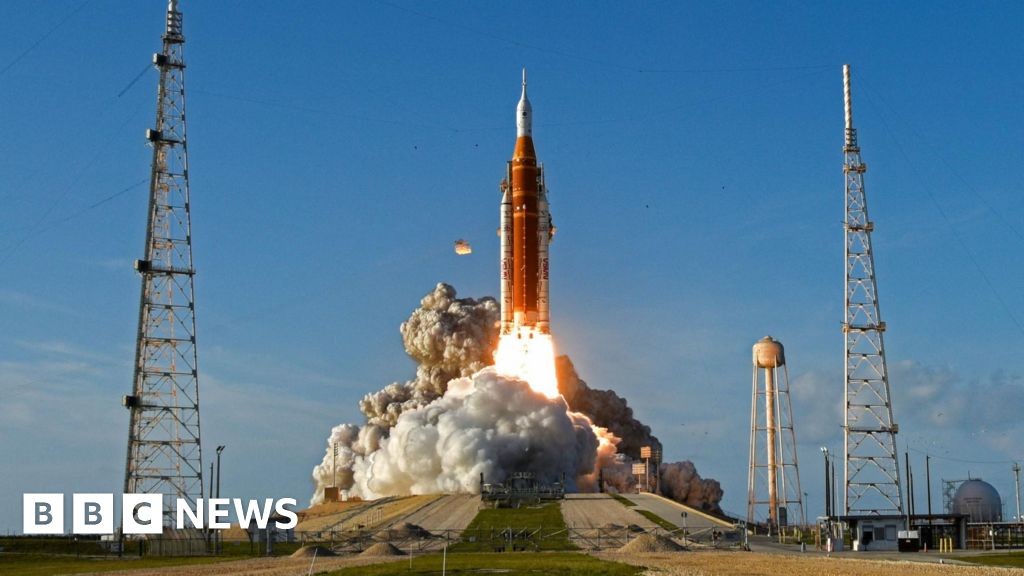
- Rocket Performance: The SLS rocket delivered 8.8 million pounds of thrust, performing “nominally” through every phase of ascent. The trajectory was so precise that two planned course corrections were deemed unnecessary.
- Spacecraft Reliability: The Orion capsule’s translunar injection burn was described as “flawless,” successfully placing the crew on a path toward the Moon.
- The “Human in the Loop”: Perhaps most importantly, the mission is testing how humans interact with the machine. Unlike robotic probes, astronauts introduce variables like CO2 production, water usage, and the need for life-support maintenance. From minor water dispenser issues to managing the CO2 removal system, the crew is providing the real-world data required to ensure the vehicle is safe for future lunar landings.
The Science vs. The Sentiment
While NASA has highlighted the scientific value of the mission—such as real-time geological observations and unprecedented views of the Orientale basin—some experts suggest the primary value may be different.
With India’s Chandrayaan-3 and China’s Chang’e-6 already providing high-resolution robotic data of the lunar surface, the “pure science” gains of Artemis II may be modest. Instead, the mission’s true impact lies in its humanity.
The mission has already produced moments of profound emotional weight, such as the crew’s decision to name a lunar crater “Carroll” in memory of a lost loved one. These unscripted, raw human moments are what allow space programs to endure in the public consciousness. Much like the Apollo era, Artemis II is proving that space exploration is as much about the human spirit as it is about engineering.
The Final Hurdle: Re-entry
Despite the successes so far, the mission’s ultimate legacy rests on a single, high-stakes event: Earth re-entry.
As the Orion capsule prepares to hit the atmosphere at approximately 25,000 mph, engineers will be watching the heat shield with intense scrutiny. This follows the unexpected heat shield damage encountered during Artemis I, which caused significant delays. A successful re-entry will validate the spacecraft’s safety and clear the path for the ambitious goal of a crewed Moon landing by 2028.
Artemis II has proven that the hardware works and the crew can manage the complexities of deep space; now, the mission must successfully return home to turn this successful test flight into a permanent lunar program.
Conclusion
Artemis II has transitioned from a theoretical mission to a proven capability, demonstrating that NASA is moving toward a more frequent and reliable launch model. If the upcoming re-entry is successful, the mission will serve as the definitive green light for humanity’s return to the lunar surface.