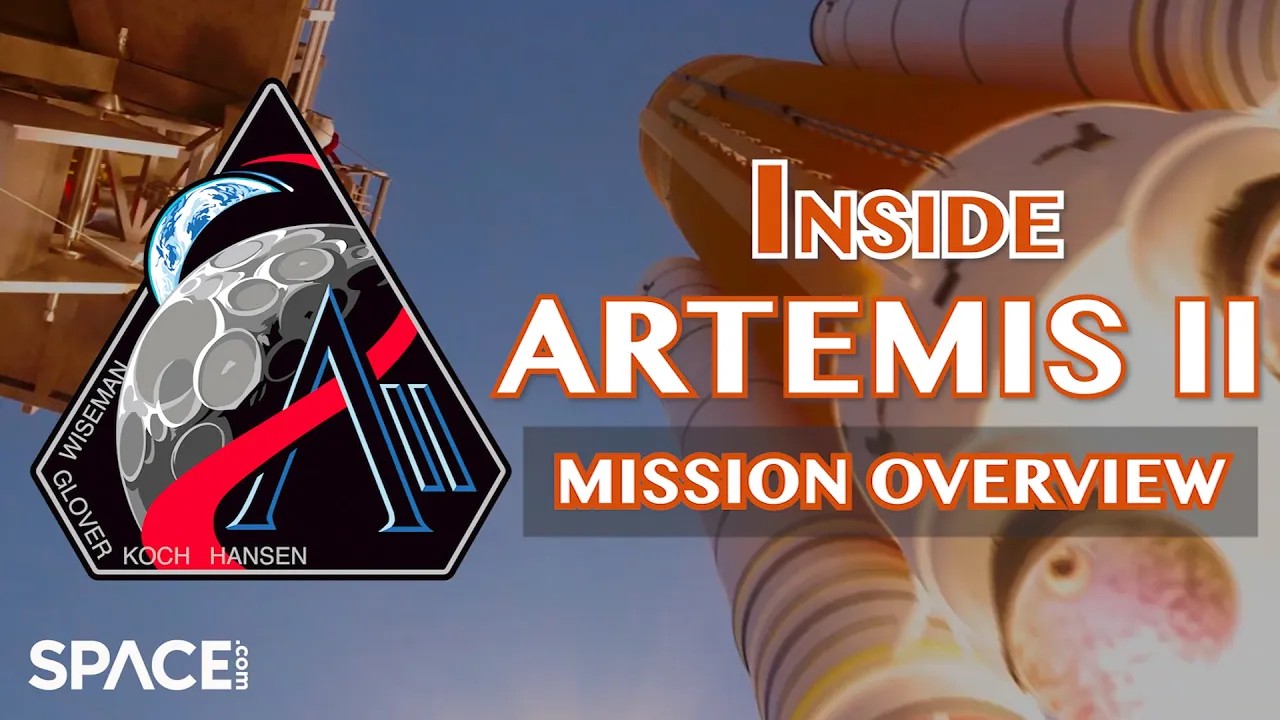
NASA’s Artemis 2 mission marks a pivotal moment in space exploration: the first crewed flight around the moon in over half a century. Launching April 1st, this mission isn’t just a symbolic return; it’s a crucial test flight designed to pave the way for a sustained human presence on the lunar surface.
This mission is a necessary step because of how far we’ve fallen behind. The last time humans traveled this far into space was in 1972, with Apollo 17. A half-century gap in crewed deep-space missions means modern systems must be rigorously tested before relying on them for long-term lunar outposts or future missions to Mars.
The Artemis 2 Mission: A 10-Day Proving Flight
The Artemis 2 mission will send a four-person crew on a ten-day journey beyond Earth orbit, venturing farther from our planet than any crewed flight since Apollo 17. While not a landing attempt, this flight is critical for validating essential technologies. Specifically, it will test life support, deep-space navigation, and communications systems, ensuring they can function reliably for future lunar missions.
The goal is not just to reach the moon, but to ensure survival and operational capability in the harsh deep-space environment. This includes verifying that equipment can withstand extreme temperatures, radiation exposure, and the vacuum of space for extended periods.
Who Will Fly on Artemis 2?
The mission crew consists of four experienced astronauts:
- Reid Wiseman (Commander): A retired Navy captain and NASA’s Chief Astronaut, Wiseman will lead the mission.
- Victor Glover (Pilot): A Navy captain and test pilot, Glover is the first Black astronaut to live long-term on the International Space Station.
- Christina Koch (Mission Specialist): An engineer, Koch holds the record for the longest single spaceflight by a woman.
- Jeremy Hansen (Mission Specialist): A Canadian Space Agency astronaut, Hansen will be making his first spaceflight.
These astronauts represent a diverse and highly skilled team prepared to push the boundaries of human exploration. The crew’s experience and expertise will be crucial for collecting valuable data during the flight.
The Power Behind Artemis 2: The Space Launch System (SLS)
The mission relies on NASA’s Space Launch System (SLS), a 322-foot-tall megarocket, the most powerful rocket built since the Saturn V of the Apollo program. This two-stage booster is designed to send humans back into deep space after decades of relying on international collaboration for crewed launches.
The SLS isn’t just about raw power; it’s about reliability and the ability to carry the Orion spacecraft with a full crew and all necessary supplies. The rocket’s development has been complex and costly, but its performance is critical for NASA’s long-term lunar ambitions.
Orion: The Deep-Space Crew Vehicle
The Orion spacecraft serves as the crew’s home, control center, and emergency lifeboat during the mission. Designed to withstand extreme conditions, including high radiation levels, temperature fluctuations, and the vacuum of space, Orion incorporates cutting-edge technology.
This includes a launch abort system capable of rapidly evacuating the crew in emergencies and a massive heat shield designed to protect them during reentry at speeds exceeding 25,000 miles per hour. The spacecraft also includes essential life-support systems, including (yes) a functional toilet, to ensure the crew’s comfort and safety.
Artemis 2 is a necessary precursor to long-term lunar exploration. By thoroughly testing critical systems in a real-world environment, NASA is laying the groundwork for a sustainable human presence on the moon and beyond.