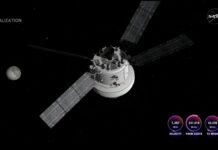
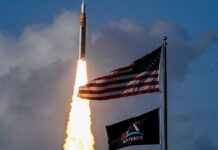
The Artemis II mission is entering its most critical phase. Early Monday morning (Eastern Time), the crew’s spacecraft will cross a pivotal threshold: entering the lunar sphere of influence. This is the precise moment when the Moon’s gravitational pull begins to overpower Earth’s, marking the transition from a departure from home to an arrival at a new destination.
Breaking Records and Setting New Milestones
As the spacecraft accelerates toward its target, the mission is poised to shatter long-standing human distance records. At approximately 1:56 p.m., the four-person crew—Reid Wiseman, Victor Glover, Christina Koch (NASA), and Jeremy Hansen (Canadian Space Agency) —will travel further from Earth than any human in history.
This journey will surpass the previous record of 248,655 miles, set during the Apollo 13 mission. While Apollo 13 reached a similar distance under emergency circumstances to facilitate a return to Earth, the Artemis II crew is traveling that distance as part of a deliberate, planned exploration of the lunar environment.
The Mission Objective: A Close-Up View
The primary focus of this 10-day mission is a high-speed lunar flyby, providing humans with their first close-up look at the Moon in over five decades. Once the spacecraft reaches its closest approach, the crew will begin a methodical period of observation.
The mission plan includes:
– Targeted Observations: The crew will focus on approximately 35 specific lunar surface features.
– Scientific Documentation: Using advanced imaging, the astronauts will capture high-resolution data of the lunar landscape.
– System Verification: The crew has already begun preliminary preparations, including testing telephoto equipment to identify key sites on the surface.
Why This Matters
This mission is more than just a record-breaking flight; it is a vital test of the systems and human endurance required for long-term lunar habitation. By successfully navigating the Moon’s gravity and conducting detailed surface observations, NASA and its international partners are laying the groundwork for future missions that intend to land humans on the lunar surface.
The transition from “orbiting Earth” to “orbiting the Moon” represents a fundamental shift in the complexity of spaceflight, testing the spacecraft’s ability to manage the intense gravitational dynamics of a deep-space environment.
The Artemis II flyby serves as the definitive bridge between the era of lunar visitation and the era of lunar occupation.
In summary, the Artemis II crew is transitioning from Earth-bound flight to lunar arrival, a move that will break historical distance records and provide unprecedented scientific data of the Moon’s surface.