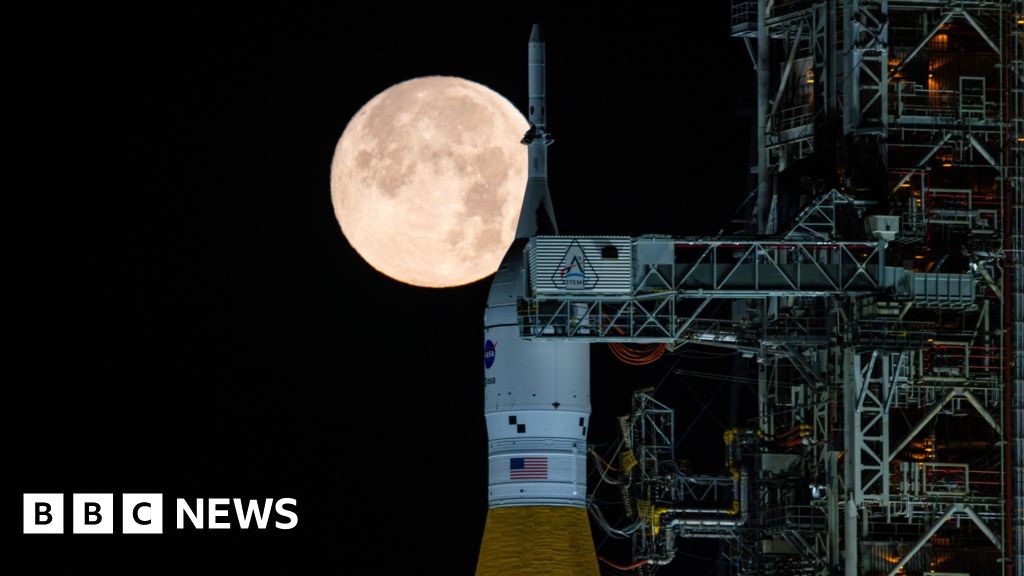
NASA has confirmed a new target launch date for the Artemis II mission – early April – following repairs to a helium leak discovered in the Space Launch System (SLS) rocket. This mission represents the first crewed flight around the Moon in over half a century, marking a pivotal moment in renewed lunar exploration.
Repair and Testing Phase
The SLS rocket was temporarily returned to the Vehicle Assembly Building (VAB) at Cape Canaveral, Florida, after the leak was detected. NASA reports that the issue has been resolved, and the rocket is scheduled to roll back to the launchpad on March 19th. The earliest possible launch date is now set for April 1st.
This delay, though significant, underscores the rigorous testing and safety protocols involved in human spaceflight. While initial plans aimed for a March launch, the discovered helium leak necessitated thorough inspection and repair.
The Artemis II Mission Profile
The ten-day mission will carry a four-person crew on a trajectory that takes them around the far side of the Moon – the hemisphere permanently facing away from Earth – and back. This journey is not a landing; instead, it serves as a critical test of the SLS rocket, the Orion spacecraft, and life support systems under deep-space conditions.
Risk Mitigation and Confidence
Despite the inherent risks of space travel, NASA officials express confidence in the mission’s prospects. John Honeycutt, chair of the Artemis II Mission Management Team, noted that historically, new rocket programs have a 50% success rate. However, he believes the Artemis II team has significantly minimized risks through meticulous planning and mitigation efforts.
“We do an outstanding job of understanding the risk, buying down the risk, mitigating the risk, and putting together controls to manage the risk.” – John Honeycutt
The team has decided against a further “wet dress rehearsal” (a full-scale launch simulation) once the rocket is back on the pad, trusting the current data and readiness checks.
Previous Delays and Future Outlook
This latest schedule adjustment follows a two-year delay in the overall Artemis program due to heat shield issues discovered during the uncrewed Artemis I mission. The Artemis program’s long-term goal is to establish a sustainable human presence on the Moon, paving the way for future missions to Mars.
The hardware will dictate the final launch date, with NASA prioritizing safety above all else. As Glaze stated, “We will launch when we’re ready.”
This mission is not just a technical feat but a demonstration of human ambition, engineering prowess, and the unwavering pursuit of space exploration. The early April launch window will be closely watched as the world anticipates the return of crewed lunar missions.