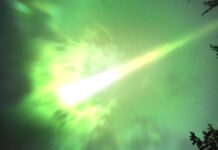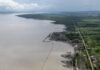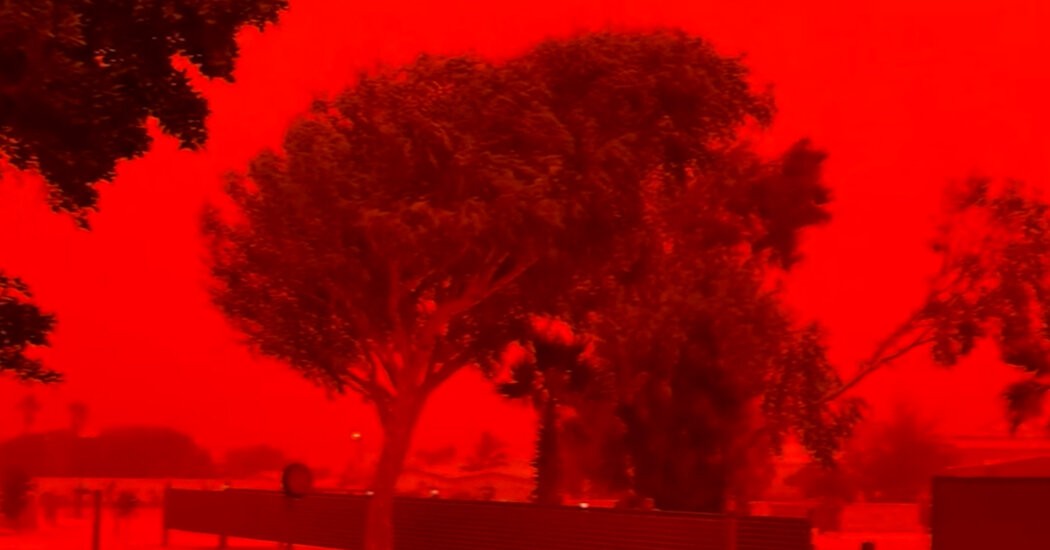
The skies over Western Australia recently turned a striking, apocalyptic blood red, sparking widespread curiosity and concern. Videos and images captured at the Shark Bay Caravan Park in Denham showed a vivid crimson glow, initially resembling scenes from science fiction films. The eerie display was not the result of a filter, but a natural consequence of atmospheric conditions and the region’s unique geology.
The Science Behind the Red Skies
The phenomenon is linked to iron-rich soil prevalent in Australia’s arid landscapes. Over time, these rocks undergo oxidation, essentially rusting and weakening the rock structure. This process creates the distinct reddish hue found in the soil, resembling the surface of Mars.
The red color wasn’t a static event; it coincided with Tropical Cyclone Narelle passing through Western Australia. The storm’s powerful winds stirred up vast quantities of this rust-colored dust, scattering it across the atmosphere. This is why the phenomenon was most visible on Friday as the cyclone approached.
Why This Matters: Beyond Aesthetics
The intensity of the red color can vary depending on the concentration of dust and the angle of sunlight. While dramatic, events like these are not unprecedented. Similar red skies have been observed in other parts of the world, including Indonesia in 2019 when wildfires caused a similar atmospheric effect.
The recurring nature of this phenomenon raises questions about the increasing frequency of extreme weather events and their impact on air quality. Dust storms and wildfires, both exacerbated by climate change, are becoming more common, leading to more frequent and intense atmospheric colorations.
From Cyclone to Calm: The Storm’s Aftermath
By Saturday, Cyclone Narelle had been downgraded to a tropical low-pressure system after bringing rainfall and strong winds to Western Australia. The dust settled, but the striking images remain as a reminder of the power of natural forces. The sky occasionally turns red due to cyclones, dust storms, and wildfires, making this an unusual but not entirely unpredictable sight.
The Australian sky turned red because of natural geological and meteorological processes. The event serves as a vivid illustration of how environmental factors can interact to create striking, yet unsettling, atmospheric displays.