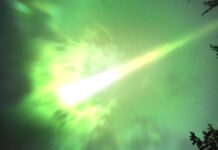
The iconic lightsaber from Star Wars is a staple of science fiction, but how closely does its fictional technology align with real-world physics? The short answer: not very well, at least not with current understanding. However, breaking down the core components reveals where the idea falls apart and where scientific concepts might offer a distant path toward something similar.
The Core Problem: Containing Energy
A lightsaber’s defining feature is a contained blade of pure energy. In the films, this is often depicted as plasma held in place by a magnetic field. While plasma is real – an ionized gas where electrons separate from atoms – containing it is the fundamental challenge.
Plasma requires enormous energy to maintain. The heat would instantly vaporize anything that gets too close. The fictional lightsaber’s hilt appears small, but to generate and sustain a blade of that scale, it would need a fuel source far beyond any portable technology.
Key Scientific Concepts at Play
Let’s look at the terms involved:
- Fusion: The energy source of stars, merging atomic nuclei. This is immensely powerful but requires conditions found only in stellar cores or experimental reactors.
- Electrons & Electric Current: The flow of electrons creates electricity, but focusing it into a coherent blade isn’t simple.
- Magnetic Fields: These can influence charged particles, but containing a high-energy plasma with them requires extreme precision and strength.
- Lasers: While lasers produce focused light, they don’t create a blade that can cut through metal. They dissipate energy rapidly, not sustain it.
Why It Doesn’t Add Up
The biggest issue is confinement. In real life, magnetic fields are not strong enough to hold plasma indefinitely in a blade shape. The energy density required would be astronomical, and the heat dissipation would be uncontrollable. The fictional lightsaber relies on physics that simply don’t exist in the natural world.
The fictional explanation of a “kyber crystal” focusing energy is pure science fiction. Crystals can manipulate light, but not to the degree needed for a lightsaber. The idea is a plot device, not a scientific solution.
The Verdict
A true lightsaber as depicted in Star Wars is currently impossible. It violates known laws of physics regarding energy containment, heat management, and material science. While advancements in plasma physics and high-energy materials might one day offer something resembling a lightsaber, it would be far less elegant and far more dangerous than the movie version.
The lightsaber remains firmly in the realm of science fiction, a testament to creative storytelling rather than a realistic engineering challenge.