Paleontologists have unveiled a new artificial intelligence tool, DinoTracker, designed to identify dinosaur footprints with unprecedented accuracy. The app addresses a long-standing challenge in paleontology: matching fragmented fossilized tracks to the dinosaurs that made them. The core innovation lies in how the AI learns – by analyzing footprint relationships rather than relying on potentially flawed human labels.
The Problem with Existing Methods
Previous AI systems were trained on datasets where footprints were already assigned to specific dinosaur species. The problem? Many of those original classifications are likely wrong. As Dr. Gregor Hartmann of Helmholtz-Zentrum in Germany points out, “You never find a footprint with the dinosaur that made it.” The new system bypasses this issue by first analyzing 2,000 unlabeled silhouettes to identify patterns, then clustering them based on measurable features.
How DinoTracker Works
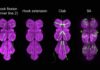
The AI identifies eight key features in footprints: toe spread, ground contact area, and heel position. These parameters allow the system to group similar prints, even if the species making them is unknown. The team then turned this logic into a free app allowing anyone to upload a footprint silhouette, explore its closest matches, and manipulate the features to see how variations affect similarity scores.
Implications for Paleontology
DinoTracker isn’t just a tool for verification; it’s pushing boundaries in understanding dinosaur evolution. The AI’s analysis confirms existing suspicions that Triassic and early Jurassic footprints bear striking resemblance to bird tracks – 60 million years older than the earliest bird fossils. This discovery doesn’t necessarily mean birds evolved earlier, but it does suggest that some dinosaurs had remarkably birdlike feet.
Caveats and Future Research
The AI’s findings aren’t without debate. Some experts, like Dr. Jens Lallensack of Humboldt University of Berlin, caution that the system may overemphasize surface-level similarities rather than underlying foot structure. The way a foot sinks into soft ground can also mimic bird-like patterns. The DinoTracker app clusters prints with expected classifications 90% of the time, but human verification remains essential.
DinoTracker is a powerful new tool, but it’s not a replacement for expert analysis. It offers a data-driven approach to solving ancient mysteries, raising questions about how early bird-like features evolved, and whether some dinosaurs were far more bird-like than previously thought.