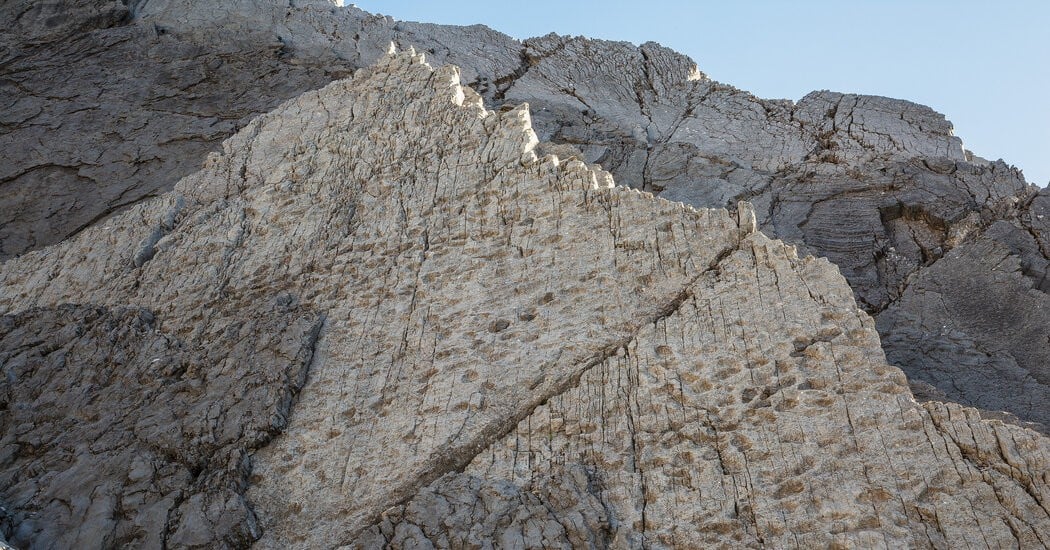
Thousands of remarkably well-preserved dinosaur footprints, dating back over 200 million years, have been discovered in Stelvio National Park, Italy. The find, made by nature photographer Elio Della Ferrera, offers a rare glimpse into the late Triassic Period and the creatures that roamed the region before the age of modern dinosaurs.
A Serendipitous Discovery
Della Ferrera, initially photographing wildlife like bearded vultures and red deer, noticed an unusual pattern through his telephoto lens in mid-September. Recognizing the potential significance, he navigated challenging terrain – steep, overgrown slopes – for approximately two hours to reach the site.
“The last few hundred meters are really difficult to cover because they are vertical, and there is this crumbly layer on top of a hard bottom layer,” Della Ferrera described the conditions.
The tracks are so clear that individual toe and claw marks are visible, spanning hundreds of yards in some cases. The photographer admits he may have overlooked the site previously, focusing instead on landscape and wildlife photography.
What the Footprints Reveal
Scientists believe the footprints were left by prosauropods, early ancestors of long-necked dinosaurs like the brontosaurus. These plant-eating giants lived during the late Triassic Period, a crucial transition phase in dinosaur evolution. The tracks provide direct evidence of their presence in what is now the Italian Alps, an area that was vastly different in climate and geography over 200 million years ago.
The preservation quality is exceptional, likely due to the unique geological conditions that protected the prints from erosion over millennia. Such discoveries are rare because footprints typically degrade before fossilizing; this site seems to have avoided that fate.
Why This Matters
The Alps, a region now known for its scenic beauty, once hosted a thriving dinosaur population. These footprints serve as a reminder of the Earth’s dynamic history and the constant shifts in ecosystems over geological time. The find also highlights the role of chance in scientific discovery: a photographer’s keen eye, combined with dedication, led to a paleontological treasure.
The presence of prosauropods in this region raises further questions about migration patterns, environmental conditions, and the broader distribution of dinosaurs during the Triassic. Future research will likely focus on analyzing the tracks to determine herd behavior, gait, and potentially even individual dinosaur sizes.
This discovery is a testament to the enduring power of fossil evidence to rewrite our understanding of the past.