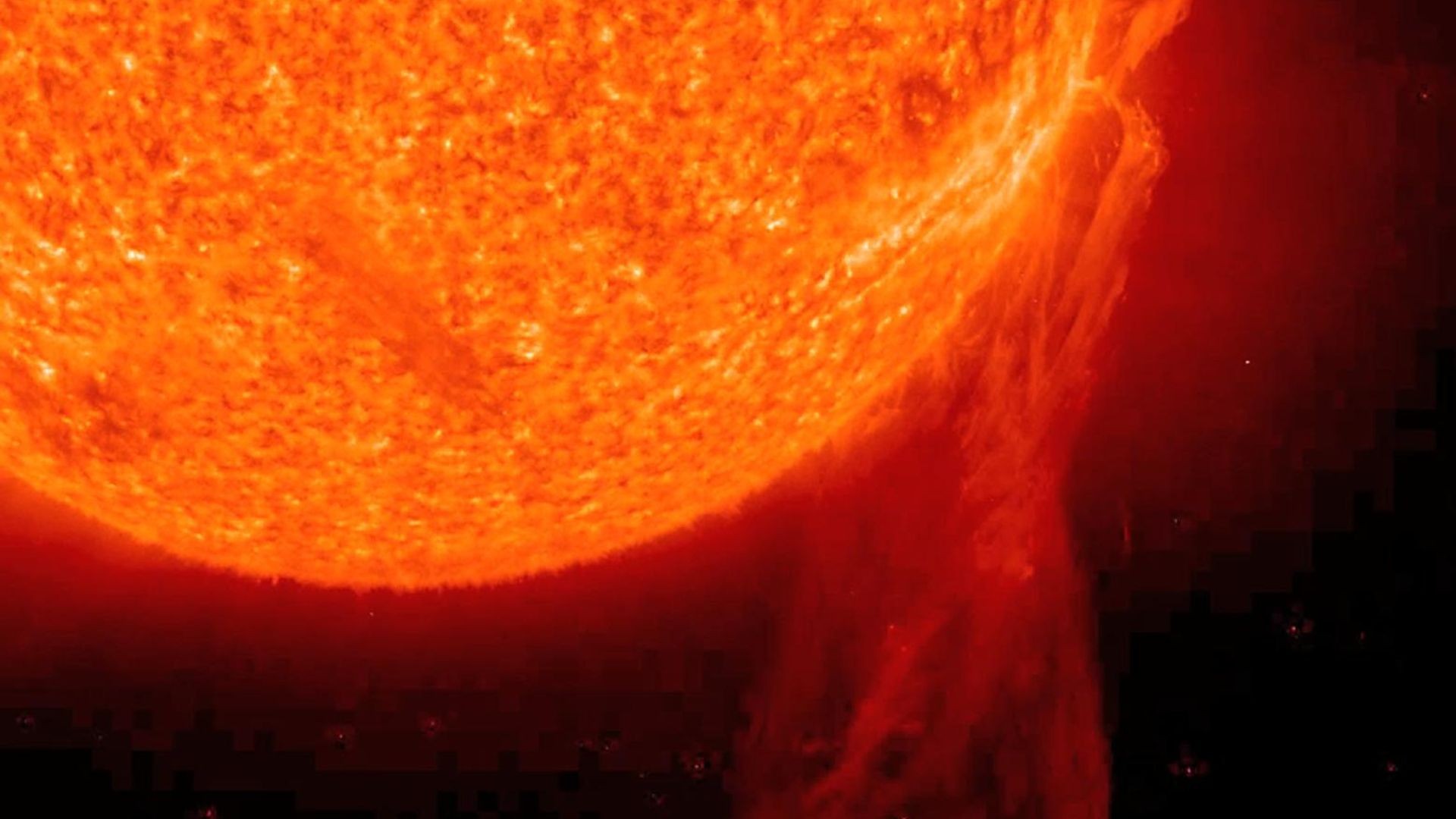
The sun’s sudden disappearance would trigger a cascade of catastrophic events, reshaping Earth into a frozen, lifeless husk. While such an event is not imminent, understanding its consequences highlights the sun’s critical role in sustaining life and the planet’s delicate equilibrium.
The Sun’s Formation and Earth’s Dependence
The sun, formed roughly 4.6 billion years ago from a collapsing cloud of gas and dust, now burns at a core temperature of 27 million degrees Fahrenheit. Earth, along with other planets, emerged from the remaining material. The sun’s gravitational pull and energy output are the foundations of our planet’s habitability. Earth resides in the “Goldilocks zone,” where liquid water—essential for life as we know it—can exist. Photosynthesis, water cycles, climate regulation, and even human vitamin D production are all directly dependent on sunlight.
Immediate Consequences: Darkness and Orbital Chaos
If the sun vanished, we wouldn’t notice for approximately 8 minutes and 20 seconds—the time it takes for sunlight to reach Earth. After that, a sudden, complete blackout would occur. Artificial lighting would become the only source of illumination. The moon, reliant on reflected sunlight, would disappear from view, though distant stars would remain visible. More critically, the loss of the sun’s gravity would send all planets hurtling off into interstellar space along their current trajectories.
The Collapse of Life: Photosynthesis and Freezing Temperatures
The immediate threat to life would be the cessation of photosynthesis. Plants, the base of most food chains, would quickly die without sunlight. While some might enter dormancy briefly, they would eventually succumb. Fungi, which feed on dead organic matter, would thrive in the short term, but even they would struggle in the rapidly cooling environment.
Earth would cool at an average rate of 36°F (20°C) per day initially, plunging most of the planet into subfreezing temperatures within days. Lakes would freeze over in weeks, and the oceans, though slower to react, could remain liquid for decades in deep, volcanically active regions. Ultimately, Earth’s temperature would approach that of Pluto, currently around -400°F (-240°C). However, even in absolute darkness, the residual heat from the Big Bang would prevent Earth from reaching absolute zero.
Survival Prospects: Extremophiles and Underground Shelters
Human civilization would likely collapse, though some survival is conceivable in underground bunkers powered by geothermal or nuclear energy, supplemented by artificial lighting for plant cultivation. The most resilient organisms would be extremophiles: microscopic animals like tardigrades (water bears), known for surviving extreme radiation, alcohol immersion, and even blunt force trauma. Chemosynthetic bacteria, thriving near deep-sea vents, would also persist by utilizing chemical energy from rocks and minerals instead of sunlight.
The Long-Term Fate: Stellar Evolution and Earth’s Inevitable Demise
While an instantaneous solar disappearance is impossible, the sun will eventually die. Over the next 5 billion years, it will expand into a red giant, potentially engulfing Mercury, Venus, and possibly Earth. Even sooner—in about a billion years—the sun’s increasing brightness will vaporize Earth’s oceans.
Understanding these scenarios, though distant, is crucial for comprehending stellar evolution and the broader dynamics of the universe. By studying these extreme possibilities, we gain a deeper insight into the fragility of life and the fundamental forces that govern our existence.