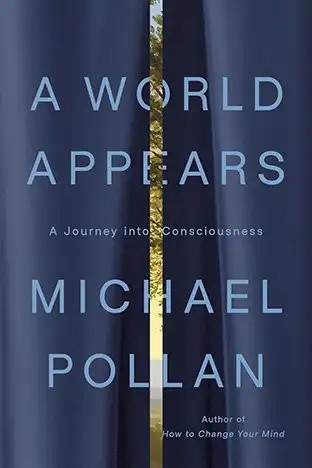
Renowned author Michael Pollan, best known for his explorations of food, plants, and altered states of mind, turns his attention to one of humanity’s most enduring mysteries: consciousness. In his new work, A World Appears, Pollan doesn’t offer easy answers; instead, he charts a journey through the cutting-edge science, philosophical debates, and even psychedelic insights surrounding this enigmatic phenomenon. Pollan candidly admits the pursuit leaves him knowing less at the end than when he began – a testament to the complexity of the subject.
Defining the Undefinable
At its core, consciousness is simply subjective experience – the ‘what it’s like’ to be something. Humans possess this; toasters do not. Philosopher Thomas Nagel famously asked what it would be like to be a bat, highlighting that even vastly different beings likely experience something. Pollan argues that consciousness doesn’t reside solely in the brain’s cortex but begins with basic feelings like hunger or discomfort, originating in the brainstem itself. This suggests that consciousness is fundamentally tied to having a body, one vulnerable enough to experience sensation.
The Limits of Traditional Science
The scientific method, designed for objectivity, struggles to grasp something so inherently subjective. Galileo’s decision to leave qualitative experience to the church wasn’t a dismissal of it, but a pragmatic recognition that current tools were ill-equipped to study it. The problem isn’t just measurement; it’s the very framework of inquiry. Science itself is a product of human consciousness, shaping what questions are asked and how they’re answered.
Some researchers propose new approaches, like Integrated Information Theory, which starts with subjective experience and seeks structures that would create it. Pollan remains skeptical but acknowledges the need to incorporate first-person perspectives into the study of consciousness.
The Sentience of Plants?
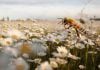
Pollan explores the surprising world of plant biology, where findings suggest plants possess forms of awareness. While not necessarily conscious in the human sense, plants exhibit sentience: the ability to sense their environment and react accordingly. They navigate mazes, release toxins when attacked, communicate with neighboring plants, and even respond to anesthetics in ways that mirror animal responses. This raises provocative questions about the boundaries of awareness and whether consciousness is more widespread in the natural world than previously assumed.
AI and the Illusion of Feeling
Artificial intelligence, at least in its current form, is unlikely to achieve true consciousness. Computers can simulate thought, but they lack the qualitative dimension of genuine feeling, which is rooted in a vulnerable, embodied existence. Attempts to create vulnerable AI – such as adding tearable skin with sensors – remain speculative, with even the creators unsure if such efforts will yield real experience.
Psychedelics as a Lens on Reality
Psychedelic experiences have profoundly influenced Pollan’s thinking. These altered states dissolve the usual filters of perception, revealing that consciousness mediates our experience of the world. Scientists like Christof Koch, initially skeptical, have had transformative experiences under psychedelics, questioning the brain-centric view of consciousness. Pollan treats these insights as hypotheses, seeking validation through other means.
The Value of Uncertainty
The search for consciousness is not about finding a definitive answer but about the journey itself. Pollan acknowledges the frustration of pursuing an unsolvable problem, but ultimately embraces the value of uncertainty. He concludes that consciousness itself is under siege – eroded by overstimulation, surveillance, and the surrender of private thought to corporations. The real value lies in defending this inner space, becoming more conscious along the way.
The quest for understanding consciousness isn’t about reaching a destination; it’s about cultivating a deeper appreciation for the complexity of our own minds. And in an era where our attention is relentlessly commodified, defending that inner space is more urgent than ever.