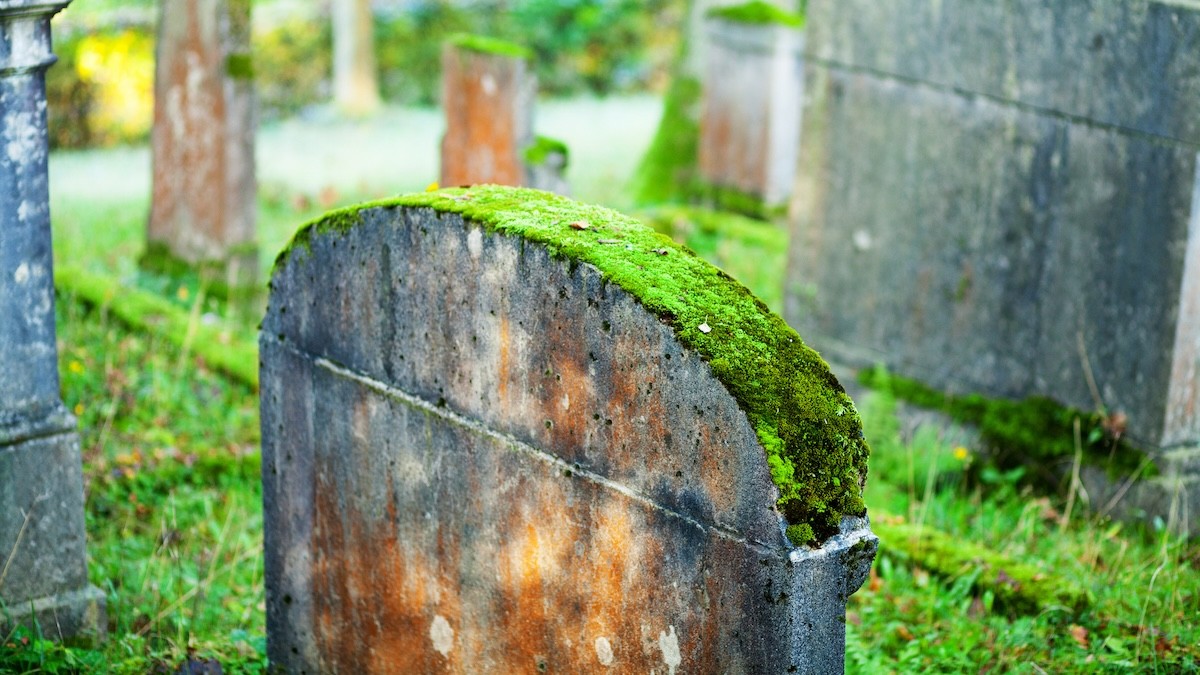
In a case that sounds more like a television thriller than a forensic report, a group of cemetery workers was convicted of a massive desecration scheme thanks to an unlikely witness: a single piece of moss.
The investigation into the Burr Oak Cemetery, located near Chicago, uncovered a systematic operation where workers exhumed old graves, relocated human remains to unused areas of the grounds, and resold the emptied burial plots for profit. Prosecutors estimated that approximately 1,500 bones from at least 29 individuals had been illegally moved.
The Botanical Link
The breakthrough came when the FBI contacted Matt von Konrat, a head botanist at the Field Museum in Chicago. Investigators had recovered a sample of moss buried eight inches beneath the surface, alongside human remains.
By analyzing the specimen, von Konrat and his team identified it as Fissidens taxifolius, or common pocket moss. The crucial discovery was not just the species itself, but its location:
– This specific moss was not native to the area where the bones were found.
– However, a thriving colony of this exact moss was located in the section of the cemetery where the original graves had been disturbed.
This provided the “smoking gun” that linked the two locations, proving that material from the original graves had been transported to the new, unauthorized burial site.
Breaking the Alibi: The “Half-Life” of Greenery
While the presence of the moss proved the crime happened, it didn’t solve the most difficult legal hurdle: timing.
The defendants argued that the grave-robbing had occurred before they were ever employed at the cemetery. To secure a conviction, investigators needed to prove the disturbance happened during the defendants’ tenure. To do this, they turned to the unique physiology of moss.
Unlike many plants, certain mosses maintain a level of metabolic activity even after they appear dead or dry. As moss decays, its chlorophyll —the green pigment responsible for photosynthesis—gradually degrades.
By measuring the rate of chlorophyll decay, researchers were able to establish a biological “timeline” for the sample.
The analysis revealed that the moss sample was only one to two years old. This timeline directly contradicted the defendants’ alibis, placing the crime squarely within the period they were working at the cemetery. Consequently, in 2015, the employees were convicted of desecrating human remains.
A Rare but Powerful Forensic Tool
While this case highlights the potential of forensic botany, it remains a niche field. A study conducted by von Konrat and his colleagues in 2025 revealed that moss-related evidence has been used in only about a dozen criminal cases over the last century.
This scarcity suggests that forensic investigators may be overlooking “microscopic” plant evidence that could provide vital context in complex crimes. The Burr Oak case serves as a landmark example of how even the smallest biological traces can bridge the gap between a suspicion and a conviction.
Conclusion
By leveraging the predictable decay of chlorophyll in moss, forensic botanists provided the chronological evidence necessary to dismantle a long-running criminal scheme. This case highlights the untapped potential of using microscopic plant life to solve high-stakes criminal investigations.