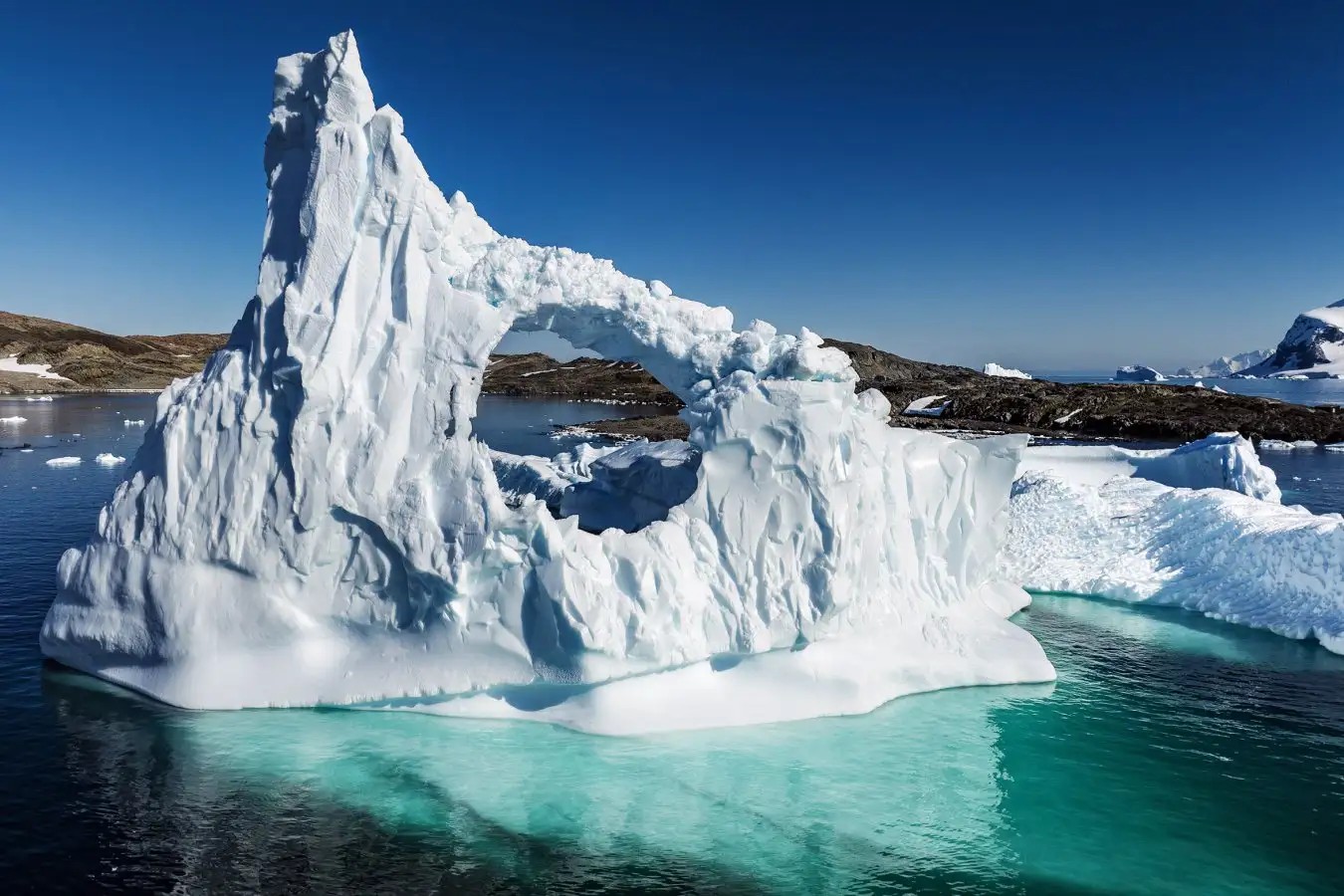
For decades, Antarctic sea ice defied expectations, remaining stable or even expanding while Arctic ice rapidly declined. Now, a dramatic shift is underway: Antarctic ice has plummeted to record lows, losing an area comparable to Greenland in just a few years. New research confirms that this isn’t primarily due to air temperatures, but instead to warmer deep ocean waters rising to the surface, eroding the ice from below.
The Role of Deep Ocean Warming
The Antarctic is encircled by the Circumpolar Deep Water (CDW), a mass of warm, salty water originating in the tropics. This water naturally flows at depth, but climate change is altering the conditions that keep it contained. Measurements from drifting buoys reveal that the CDW is increasingly surfacing, directly melting the sea ice. This process was previously underestimated in climate models, which largely focused on atmospheric warming as the main driver of Antarctic ice changes.
Shifting Wind Patterns Amplify the Effect
Strong winds around Antarctica, particularly in the “roaring forties,” “furious fifties,” and “screaming sixties,” play a critical role. Climate change is pushing these storm tracks southward, increasing precipitation in the sea ice zone. Initially, this freshwater layer insulated the ice, allowing it to expand to a record high in 2014. However, the stronger winds also push surface water and ice forward, creating upwelling where warmer deep water rises to fill the void.
Between 2014 and 2016, this wind-driven upwelling overpowered the protective freshwater layer, initiating rapid ice melt in the Weddell Sea. Computer models confirm that even a slight reversal in conditions could trigger a return of this heat, sustaining the decline.
The Weakening Winter Water Barrier
Even before increased precipitation, the CDW had been warming and expanding, thinning the layer of cold, salty “winter water” that normally keeps it contained. This barrier weakened in 2015 and 2016 when stronger-than-average winds forced more deep water upward, disrupting the layering that had previously protected the ice. The layering has not recovered since.
“It’s the wind that pushes [sea ice] over into these rapid declines, but it’s the ocean that really keeps it low,” says Theo Spira, a researcher at the Alfred Wegener Institute.
This finding underscores that even if wind patterns were a natural fluctuation, the underlying conditions for melt were already set by global warming. The Antarctic is now in a new regime where ice decline is likely persistent.
Implications for Wildlife and Global Currents
While melting sea ice does not directly raise sea levels, it threatens species dependent on it, such as krill and penguins. More critically, reduced sea ice near key ice shelves could disrupt the formation of dense Antarctic bottom water, which drives global ocean currents like the Atlantic Meridional Overturning Circulation (AMOC). A slowdown of the AMOC could have severe consequences for European climate stability. While freshwater from glacial melt also affects bottom water formation, the ocean warming is a key additional factor.
The research makes it clear that the Antarctic sea ice is undergoing a fundamental transformation, driven by ocean warming and amplified by shifting wind patterns. This represents a significant shift in the Earth’s climate system with far-reaching consequences.