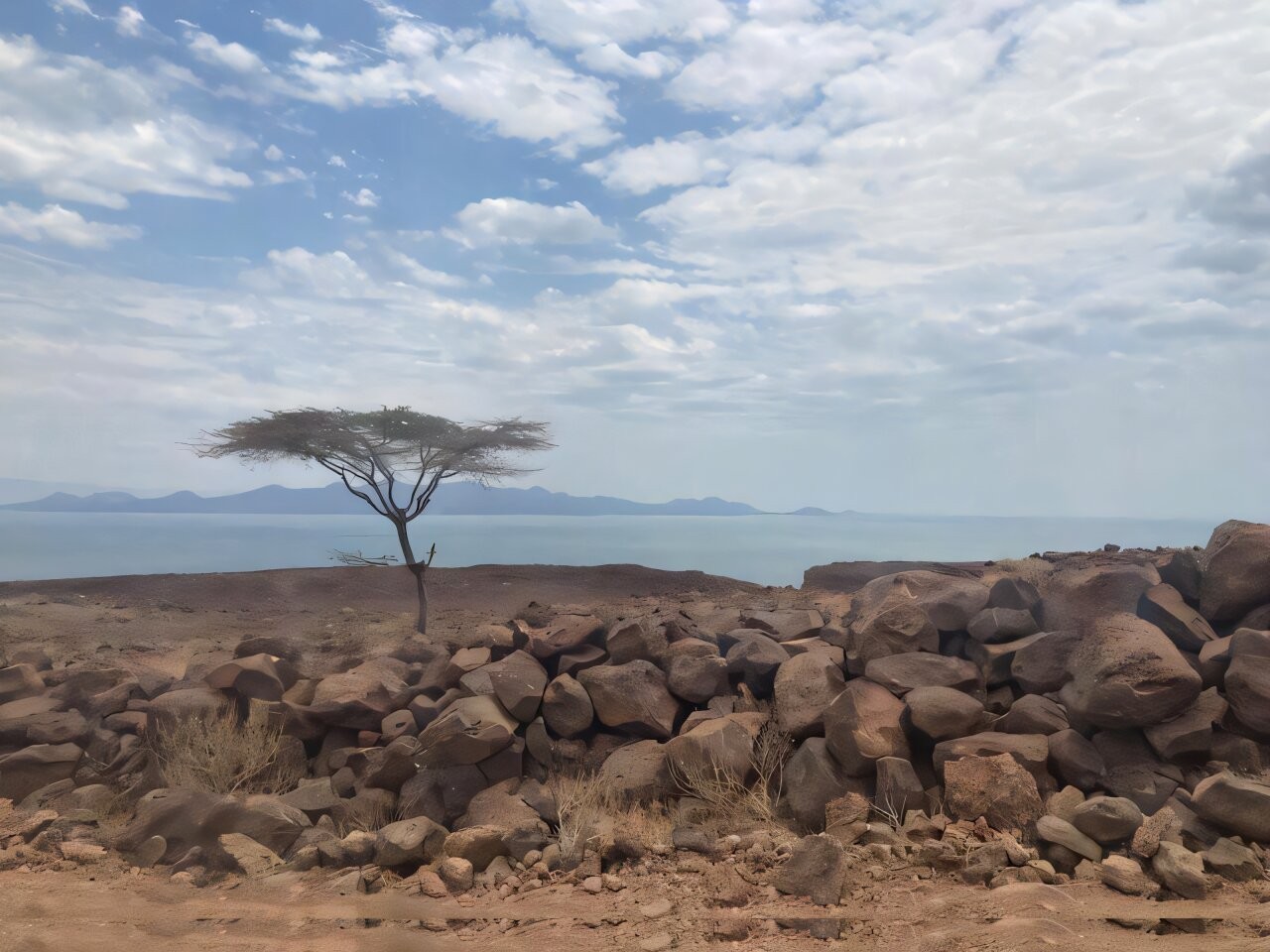
New research from Tulane University and an international team of scientists sheds light on a surprising phenomenon in Earth’s crust: why some regions stubbornly resist the process of continental breakup, challenging long-held scientific assumptions. Published in the journal Nature, the study focuses on the East African Rift, a unique geological area where the Earth’s crust is actively splitting apart – providing a rare opportunity to observe continental breakup in action.
The East African Rift and the Turkana Depression
The East African Rift is one of the few places on Earth where scientists can directly observe the breakdown of a continent. The Tulane-led research team focused on the Turkana Depression, a region between Kenya and Ethiopia, to investigate why some areas within this rift system remain remarkably stable while others readily deform. This region provides a natural laboratory for understanding the forces at play when continents begin to separate.
An Unexpected Resistance to Deformation
Traditionally, scientists believed that areas previously stretched and thinned would be the easiest locations for a continent to break apart. However, this new research reveals a contrary effect: a portion of the African tectonic plate, previously subjected to thinning, is now exhibiting a surprising resistance to deformation. This unexpected behavior prompted a deeper investigation into the underlying processes.
The Role of a Past Heating Event
The team’s findings point to a key event that occurred roughly 80 million years ago: a significant heating event that dehydrated the African plate. This event removed water and carbon dioxide from deep within the plate, leaving behind a stronger, more rigid structure. The removal of these fluids has a profound impact on the plate’s ability to deform.
Collaborative Research and Advanced Monitoring
The study was a truly international collaboration, bringing together experts from Tulane University, the University of Montana, Imperial College London, Addis Ababa University in Ethiopia, and the Universities of Nairobi and Dedan Kimathi in Kenya. The team combined a wide range of scientific skills and data sets to create detailed visualizations of the plate’s structure and properties.
Earthquake and GPS Monitoring
“Our collaborative research shows that volcanism and plate stretching that form deep basins avoid the thin and dry parts of the continental plates.” – Martin Musila, Ph.D. candidate at Tulane University
Crucially, the Tulane scientists spearheaded the earthquake and GPS monitoring efforts. By deploying networks of instruments, the team measured both the steady movement of the plate and the sudden shifts caused by earthquakes. This data allowed them to create three-dimensional maps illustrating how deformation and volcanic activity effectively bypass the previously thinned zones, leaving the weaker area relatively unchanged.
Implications for Understanding Continental Breakup
The research clarifies how ancient events can have long-lasting effects on the mechanical properties of continental plates. The removal of water and CO2 through volcanic activity has transformed the plate’s structure, significantly hindering the process of rifting. This discovery has important implications for our understanding of continental breakup and the geological evolution of our planet, suggesting that past tectonic events play a far more significant role than previously recognized.
The study’s findings highlight the complex interplay of geological processes over vast timescales, emphasizing the lasting impact of ancient heating events on the stability and evolution of Earth’s continents. The researchers’ detailed maps and modeling techniques have provided a powerful new tool for understanding these processes, and their work has opened up exciting avenues for future research into the dynamics of continental breakup