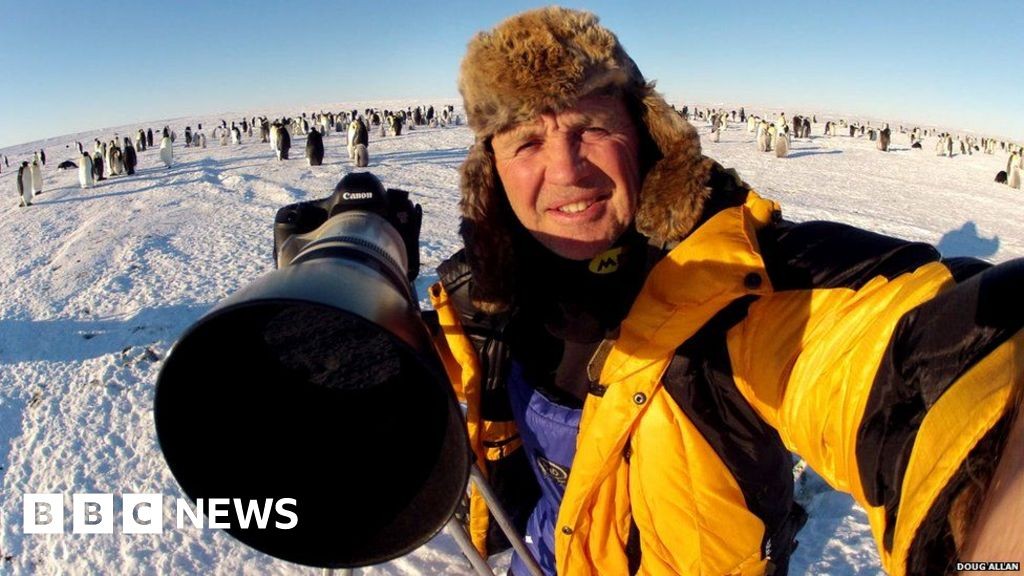
The world of natural history filmmaking has lost one of its most influential figures. Doug Allan, the acclaimed cameraman and photographer responsible for some of the most iconic imagery in television history, has passed away at the age of 74 while trekking in Nepal.
According to a statement from his management, Allan died “immersed in nature and surrounded by friends,” a fitting end for a man who dedicated his life to documenting the Earth’s most remote corners.
A Visual Legacy Alongside David Attenborough
Allan’s career was defined by his ability to capture the intimate, often dangerous lives of animals in extreme environments. He was a cornerstone of the BBC’s natural history unit, serving as a principal cameraman on landmark series including:
- Planet Earth
- Blue Planet & *Blue Planet II *
- Frozen Planet
His technical mastery and artistic vision earned him eight Emmy Awards and an OBE in 2024 for his contributions to broadcast media and environmental awareness. Much of his professional life was spent collaborating with Sir David Attenborough, helping to bridge the gap between scientific observation and cinematic storytelling.
From Marine Biology to Polar Exploration
Allan’s journey into the wild was driven by a deep scientific curiosity. Inspired by Jacques Cousteau’s pioneering underwater films, he studied marine biology at the University of Stirling before transitioning from research diving to professional filmmaking.
His career was marked by extraordinary bravery and physical endurance:
– Polar Expertise: He specialized in the world’s harshest climates, twice receiving the Polar Medal for his work in extreme regions.
– Extreme Encounters: He once spent over 600 days tracking polar bears. He famously recounted a moment when a bear’s wet nose pressed against his window, momentarily mistaking the animal for a person cleaning the glass.
– Survival Instincts: In another instance, he had to defend himself against a hungry walrus that mistook him for a seal while he was filming underwater.
An Advocate for the Planet
Beyond the lens, Allan was a dedicated environmentalist. He understood that capturing the beauty of nature was only half the battle; the other half was ensuring its survival.
In his later years, he became a vocal campaigner for environmental protections. Earlier this year, he urged the Scottish government to support an “ecocide” bill, aimed at holding corporations legally accountable for widespread and severe damage to the natural world. This shift from observer to advocate highlights a broader trend among natural historians: as habitats vanish, the role of the filmmaker evolves from mere storyteller to urgent protector.
“Doug leaves behind a visual legacy that few could ever match. His work brought audiences closer to the wonders of our planet, inspiring awe, understanding, and deep respect.” — Jo Sarsby Management
Conclusion
Doug Allan’s death marks the end of an era for wildlife cinematography. He leaves behind a profound body of work that not only redefined how we see the natural world but also ignited a global conversation about the necessity of its preservation.