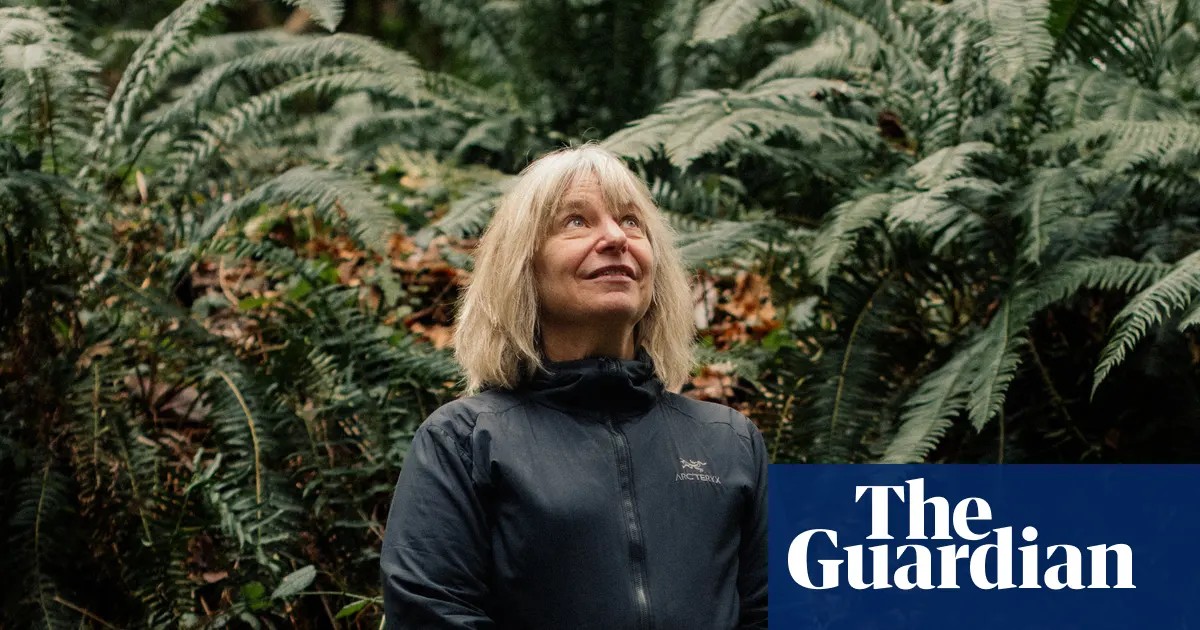
For decades, ecologist Suzanne Simard has argued that forests aren’t just collections of trees, but complex, interconnected communities. Her research suggests trees communicate, share resources, and even recognize kin through an underground network of fungi called mycorrhiza. This perspective challenges traditional forestry practices that prioritize timber extraction over ecosystem health, and it has earned her both acclaim and fierce opposition from within the scientific community.
The Shifting Landscape of Canadian Forests
Simard’s work emerged from firsthand observation in British Columbia, where increasingly severe wildfires are reshaping the landscape. The 2018 fires were record-breaking, but surpassed again in 2021 and 2023, with blazes consuming areas larger than Nova Scotia and sending smoke as far as New York City. This isn’t solely due to climate change; decades of logging practices have also played a role. Replacing diverse, native forests with fast-growing conifers – while economically efficient – creates far more flammable landscapes.
Canada’s vast forests once acted as a significant carbon sink, but since 2001, they’ve become a net emitter. This shift is a direct consequence of unsustainable logging and the combined effects of wildfires and pest outbreaks. Simard argues that billions are spent on carbon capture technology while ignoring the natural solutions already present in intact forests.
The “Wood Wide Web” and Mother Trees
Simard’s research, detailed in her bestselling book Finding the Mother Tree, reveals that the oldest, largest trees – which she calls “mother trees” – play a crucial nurturing role. These trees are connected to younger ones via mycorrhizal networks, sharing nutrients and supporting growth. This isn’t just theoretical; experiments show that seedlings thrive better when grown alongside diverse plant life, with the mycorrhizal network acting as a vital exchange system.
Her 1997 Nature paper, titled “The Wood Wide Web,” was groundbreaking, suggesting that forests function less as competition-driven ecosystems and more as collaborative communities. This concept resonated with Indigenous knowledge systems that have long recognized forest interconnectedness, while challenging the dominant, “masculine” lens of dominance often applied in forestry.
Backlash and Resistance to Revolutionary Ideas
Simard’s work hasn’t been without controversy. Following the publication of The Mother Tree, she faced aggressive criticism, including personal attacks and attempts to discredit her research. Some critics questioned the robustness of her findings, while others accused her of lacking scientific integrity.
Simard acknowledges that pushing against established paradigms invites resistance. “When you have an idea that is a little revolutionary…that threatens the structure of the scientific method,” she explains, “backlashes happen.” She draws parallels to the initial skepticism faced by Jane Goodall and James Lovelock, both of whom challenged conventional thinking in their fields.
The Path Forward: Regenerative Forestry and Indigenous Wisdom
Despite the pushback, Simard’s work is gaining traction. Her Mother Tree Project advocates for more sustainable logging practices, such as leaving mother trees intact during harvests to promote natural regeneration. She also criticizes science’s tendency toward reductionism, arguing that focusing solely on isolated variables obscures the systemic relationships crucial for understanding forest health.
Simard emphasizes the need to integrate Indigenous wisdom, which has long understood and practiced regenerative forestry. She also points out that Canada’s increasing self-reliance may ironically lead to greater resource extraction, even as climate change makes environmental protection more urgent.
Ultimately, Simard believes that acknowledging forests as intelligent, interconnected systems is essential for effective conservation. This shift requires not just scientific evidence, but a broader cultural recognition of nature’s intrinsic value.
“We need to be innovative, we need to be creative, we need to have all hands on deck and sometimes we need to break out of the scientific mould.”
Simard plans to return to the forests of British Columbia for a sabbatical, continuing her work and advocating for a future where forests are treated not as commodities, but as the vital, interconnected communities they truly are.