For decades, the RNA World hypothesis has served as a leading explanation for how life began. It suggests that before the complex dance of DNA and proteins, simple RNA molecules acted as both the blueprint and the engine of life. However, a persistent scientific hurdle remained: how could such complex, self-copying molecules emerge spontaneously from a chaotic “primordial soup” without existing help?
New research has provided a potential answer by discovering a surprisingly small and simple RNA molecule capable of performing the most difficult steps of self-replication.
The Breakthrough: Meet QT45
A team led by the Medical Research Council (MRC) Laboratory of Molecular Biology has identified a specific RNA molecule dubbed Quite Tiny 45 (QT45). Unlike the massive, laboratory-engineered RNA chains used in previous studies, QT45 is small and simple enough to have realistically formed in Earth’s early environment.
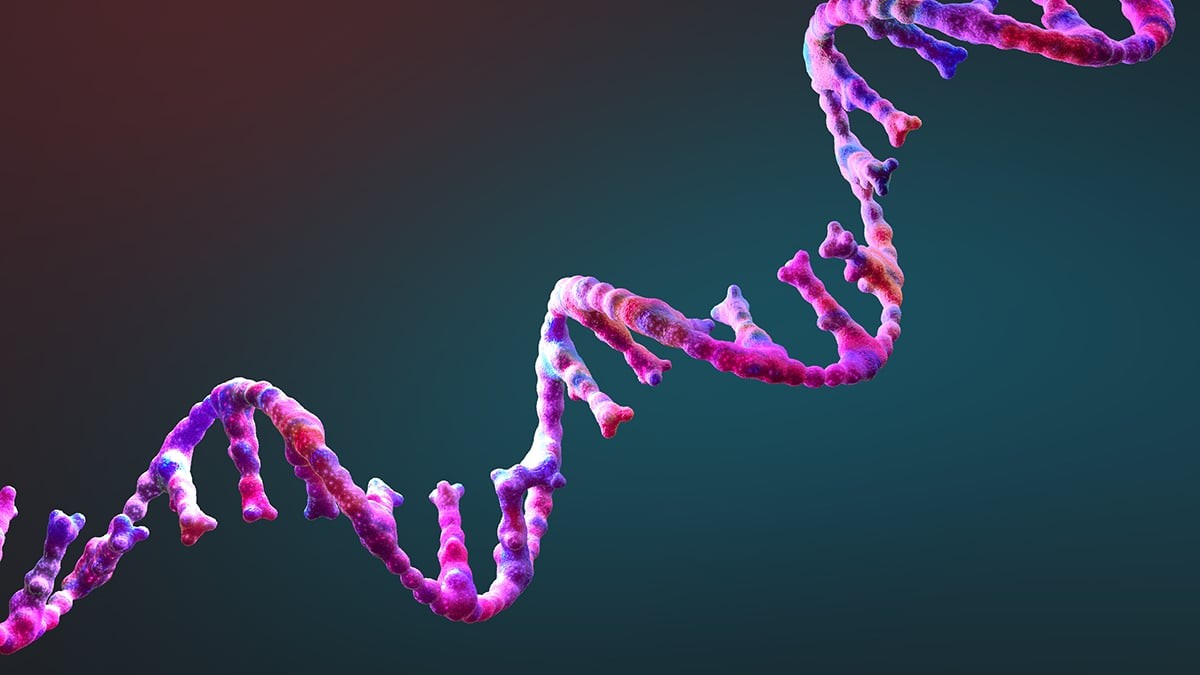
QT45 is a polymerase ribozyme —a type of RNA that functions like an enzyme. In modern biology, enzymes (which are typically proteins) act as catalysts to speed up chemical reactions. QT45, however, performs this role using only RNA.
How it works
While QT45 does not yet achieve a seamless, continuous cycle of self-replication, it has mastered the two most critical components of the process:
1. Template Copying: It can create a “mirror image” (complementary strand) of itself.
2. Synthesis: It can use that mirror image as a template to build a new version of the original molecule.
By proving that these two distinct steps can be performed by a single, small molecule, researchers have bridged a massive gap in our understanding of how biological “instruction manuals” could have written themselves.
From Random Chaos to Functional Life
To find QT45, scientists didn’t build it from the top down; they searched for it from the bottom up. They created specialized, freezing-cold liquid environments containing one trillion random, short RNA sequences.
Through iterative rounds of testing, they identified the specific combination that possessed the ability to stitch together RNA building blocks. Once optimized, QT45 demonstrated a remarkable capability: over a 72-day period, it could synthesize itself and even create other RNA templates of increasing complexity.
“By identifying a small RNA, it makes the whole idea that self-replicating RNA emerged spontaneously much more likely,” says biochemist Edoardo Gianni.
Why This Matters for the Universe
This discovery does more than just fill a gap in Earth’s biological history; it shifts our perspective on astrobiology.
If life can emerge from relatively simple, small molecules through spontaneous chemical processes, the statistical likelihood of life appearing elsewhere in the universe increases significantly. By understanding the exact “recipe” that allowed RNA to jumpstart life on Earth, scientists will be better equipped to identify similar chemical signatures on distant moons and planets.
The Road Ahead
The discovery is not the final chapter. Currently, the process is slow and produces a relatively small amount of material. The next phase of research will focus on:
– Increasing the speed of the replication process.
– Improving the yield of the synthesized RNA.
– Closing the loop to achieve a fully autonomous, continuous cycle of replication without human intervention.
Conclusion: The discovery of QT45 provides a much-needed proof of concept for the RNA World hypothesis, demonstrating that the fundamental building blocks of life could have emerged from simple, small-scale chemical reactions.