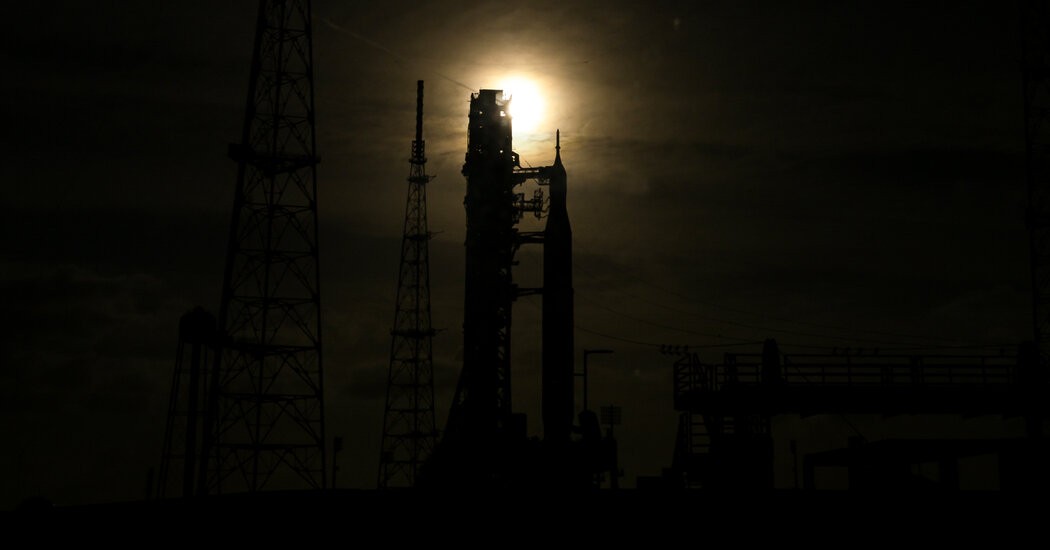
The recent launch of Artemis II, NASA’s mission to return humans to the moon, occurred against a backdrop of stark domestic and global turmoil – a situation eerily reminiscent of the original Apollo missions in 1968. While the spectacle of space exploration briefly united the nation in awe, it was overshadowed by the persistent undercurrent of political and social fracture.
Echoes of 1968
In 1968, as the Apollo 8 mission concluded, the United States was wrestling with war, civil unrest, and deep racial divisions. The mission’s success offered a rare moment of national pride, even inspiring one citizen to telegram the astronauts with a simple message: “You saved 1968.” The launch of Artemis II presented a similar opportunity for unity, but the effect proved fleeting.
A Lost Opportunity?
The Artemis II launch dominated headlines for just under two and a half hours before political discourse reasserted itself. President Trump leveraged the event not to foster national unity, but to steer the conversation back to divisive issues, including ongoing wars and economic instability. Instead of capitalizing on the shared experience of space exploration, he chose to highlight the forces driving Americans apart, stating his intention to “tell everybody how great I am.”
The Pattern Persists
This sequence of events underscores a broader trend: the United States remains deeply polarized, even in moments that could potentially transcend partisan divides. The nation is capable of extraordinary feats – like returning to the moon – but appears increasingly incapable of translating those achievements into lasting collective purpose. The contrast between technological triumph and societal fragmentation reveals a fundamental challenge: can a nation still unite around shared ambition when it struggles to agree on basic truths?
The launch of Artemis II, like its predecessors, demonstrated what the U.S. can achieve. But the speed with which the moment was overtaken by political conflict suggests that the deeper problems may prove more intractable than any engineering challenge.