


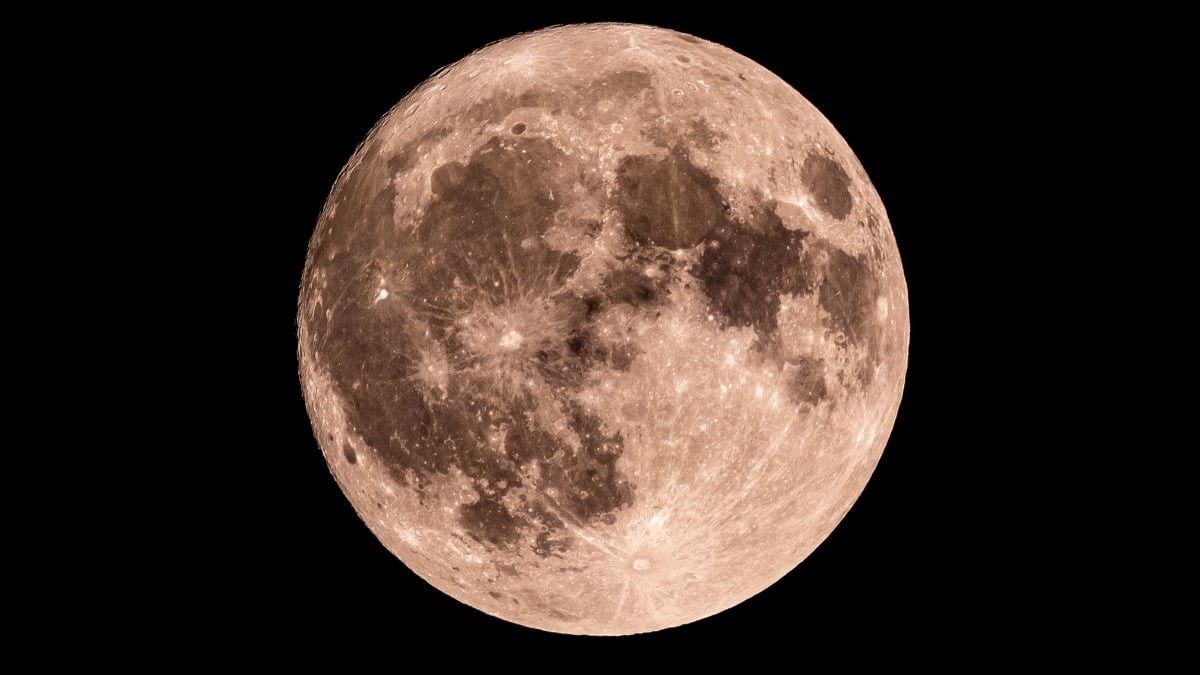
Tonight marks the New Moon phase, meaning the Moon is currently invisible in the night sky. This occurs when the Moon passes between the Earth and the Sun, presenting its dark side to our view. Interestingly, this New Moon coincides with an annular solar eclipse, a rare event where the Moon appears smaller than the Sun, creating a “ring of fire” effect around the solar disk.
The eclipse will be fully visible from Antarctica, with partial views possible in parts of South Africa. This combination—a dark New Moon night alongside an eclipse—highlights the precise orbital mechanics governing our celestial neighbors.
Understanding Moon Phases
The Moon’s apparent shape changes over roughly 29.5 days as it orbits Earth. This cycle is divided into eight distinct phases, dictated by the amount of sunlight reflecting off the lunar surface. Despite always seeing the same side of the Moon, its illumination varies as it moves around our planet.
Here’s a breakdown of each phase:
- New Moon: Completely dark; invisible to the naked eye.
- Waxing Crescent: A sliver of light appears on the right side (in the Northern Hemisphere). The “waxing” term means the illuminated portion is growing.
- First Quarter: Half of the Moon is lit on the right side.
- Waxing Gibbous: More than half is lit, but not fully illuminated.
- Full Moon: The entire face of the Moon is bright and visible.
- Waning Gibbous: Light begins to fade from the right side. “Waning” indicates the illuminated portion is shrinking.
- Third Quarter (Last Quarter): Half of the Moon is lit on the left side.
- Waning Crescent: A thin sliver remains on the left side before becoming dark again.
Looking Ahead
The next Full Moon is scheduled for March 3, following a previous Full Moon on February 1. Tracking these phases isn’t just about observation; it’s fundamental to understanding tides, lunar calendars, and even some biological rhythms in nature.
The Moon’s cycle is a constant reminder of the predictable, yet beautiful, movements of the cosmos. Its phases offer a simple, yet elegant, illustration of orbital mechanics at work.


