


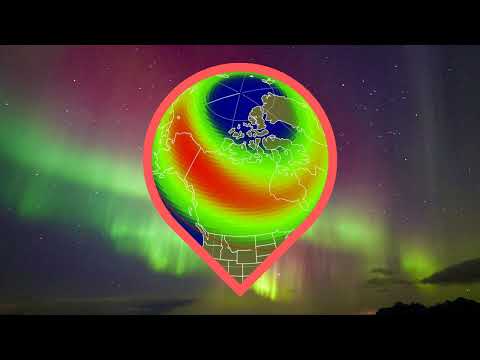
A spectacular display of the aurora borealis, commonly known as the northern lights, is possible tonight (Nov. 7) across a wide swathe of the northern United States, thanks to an ongoing geomagnetic storm. This remarkable phenomenon is being driven by a series of solar eruptions and fast solar wind impacting Earth, with strong (G3) geomagnetic conditions expected to last through tonight.
What’s Happening? Understanding the Solar Events
The current aurora activity is the result of several solar events. On Nov. 2, an M7.4 solar flare erupted from sunspot region AR4274, a large and magnetically complex region now rotating into a better view of Earth. Shortly thereafter, a coronal mass ejection (CME) – a massive release of plasma and magnetic field from the Sun – was launched. This CME reached Earth early on Nov. 7, significantly increasing both the speed of the solar wind and the strength of the magnetic field. NOAA’s Space Weather Prediction Center has issued a G3-G2 storm watch for Nov. 7 and Nov. 8, anticipating continued impacts from multiple CMEs and a fast solar wind stream originating from a coronal hole.
Geomagnetic storms occur when charged particles from the sun collide with Earth’s magnetic field. These collisions can trigger brilliant displays of light in the sky – the aurora borealis.
Where to Look: 10 US States in the Aurora Zone
Based on the latest forecasts from NOAA, the following 10 US states have a chance of seeing the northern lights:
- Alaska
- Montana
- North Dakota
- Minnesota
- Maine
- Washington
- Idaho
- South Dakota
- Wisconsin
- Michigan
However, it’s important to remember that aurora viewing is inherently unpredictable. While being within the “aurora view line” is a good start, clear, cloud-free skies, minimal light pollution, and a clear view to the north are essential.
Tips for Spotting the Lights
If you’re in one of the listed states, here’s how to increase your chances of witnessing the aurora:
- Find a dark location: Head away from city lights and other sources of light pollution.
- Orient yourself: Locate a north-facing view with a clear horizon.
- Look up: The best time to look is between midnight and 2 a.m. local time, but monitor the skies as soon as it darkens.
- Be patient: Auroras often appear in waves and may start faint.
Using a space weather app is highly recommended to track aurora forecasts based on your location. Helpful options include “My Aurora Forecast & Alerts” (iOS and Android) and “Space Weather Live” (iOS and Android).
What’s Next? Ongoing Solar Activity
Region AR4274 remains highly active and continues to rotate towards Earth. Following the initial M7.4 flare and CME, an M8.6 flare also erupted from this region on Nov. 5, and analysis of its associated CME is ongoing. Fast solar wind from a nearby coronal hole is adding to the disturbance. NOAA and the U.K. Met Office anticipate elevated activity through Nov. 8–9, with the strongest conditions expected on Nov. 7, followed by moderate storming on Nov. 8 and gradually easing conditions on Nov. 9. The U.K. Met Office cautions that elevated geomagnetic activity may continue into the weekend and even into Nov. 9, depending on future solar events.
The chance to see the northern lights is a reminder of the Sun’s powerful influence on our planet. Keep an eye on the sky, especially if you’re an aurora enthusiast – the show might not be over yet!


