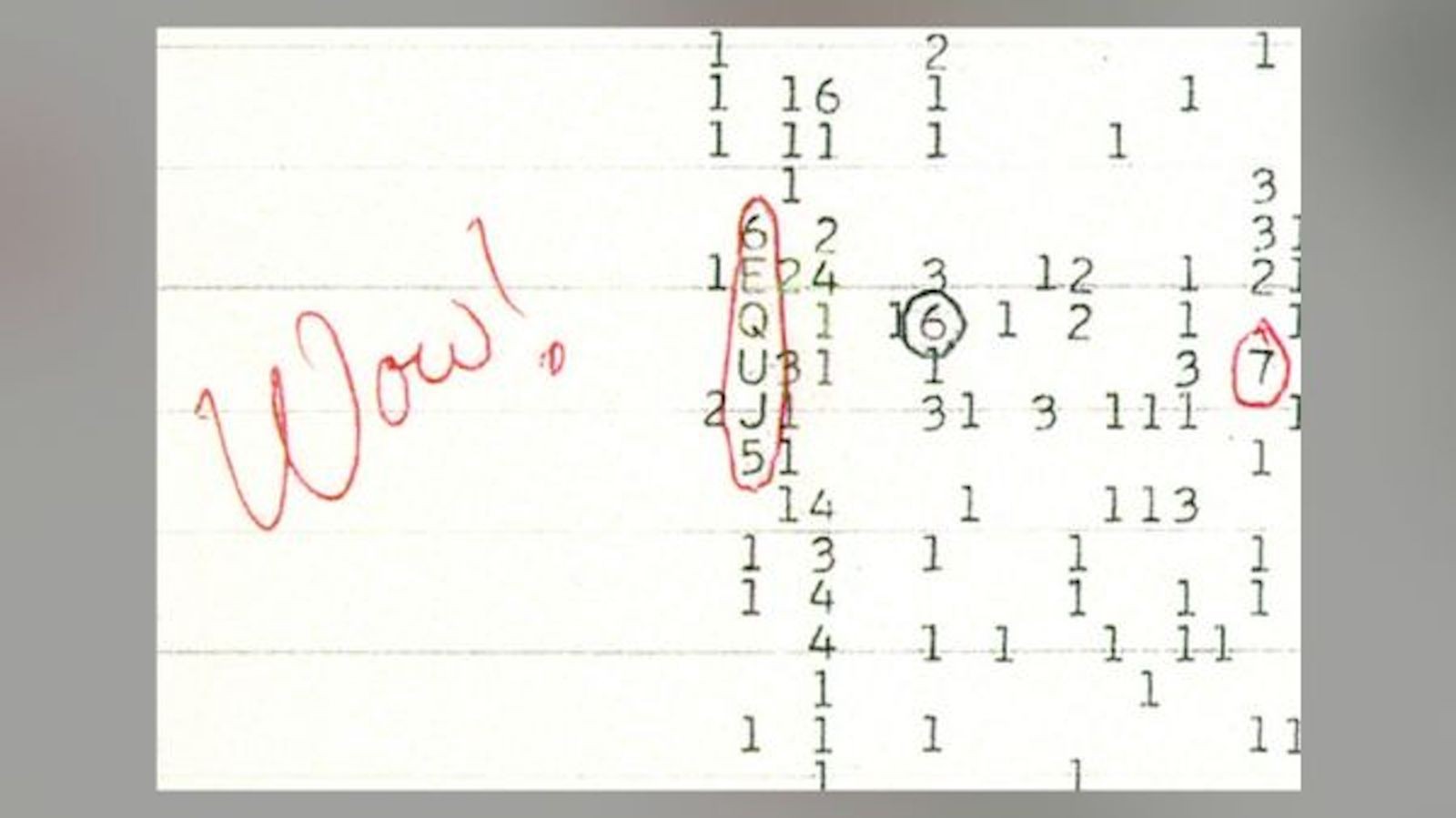
The pursuit of extraterrestrial life is often imagined as a futuristic endeavor, but its roots lie in the practical challenges of 20th-century radio astronomy. What began as a frustration with unwanted signals in scientific observations evolved into a dedicated, state-sponsored search for intelligence beyond Earth – a story intertwined with the Cold War and the very foundations of modern astrophysics.
The Accidental Birth of SETI
As space exploration accelerated after World War II, radio waves became indispensable. Scientists used them to communicate with spacecraft, while radio telescopes scanned the cosmos. A problem soon emerged: artificial radio interference from human telecommunications muddied observations, damaging equipment and introducing errors. This nuisance sparked an idea: if we broadcast signals into space, perhaps others do too.
This concept marked a fundamental shift in astronomy. Traditionally focused on natural phenomena, the field now entertained the possibility of detecting artificial signals – a technologically produced phenomenon worthy of scientific study. This new direction would become known as the Search for Extraterrestrial Intelligence (SETI).
The Soviet Lead: Pioneering Radio Astronomy
In the 1960s, only the U.S. and the USSR possessed the technological capacity for a serious SETI effort. As the dominant space powers, they were uniquely affected by radio interference. Soviet astronomers, led by Iosif Shklovsky, played a crucial role in this early phase. Shklovsky pioneered the detection of hydrogen gas using radio waves, a breakthrough that allowed astronomers to map the distribution of this element across galaxies.
The detection of hydrogen was pivotal. Before this, most hydrogen was invisible to optical telescopes. Radio astronomy opened a new window, revealing phenomena previously hidden from view. This golden age of radio astronomy also unearthed pulsars and quasars, fundamental discoveries that reshaped astrophysics. Shklovsky then turned his attention to the possibility of intentional extraterrestrial signals. His 1960 paper on the topic and the subsequent 1962 book, “Universe, Life, Intelligence”, ignited the Soviet SETI initiative.
From Symbolic Messages to Organized Search
Early Soviet SETI efforts were largely symbolic. In 1962, the USSR transmitted radio signals toward Venus containing the words “Lenin,” “USSR,” and “mir” (peace) in Morse code. This wasn’t a genuine attempt at communication; it was a demonstration of technological prowess.
To move beyond such gestures, Soviet scientists needed formal organization. In 1964, they held a secretive conference at the Byurakan Astrophysical Observatory in Armenia, far from Moscow’s scrutiny. This meeting birthed a dedicated SETI group, transforming the search into a top-down, state-led activity. The Soviet government monitored discussions closely due to the overlap between SETI and military satellite communications.
The “Noah’s Ark” Moment: Cold War Collaboration
International cooperation was hampered by Cold War tensions. Yet, in 1971, a symposium at Byurakan brought together 50 scientists from the U.S., USSR, and other nations. This meeting, dubbed “Noah’s Ark” due to the equal representation from East and West, established an official international SETI group. The fact that this collaboration occurred at the foot of Mount Ararat, a site associated with biblical origins, added a layer of irony to the event.
The irony is that it took the Cold War to drive a diplomatic achievement that allowed scientists to continue working on SETI. The group still exists today, connecting researchers worldwide.
A Lasting Legacy
SETI began as a response to radio interference and grew into a dedicated scientific pursuit. Ironically, the very frequencies that once threatened observations now serve as a potential conduit for interstellar communication. By the 1970s, international agreements on radio frequency allocation had minimized interference, but SETI continued, driven by the possibility of discovering life beyond Earth. The program’s legacy extends beyond the search itself, having contributed to new astrophysical discoveries and fostering unprecedented Cold War cooperation.
Despite decades of searching, no confirmed extraterrestrial signals have been detected. However, the pursuit continues, fueled by the enduring question of whether humanity is alone in the universe.