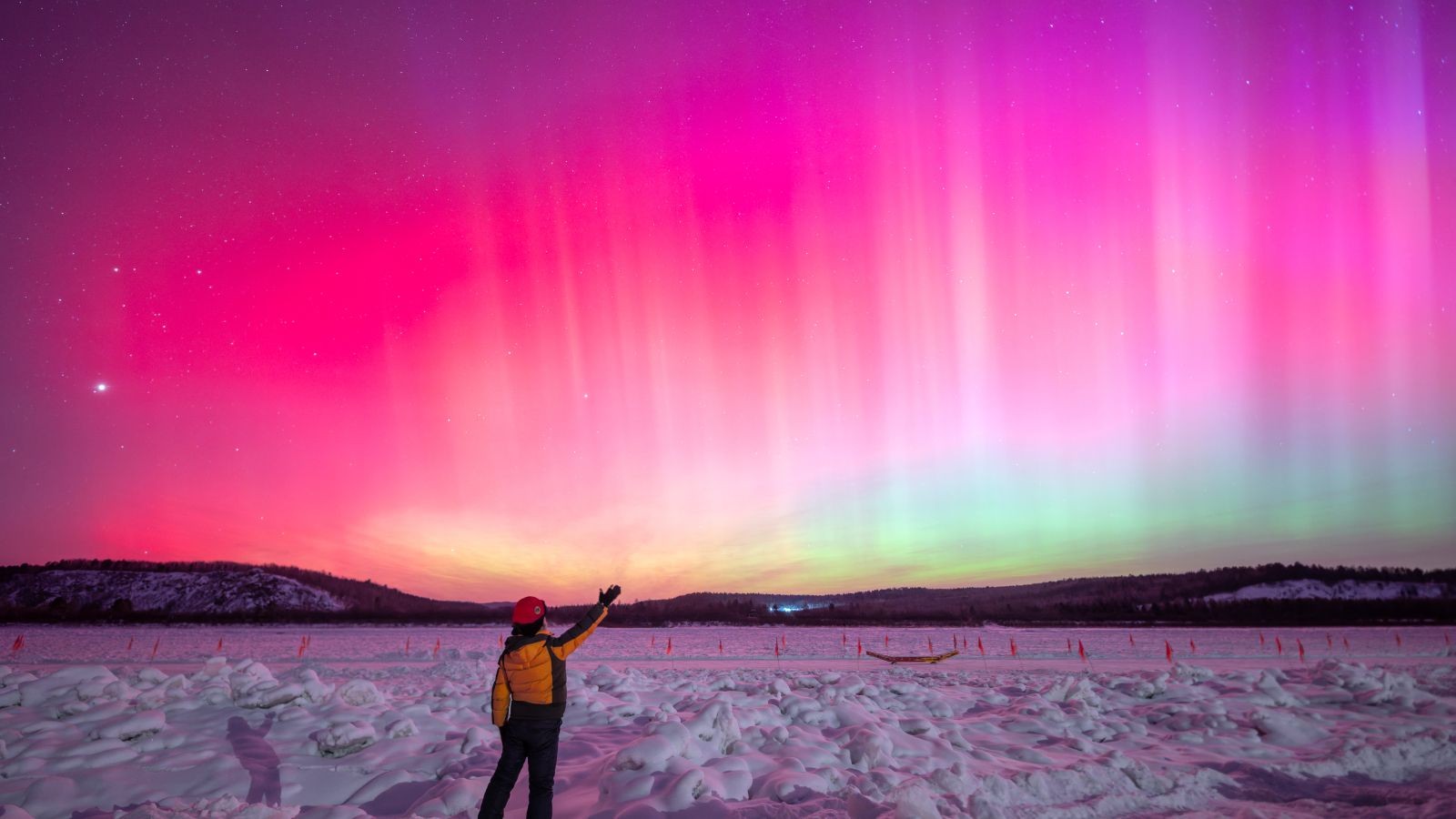
A significant geomagnetic storm, the strongest in over two decades in terms of solar radiation levels, struck Earth this week, creating spectacular aurora displays as far south as Southern California. The event, triggered by a powerful solar flare and subsequent coronal mass ejection (CME), briefly disrupted Earth’s magnetic field and brought the Northern Lights to unusually low latitudes. While not the most intense geomagnetic storm on record – the May 2024 event was stronger overall – this outburst marks a 23-year high in solar radiation intensity.
What Happened?
The storm began Monday, January 19th, when a fast-moving CME slammed into Earth’s magnetosphere. This temporary distortion allowed charged particles from the sun to penetrate deeper into the atmosphere, resulting in widespread auroras, particularly across Europe. The storm peaked at G4 (“severe”) status on the NOAA Space Weather Prediction Center (SWPC) scale, meaning it had the potential to cause temporary radio blackouts and impact orbiting spacecraft.
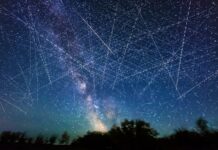
Reports from skywatchers confirm that auroras were visible in parts of the U.K., France, Germany, and even as far south as Alabama, Georgia, New Mexico, and California. These displays occurred overnight when conditions were optimal for visibility, as the sun had already set in many regions.
Why It Matters
Geomagnetic storms are a natural consequence of solar activity. The sun goes through an 11-year cycle of increasing and decreasing activity, with periods of high flare frequency. The current cycle (Solar Cycle 25) has been surprisingly strong, hinting at potentially more frequent and intense events in the coming years.
This storm highlights our increasing reliance on space-based infrastructure. From satellites providing GPS to power grids vulnerable to geomagnetic disturbances, modern technology is more susceptible to solar events than ever before. While this particular storm did not cause widespread damage, stronger events could disrupt communication systems, power supplies, and even aviation routes.
Context: Not the Biggest, But Still Significant
The May 2024 “Mother’s Day storm” remains the most intense geomagnetic storm in decades, reaching G5 (“extreme”) status for the first time since 2003’s “Halloween storms.” That event was caused by multiple CMEs from a highly active sunspot, saturating the atmosphere with radiation for three days.
The latest storm, while less potent overall, stands out due to its record-breaking solar radiation levels. The distinction between “geomagnetic storm” (what Earth experiences) and “solar radiation storm” (the initial outburst in space) is crucial: factors like the orientation of incoming radiation can determine how strongly Earth’s magnetic field responds.
What’s Next?
Geomagnetic conditions are settling, but further auroras remain possible tonight, though the storm is not expected to reintensify to G4 levels. Experts continue to monitor solar activity closely, as the sun’s unpredictable behavior poses a growing risk to our increasingly interconnected world.
The latest event underscores the need for continued investment in space weather forecasting and infrastructure resilience. As our reliance on technology grows, so too does our vulnerability to the sun’s powerful outbursts.