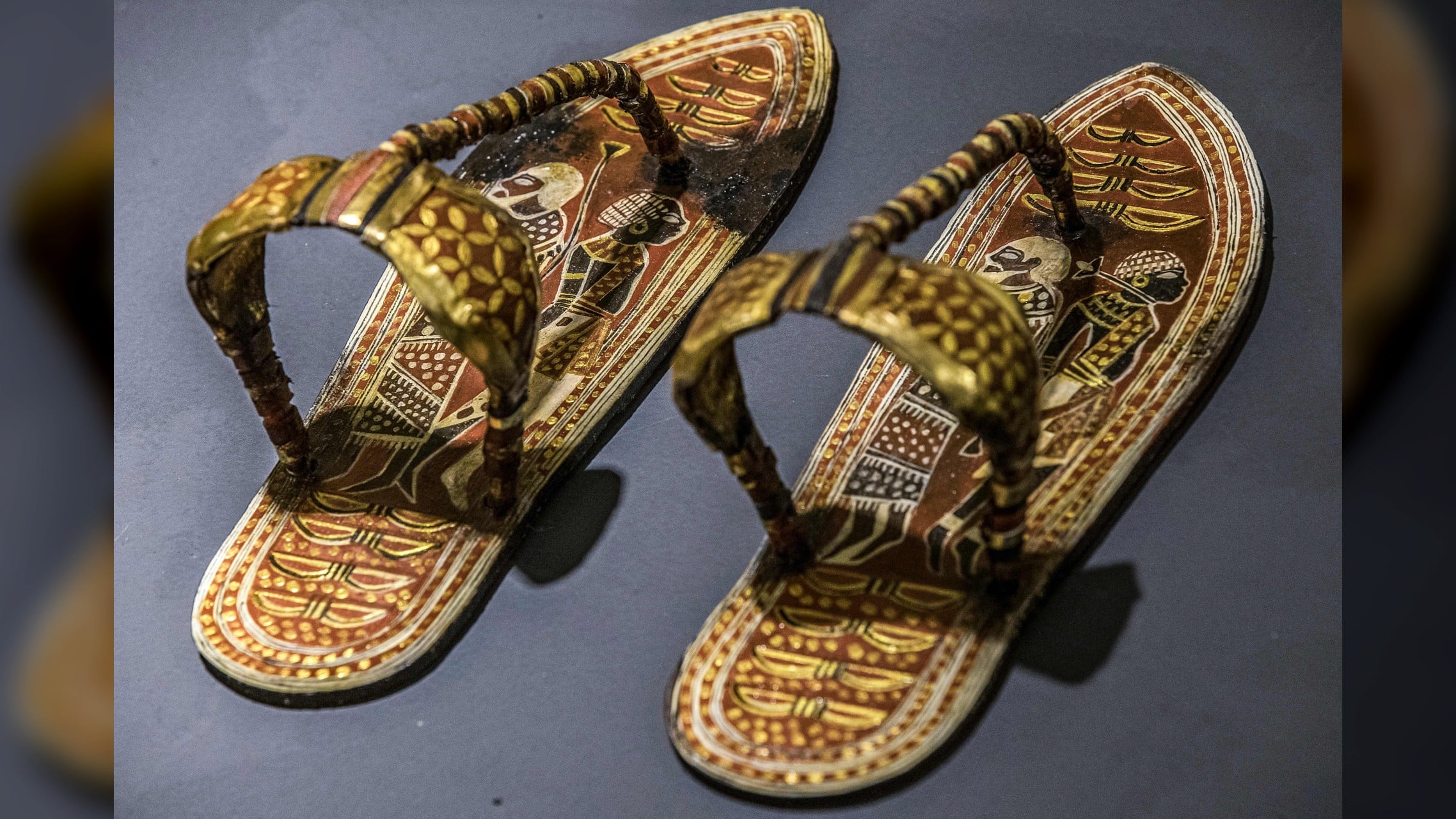
Ancient Egyptian royalty did not walk lightly over their enemies, and the discovery of King Tutankhamun’s sandals proves it. Unearthed in 1922 by Howard Carter’s team, these 3,300-year-old artifacts are more than just footwear: they are symbols of dominance. The sandals feature graphic depictions of bound captives, crushed under the king’s feet.
The Symbolism of Conquest
The sandals, roughly a U.S. men’s size 11.5, were crafted from wood, covered in bark, leather, and gold foil. The most striking feature is the imagery on the insoles: figures tied with lotus and papyrus plants, representing defeated foes. Eight bow weapons adorn each sandal – four near the toes, four at the heel – forming the “Nine Bows”, a collective symbol for all enemies of Egypt.
The sandals were designed to literally trample the king’s enemies underfoot. This was not merely decorative; it was a clear assertion of Tutankhamun’s absolute power.
The placement of these images ensured that with every step, the pharaoh symbolically crushed his rivals. The sandals are on display in Cairo’s Egyptian Museum, where an accompanying card explains that the captives represent Tutankhamun’s authority, with the Nine Bows “reifying the trampling of Egypt’s enemies by the monarch.”
Questions About Use and Afterlife
The sandals were found beneath a basket in the tomb, though their original placement remains uncertain due to past looting. Whether King Tut wore these sandals in life or if they were made specifically for his afterlife journey is unknown. His mummy was discovered with gleaming gold sandals and toe covers, but it is not clear if they were from the same set.
The existence of such detailed, symbolic footwear raises questions about the extent to which ancient Egyptian rulers used imagery to reinforce their authority, even in death. The sandals are a chilling reminder that power in ancient Egypt was not just held, but displayed with brutal efficiency.