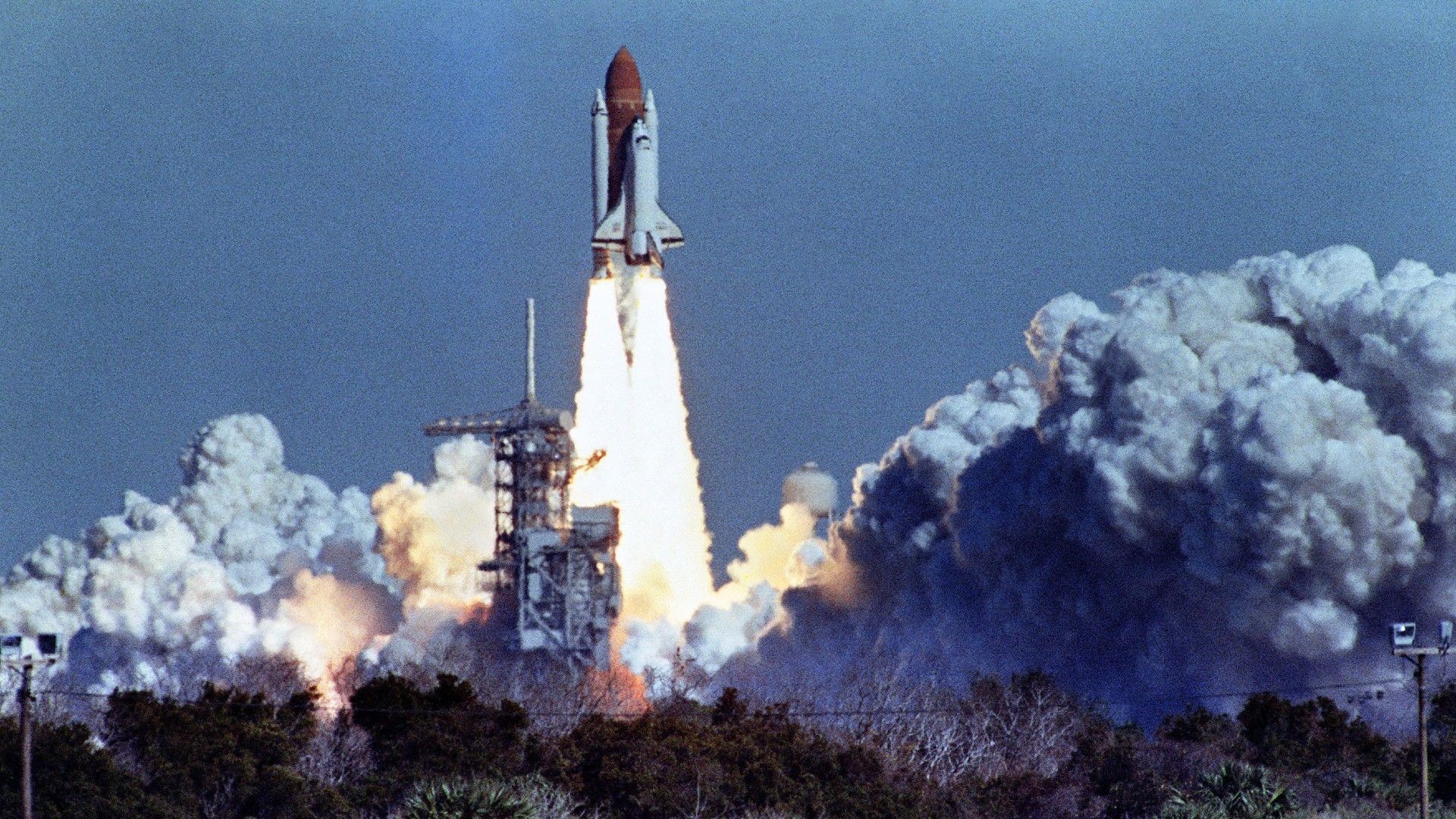
Forty years after the catastrophic loss of the Space Shuttle Challenger and its crew, human spaceflight remains a high-stakes endeavor, far from the routine some once envisioned. The tragedy on January 28, 1986 – when Challenger disintegrated 73 seconds after liftoff – exposed the brutal realities of pushing technological boundaries and the critical need for continuous vigilance. The event fundamentally changed how NASA and the space industry approach safety, but it did not eliminate risk.
A Legacy of Loss
The Challenger disaster, claiming the lives of seven astronauts, including teacher Christa McAuliffe, was not an isolated incident. Seventeen years later, the Space Shuttle Columbia broke apart during reentry on February 1, 2003, killing another seven. These two tragedies – alongside earlier disasters like the Apollo 1 launch-pad fire (1967), the Soyuz 1 crash (1967), and the depressurization failure of Soyuz 11 (1971) – underscore a harsh truth: spaceflight is intrinsically dangerous.
As historian Ron Doel, a witness to the Challenger launch, recalls, the shock was visceral. He watched from NASA’s Jet Propulsion Laboratory as the tragedy unfolded, juxtaposed against the excitement of Voyager 2’s flyby of Uranus. The incident forced a reckoning with complacency and technical shortcomings, culminating in the Rogers Commission report, which bluntly stated that the decision to launch Challenger was “flawed.”
Close Calls and Modern Challenges
Even in the era of commercial spaceflight, accidents persist. European astronaut Luca Parmitano experienced a water leak in his spacesuit during a 2013 spacewalk, while debris strikes have repeatedly damaged spacecraft, including Russia’s Soyuz MS-22 and China’s Shenzhou 20. Despite these close calls, astronauts have continued to land safely.
Today, launch cadence is drastically higher. Rockets launch every few days, increasing the pressure on safety protocols. While NASA emphasizes rigorous testing and “lessons learned,” the complexity of modern systems means some failures are inevitable. As Western University physicist Pauline Barmby puts it, “There’s an enormous amount of testing, but there are things you cannot test… you will only see what happens once you’re actually in space.”
The Rise of Private Spaceflight and New Vulnerabilities
The surge in private space companies – SpaceX, Blue Origin, Boeing, and Virgin Galactic – has amplified both opportunity and risk. Blue Origin has experienced two vehicle failures (uncrewed), Virgin Galactic suffered a pilot fatality in 2014, and even SpaceX has seen occasional launch or landing hiccups. The heavy reliance on a single company, like SpaceX, raises concerns about systemic vulnerability.
Boeing’s Starliner capsule faced significant issues during its inaugural crewed test mission in 2024, forcing NASA to bring the astronauts back via a SpaceX Crew Dragon capsule after an extended stay on the ISS. Starliner’s two previous uncrewed test flights also encountered problems.
A Culture of Caution, but Inevitable Uncertainty
The industry operates under intense scrutiny, with NASA officials emphasizing meticulous decision-making for crewed missions. As Jeff Radigan, NASA’s lead flight director for Artemis 2, stated in a recent press conference, “We may run into an issue, and the last thing we want to do is make a decision too early and then lose an opportunity.”
Retired astronaut Chris Hadfield’s advice encapsulates the mindset: “Your first job is to not make things worse.” The reality is that spaceflight demands calculated risk. History may not repeat, but it often rhymes. Systems evolve, but fundamental dangers remain.
Despite technological advances, human spaceflight will always carry inherent risks. The lessons of Challenger, Columbia, and countless other incidents remind us that progress comes at a price, and vigilance is the only constant in the pursuit of the stars.