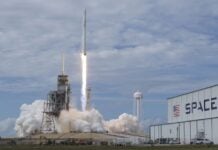
SpaceX successfully launched 25 Starlink broadband internet satellites into orbit on Sunday, March 8, continuing the rapid expansion of its global network. The launch took place at 7:00 a.m. EDT (11:00 GMT / 4:00 a.m. PDT) from Vandenberg Space Force Base in California, using a Falcon 9 rocket.
Successful Deployment and Booster Recovery
The Falcon 9’s first stage, Booster 1097, completed its seventh spaceflight with a precision landing on the “Of Course I Still Love You” droneship stationed in the Pacific Ocean. This reusable booster has now supported missions including Sentinel-6B, the Twilight mission, and four previous Starlink deployments.
Growing Starlink Constellation
With this launch, the total number of active Starlink satellites in low Earth orbit has reached 9,915, according to satellite tracker Jonathan McDowell. This marks SpaceX’s 29th mission this year and the 639th overall in the company’s history.
Implications for Global Connectivity
The continuous deployment of Starlink satellites is rapidly increasing global internet access, particularly in underserved and remote areas. SpaceX aims to provide high-speed, low-latency internet services worldwide, challenging traditional satellite and terrestrial broadband providers. This expansion has significant implications for communication infrastructure, digital inclusion, and future space-based services.
The relentless pace of Starlink launches underscores SpaceX’s commitment to its ambitious vision for space-based internet connectivity, with no signs of slowing down in the near future.