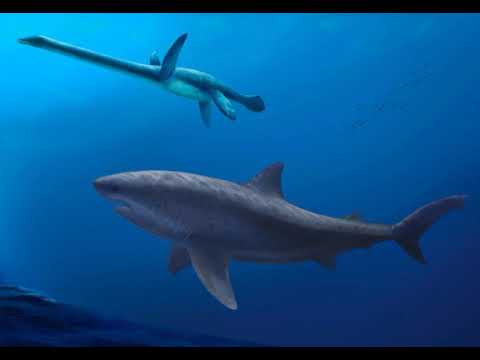
Fossils found in northern Australia reveal that the ancestors of modern mackerel sharks – including great whites and makos – were already giants during the age of dinosaurs, roughly 15 million years earlier than previously thought. This discovery challenges existing timelines of shark evolution and highlights Australia’s critical role in understanding prehistoric marine life.
The Rise of Megasharks
Sharks, apex predators for over 400 million years, began diversifying into modern lineages around 135 million years ago. While early forms were relatively small, the new findings demonstrate that some lamniform sharks (the group including modern mackerel sharks) rapidly evolved to massive sizes. The fossils, unearthed near Darwin, consist of enormous vertebrae belonging to a previously unknown species of cardabiodontid – a lineage known for its mega-predatory size.
These ancient sharks rivaled other dominant marine reptiles, such as plesiosaurs and ichthyosaurs, in size and predatory dominance. The recovered vertebrae were over 12 cm in diameter, significantly larger than those of modern great white sharks (around 8 cm). This indicates a body length of 6-8 meters (over 20 feet) and a weight exceeding 3 tons, placing these sharks at the top of their food chain.
Why This Matters: Rewriting Shark Evolution
The discovery is significant because it pushes back the timeline for the evolution of mega-body size in lamniform sharks. Previously, scientists believed these giants emerged later in evolutionary history. The Darwin fossils demonstrate that the capacity for extreme size was an ancient trait within this shark lineage, allowing them to exploit top-predator niches from an early stage.
The Tethys Ocean, a vast body of water that once connected Gondwana and Laurasia, was teeming with marine life during this period. The discovery shows that these sharks were not confined to deep waters but thrived in shallow coastal environments. This suggests a complex ancient food web where sharks actively competed with other marine reptiles for dominance.
Australia’s Paleontological Significance
“This discovery not only rewrites the timeline of shark evolution but also reinforces Australia’s global significance in paleontological research,” according to Dr. Mikael Siversson, a researcher at the Western Australian Museum. The site near Darwin continues to yield new insights into prehistoric life, proving that the region holds a wealth of undiscovered fossils.
The research, published in Communications Biology, underscores the importance of ongoing paleontological investigations. Each new find helps refine our understanding of ancient ecosystems and the creatures that inhabited them.
The discovery of these ancient megasharks confirms that the predatory legacy of modern sharks dates back much further than previously understood, establishing their dominance as apex predators from the age of dinosaurs onward.