A recent study has confirmed that two objects from the famed Treasure of Villena—a collection of Bronze Age gold artifacts discovered in Spain—are crafted from iron originating not from Earth, but from meteorites. This discovery suggests that metalworking techniques in Iberia over 3,000 years ago were more sophisticated than previously believed, and highlights the importance of extraterrestrial materials in early human technology.
The Treasure of Villena: A Historical Context
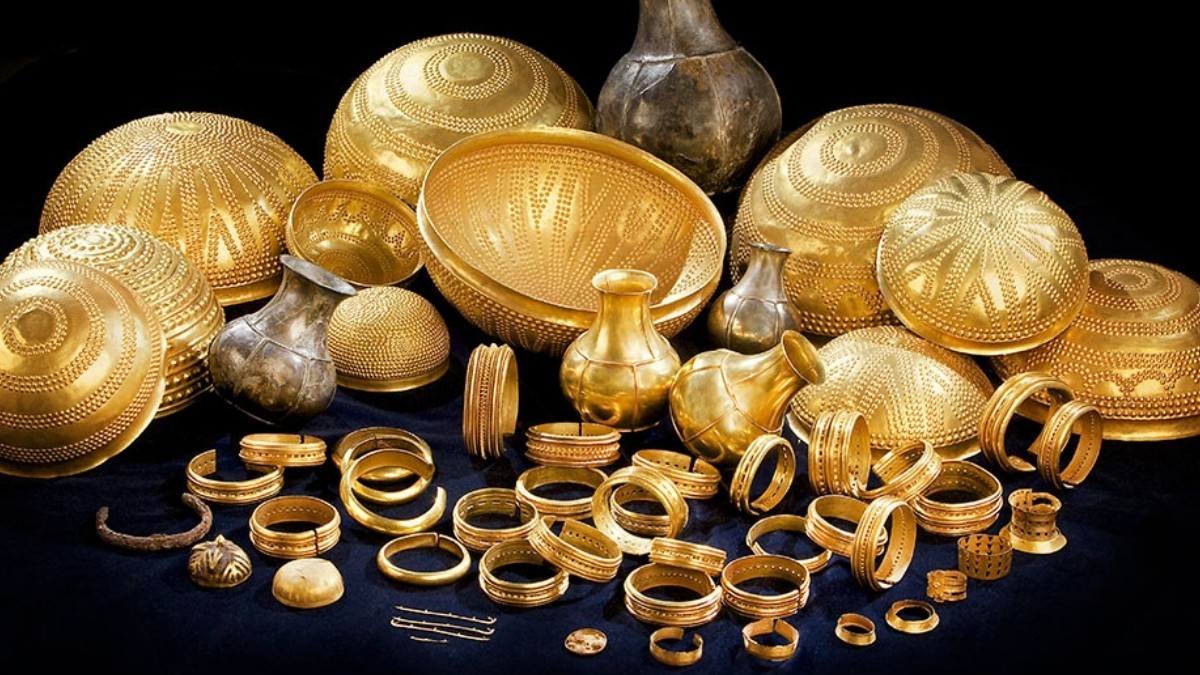
The Treasure of Villena, unearthed in 1963 in Alicante, Spain, is considered one of the most significant examples of Bronze Age goldsmithing in Europe. Comprising 66 gold objects, the collection has been a subject of ongoing research due to the puzzling presence of two seemingly iron-based artifacts. These objects—a corroded bracelet and a hollow hemisphere—did not fit neatly into the established timeline of Iberian metallurgy.
The Iron Age, as it pertains to the Iberian Peninsula, began around 850 BCE with the widespread smelting of terrestrial iron. The rest of the Treasure, however, had been dated to between 1500 and 1200 BCE, creating a historical anomaly. Were these iron objects later additions, or did Iberian craftspeople have access to iron centuries before its widespread adoption?
Unveiling the Extraterrestrial Origin
The answer, as revealed in a 2024 study, lies in the unique composition of meteoritic iron. Unlike iron ore extracted from Earth’s crust, meteorites contain significantly higher levels of nickel. Researchers, led by Salvador Rovira-Llorens, obtained permission to sample the artifacts and subjected them to mass spectrometry. Despite severe corrosion, the analysis strongly indicated that both the bracelet and hemisphere were forged from meteoritic iron.
This finding confirms that these objects were likely created alongside the rest of the Treasure, dating back to 1400–1200 BCE. The use of meteoritic iron wasn’t uncommon in the Bronze Age; notable examples include the iron dagger found in Tutankhamun’s tomb. Highly prized for its rarity and unique properties, meteoritic iron was reserved for special items by elites.
Implications and Future Research
The study provides compelling evidence that Iberian craftspeople were capable of working with meteoritic iron centuries before the advent of terrestrial iron smelting. This challenges conventional understandings of early metalworking technology in the region. While the current analysis isn’t entirely conclusive due to the corrosion, researchers suggest that non-invasive techniques could provide more detailed data to solidify these findings.
The discovery underscores the ingenuity of Bronze Age artisans and their ability to utilize materials beyond readily available resources. It also raises questions about the trade networks and cultural exchange that may have facilitated access to meteoritic iron in Iberia.
The Treasure of Villena continues to yield new insights into the past, demonstrating that even well-studied archaeological sites can still reveal groundbreaking discoveries.