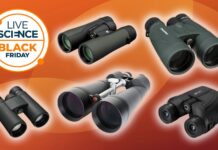
Deciding between a telescope and binoculars can be tricky, especially with Black Friday deals looming. Both tools offer magnified views, but they excel in different areas. Choosing wisely depends on what you want to observe, how often, your environment, and your budget. Jumping in without knowing the differences could leave you with a telescope too bulky for birdwatching or binoculars too weak for detailed stargazing.
Understanding the Core Differences
The primary distinction lies in their design and use. Binoculars are compact, handheld devices used with both eyes, ideal for quick observations of wildlife, birdwatching, or casual stargazing. Telescopes, on the other hand, are long optical tubes mounted on tripods, primarily for detailed astronomical viewing.
While binoculars offer portability and ease of use, telescopes provide superior magnification and light-gathering ability for deep-sky objects. Quality optics come at a cost, but Black Friday sales can significantly reduce prices. This year’s Prime Day offered limited savings, making Black Friday the prime opportunity to secure a deal.
Who Should Choose Binoculars?
Binoculars suit several user groups. Wildlife enthusiasts and birders benefit from their compact size and ease of movement, allowing for discreet observation without cumbersome setup. For hikers, campers, or travelers, binoculars are lightweight and versatile enough for various subjects, including wildlife, nature, and the night sky.
Even casual stargazers can enjoy lunar details and constellations with binoculars, though dedicated astronomy requires higher magnification and larger objective lenses. Larger astronomy binoculars (like the Celestron SkyMaster 15×70) still offer a portable alternative to telescopes, but tripod mounting is necessary.
Who Should Invest in a Telescope?
Telescopes are the tool of choice for serious astronomy enthusiasts. They provide unmatched magnification and clarity for observing planets, galaxies, and nebulae. While setup can be more technical, beginner models are relatively easy to assemble.
Astrophotographers can use telescopes with adapters to capture stunning space photos, while smart telescopes offer an accessible entry point for beginners, though at a higher cost. Families and children can also benefit from smaller telescopes as educational tools, sparking interest in science and astronomy.
Environmental Considerations
Your location matters. Urban dwellers with light pollution may find binoculars or smart telescopes more practical, as telescopes struggle in bright environments. Rural or remote areas provide ideal dark skies for both binoculars and telescopes. For on-the-go use, binoculars remain the clear choice due to their portability. Backyard observers have the flexibility to use either, though light pollution may affect stargazing quality.
What to Expect This Black Friday
Black Friday is the best time to find deals on optics. Last year, the Celestron NexStar 8SE dropped to $1,299, a record low. Smart telescopes like the Unistellar eVscope 2 saw discounts up to $1,000, while high-end binoculars like the Leica Noctivid 10×42 were reduced by $983. Entry-level options, such as the Nikon Prostaff P3 10×42, were available for under $100.
Ultimately, the right choice depends on your specific needs. Binoculars offer versatility and portability, while telescopes deliver superior astronomical viewing. Black Friday provides an excellent opportunity to upgrade your equipment or enter the hobby at a reduced price.