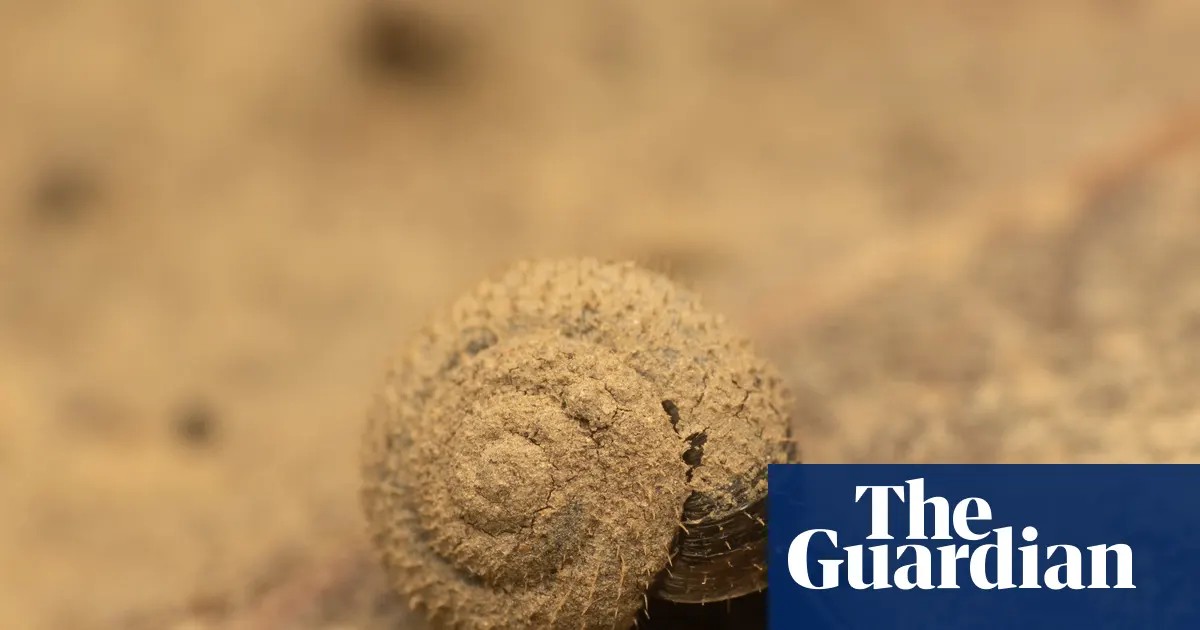
Citizen scientists and wildlife experts have launched an unprecedented search for the critically endangered German hairy snail (Pseudotrichia rubiginosa ) across London’s tidal Thames and its tributaries. This tiny, uniquely hairy mollusk—no larger than a fingernail—is facing extinction in the UK, despite evidence suggesting it has inhabited these lands since at least the Neolithic period, and possibly even earlier, when the Thames was connected to the Rhine.
A Species Lost in Time
The German hairy snail wasn’t officially recorded in Britain until 1982, but fossil records reveal its ancient presence. Its survival is remarkable, given its reliance on specific riverside habitats. The snail’s fine, hair-like projections on its shell help it retain moisture and cling to surfaces, a vital adaptation in the fluctuating tidal zones where it thrives.
Collaborative Conservation Effort
Over 100 volunteers, coordinated by Citizen Zoo and the Zoological Society of London (ZSL), are meticulously surveying known and potential habitats. Confirmed sightings include locations near Kew, Richmond, Isleworth, and Cody Dock. The initiative is backed by the London Wildlife Trust, the Conchological Society, and the Port of London Authority.
Why This Matters
The snail’s decline highlights the fragility of London’s biodiversity. Habitat loss, pollution, and fragmentation are key threats. Conservation efforts now focus on restoring habitats, managing pollution, and potentially translocating snails between suitable sites. The species is a priority in the London Biodiversity Action Plan and is considered endangered across much of Europe, including its namesake Germany.
“These surveys will help us understand how the snail is faring and how we can protect it… securing their future for years to come.” — Joe Pecorelli, ZSL.
The German hairy snail’s survival is more than just a conservation story; it’s a reminder of the hidden natural world thriving in urban environments. Protecting this species also safeguards London’s green spaces for both wildlife and people.
The search continues, urging Londoners to pay closer attention to the riverside’s overlooked corners. The fate of this ancient species rests on our collective awareness and action.