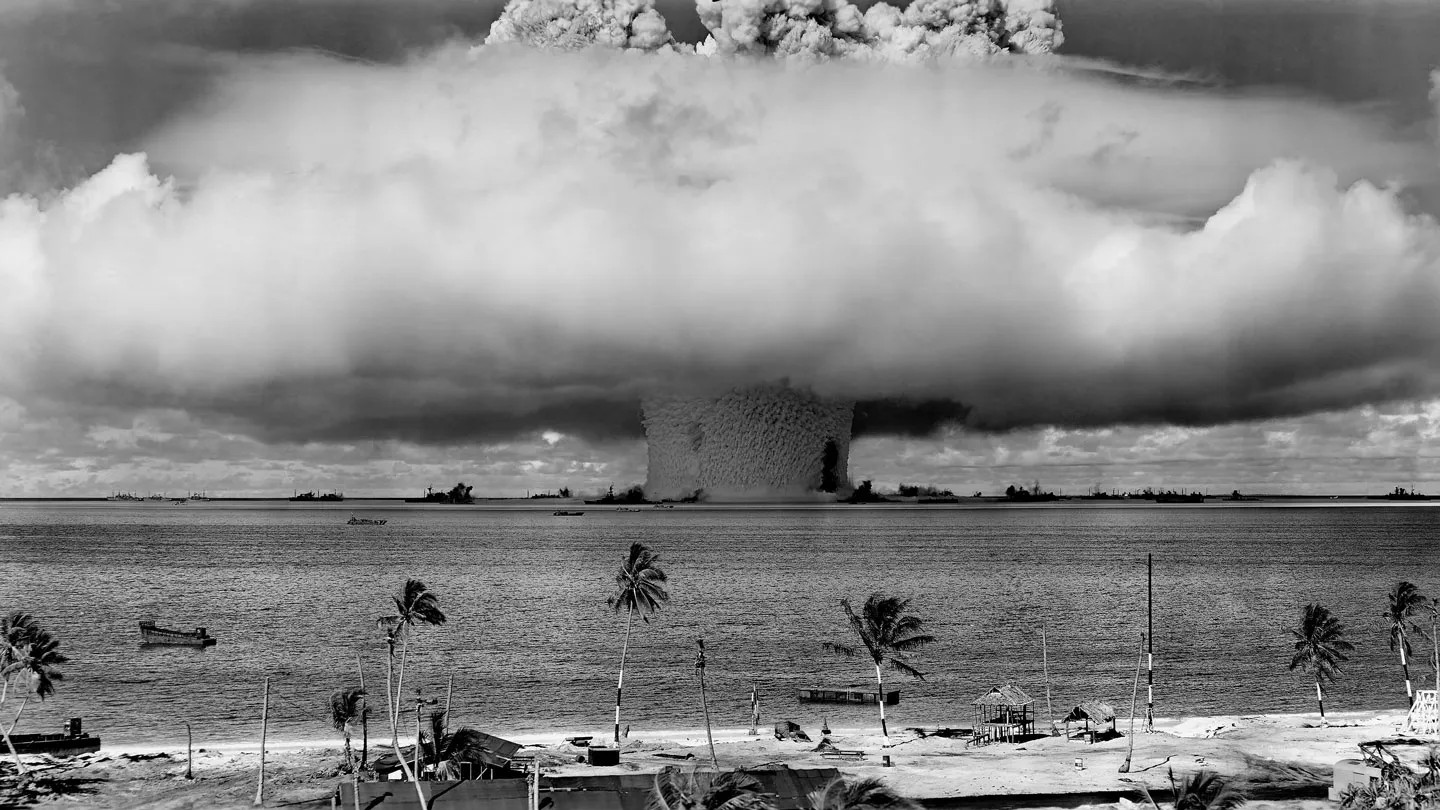
Decades after the first atomic detonations, the fallout from nuclear weapons tests continues to shape environments and human health across the globe. The Anthropocene, a term now widely used by scientists, marks the era where human activity became the dominant force on Earth. Its origins are often traced to the mid-1940s – the dawn of the Nuclear Age – though some argue industrialization in the early 1800s already signaled this shift.
The Science of Radioactive Decay
The core issue stems from radioactive decay, a natural process where unstable elements shed energy and particles over time. This transforms one element into another, eventually reaching stability. For example, Uranium-238 decays through a chain reaction into Radium-222, Radon-222, Polonium-210, and finally, stable Lead-206. The speed of this decay varies drastically; some isotopes vanish within seconds, while others take billions of years to stabilize. The key metric is half-life, the time it takes for half of a radioactive substance to decay.
Historical Context: Testing in the Pacific
The majority of early nuclear tests were conducted in remote locations, notably in the Pacific Ocean. Islands and atolls became ground zero for hundreds of explosions. The fallout spread downwind – carried by prevailing winds to contaminate ecosystems and populations.
The tests weren’t just about explosions: they were also about understanding the atmospheric effects of radiation. This led to widespread contamination of marine life, soil, and water sources.
Health Impacts and Environmental Persistence
Radioactive fallout poses significant health risks. Exposure increases the incidence of cancer, a broad category of diseases characterized by uncontrolled cell growth. The thyroid gland is particularly vulnerable, as it absorbs radioactive iodine, leading to thyroid cancer and other complications.
The legacy doesn’t stop there. Sediment – the accumulation of sand, stones, and debris – acts as a long-term reservoir for radioactive isotopes. These particles can enter the food chain, accumulating in marine organisms and eventually reaching humans.
Modern Relevance and Ongoing Concerns
Although large-scale atmospheric testing has ceased, the radioactive footprint remains. Cleanup efforts are costly and incomplete, with some areas remaining uninhabitable. The long half-life of certain isotopes means contamination will persist for generations.
The impact of nuclear testing serves as a stark reminder of humanity’s capacity to alter planetary systems on a profound and lasting scale.
Today, the issue extends beyond historical fallout. Nuclear accidents, waste disposal, and the potential for future conflicts all contribute to ongoing radioactive contamination. Understanding these processes is crucial for mitigating risks and ensuring long-term environmental and public health.