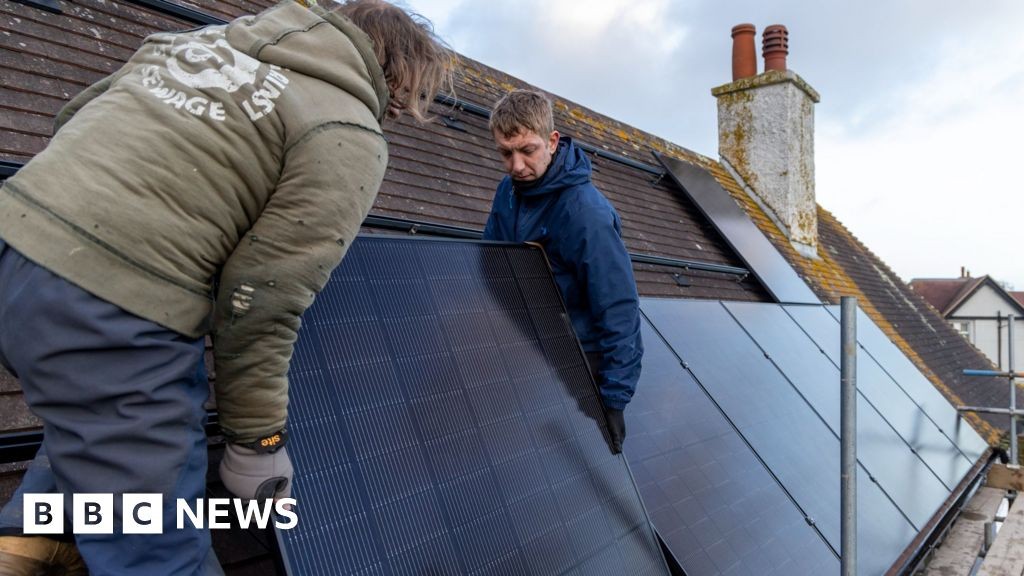
The UK government has unveiled a £15 billion plan, the “Warm Homes Plan,” aimed at lowering energy bills for households by incentivizing the adoption of solar panels, heat pumps, and battery storage systems. The initiative, rolling out over the next five years, seeks to triple the number of homes equipped with solar technology and alleviate fuel poverty for an estimated one million people.
Funding and Eligibility
The plan will distribute funding through a mix of low-interest loans and grants. Households that install all three technologies — solar panels, heat pumps, and batteries — could save up to £500 per year on their energy bills, though some estimates suggest savings could exceed £1,000.
- Households with the means to pay will also be eligible for subsidies, though even with them, heat pump installations may cost around £5,000 on average.
- Additional £600 million will be allocated to low-income households to cover the full cost of solar panel and battery installations.
- Low and zero-interest loans will be available to households regardless of income.
Industry and Political Reactions
The energy and finance sectors have largely welcomed the plan as a long-term commitment that will encourage private investment in green technologies. Dhara Vyas, CEO of Energy UK, emphasized the certainty the £15 billion provides to investors. However, opposition parties and some industry figures have voiced concerns.
- The Conservative Party warns the scheme could burden households with ongoing costs.
- Richard Tice of Reform criticized the plan as a “waste of taxpayers’ cash,” citing reliance on Chinese-made components (68% of UK solar imports came from China in 2024).
- Dale Vince, CEO of Ecotricity, argues that solar panels offer the greatest cost-benefit ratio compared to heat pumps.
Policy Changes and Supply Chain Diversification
The plan includes extensions to the Boiler Upgrade Scheme, offering £7,500 grants for air source heat pumps until 2030. The government also intends to diversify supply chains away from China, though work to “unwind that concentration” is ongoing.
The original plan had prioritized insulation upgrades, but controversy surrounding a previous government-funded scheme led to its downgrading. Officials argue that heat pumps, as an emerging technology, require greater government support to accelerate industry growth.
Renters’ Rights and New Build Standards
The Warm Homes Plan will also affect renters, with landlords required to ensure rental properties meet an Energy Performance Certificate (EPC) rating of C by 2030. The government plans to revise EPC assessment methods later this year.
New builds will be mandated to include low-carbon heating, high energy efficiency, and solar panels by default. These standards have been delayed but are expected to be published in the coming months.
Ultimately, the Warm Homes Plan represents a significant government commitment to decarbonizing home heating and lowering energy costs. Success hinges on effective delivery, supply chain diversification, and managing potential financial burdens for households.