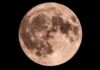
On March 8, 2026, the Moon will be in its Waning Gibbous phase, meaning approximately 70% of its visible surface will be illuminated. This occurs as the Moon moves past its Full Moon stage and begins to shrink in brightness. Understanding lunar phases is more than just a matter of tracking the sky; it connects us to ancient calendars, tidal patterns, and even folklore across cultures.
What to Expect in the Night Sky
For observers in North America, the Waning Gibbous phase offers excellent opportunities for stargazing. Under clear skies, features like the Aristarchus Plateau, Mare Imbrium, and Copernicus Crater will be easily visible to the naked eye. Binoculars reveal finer details such as the Grimaldi Basin, Alphonsus Crater, and Alps Mountains. For those with telescopes, the chance to observe historical landmarks like the Apollo 16 landing site, Rima Hyginus, and Schiller Crater adds another layer of fascination.
The Moon’s phases aren’t random. They’re a direct result of our satellite’s orbit around Earth and how sunlight reflects off its surface.
The Lunar Cycle Explained
The Moon completes one full cycle of phases in roughly 29.5 days. This cycle is divided into eight distinct phases:
- New Moon: Invisible from Earth, positioned between us and the sun.
- Waxing Crescent: A sliver of light appears on the right side.
- First Quarter: Half of the Moon is illuminated on the right.
- Waxing Gibbous: More than half of the Moon is lit, growing towards fullness.
- Full Moon: The entire face of the Moon is visible.
- Waning Gibbous: Light begins to decrease on the right side.
- Third Quarter: Half of the Moon is illuminated on the left.
- Waning Crescent: A thin sliver remains on the left before disappearing again.
Looking Ahead: The Next Full Moon
The next Full Moon is predicted for April 1, 2026, continuing the natural rhythm that has guided civilizations for millennia. The Moon’s cycle influences not only our night sky but also the Earth’s tides, and even some animal behaviors.
In conclusion, observing the Moon’s phases isn’t just about seeing a beautiful sight; it’s about connecting with a fundamental natural process that has shaped human history and continues to inspire wonder today.