Last week, claims of the “world’s first uploaded animal” – a virtual fly created by San Francisco-based Eon Systems – spread rapidly online, fueled by AI enthusiasts and high-profile endorsements. Despite the excitement, a closer look reveals the claims are unsupported by rigorous evidence, obscured by vague metrics, and riddled with definitional problems.
The Viral Claim & Initial Hype
Eon Systems cofounder Alexander Wissner-Gross initially shared videos of a digital fly exhibiting basic behaviors, calling it a “whole-brain emulation.” CEO Michael Andregg further amplified the hype, describing it as a “real uploaded animal.” These statements were disseminated widely, with endorsements from figures like Elon Musk, Bryan Johnson, and Peter Diamandis, who repeated the claims without independent verification. The story quickly morphed into sensationalized headlines asking if humans could be next, echoing science fiction tropes like The Matrix.
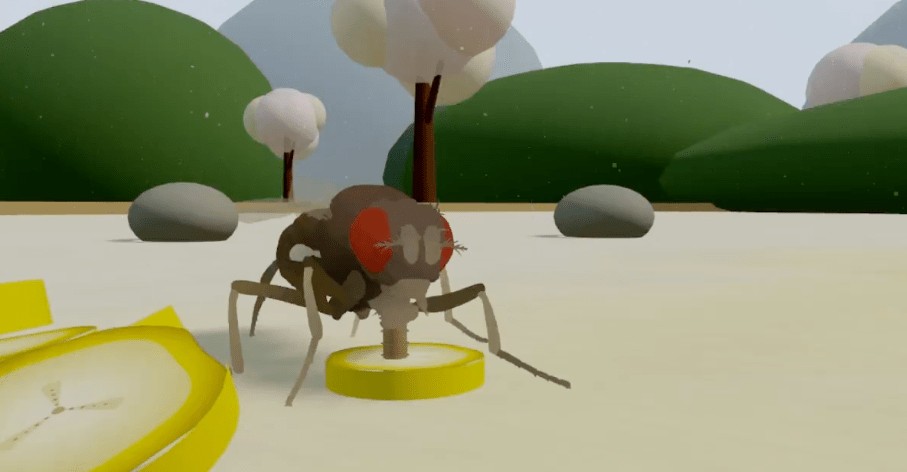
The problem? No detailed methodology, no peer-reviewed paper, and no independent confirmation were provided. The evidence consisted solely of short videos showing a digital fly walking, eating, and moving its legs.
The Science: What Eon Actually Did
Eon Systems later published a blog post attempting to clarify their work, but it fell short of substantiating the claim of a full “upload.” The team combined existing large-scale projects: a detailed fly brain map, a physical simulation of a fly’s body, and models simulating interactions between them. While this is an impressive technical achievement, experts emphasize it is not equivalent to a complete brain upload.
As Harvard neurobiologist Alexander Bates explained, “for a claim of this magnitude, I would expect something that should spell out the whole approach in specifics.” The blog post failed to explain key metrics, such as the cited “91% behavior accuracy,” leaving it unclear what that figure actually represents.
Crucially, the virtual fly does not fly.
The Definitional Problems of “Uploading”
The core issue lies in what constitutes an “upload” and whether the result can be meaningfully called a “fly.” The current model is a composite of neural wiring, programming, and other information stitched together from multiple animals. This raises fundamental questions:
- Does reproducing a few fly-like behaviors constitute an upload?
- Does a fully mapped brain in a virtual environment count as a “fly?”
- Or does “fly” require the whole messy biological package – body, cells, metabolism, and learned experience?
Even if Eon perfectly copied the fly’s brain, the result is still a copy, not an upload, which has profound implications. Multiple identical copies could be created, raising ethical questions about identity and replication.
Experts Weigh In
Neuroscientists and philosophers agree that the term “uploaded animal” is premature and misleading. University of Montreal neuroscientist Shahab Bakhtiari said the term remains an “open question,” while philosopher Jonathan Birch stated bluntly, “I don’t think we should ever say ‘uploaded animal.’” Instead, the work should be described as “whole-brain emulation,” which leaves the biological organism behind.
The Reality: An “MVP” of Consciousness?
Despite criticism, Eon Systems CEO Michael Andregg insists the claim stands. He describes the system as a “minimum viable product” (MVP) of an uploaded animal, admitting it has “lots of limitations.” Andregg even claims the virtual fly is “conscious in a limited sense,” capable of smelling, seeing, and tasting, though this assertion remains unsubstantiated.
Ultimately, the virtual fly is not a breakthrough in consciousness transfer, but rather a sophisticated simulation that lacks the biological complexity of a living organism. The hype surrounding it highlights the dangers of unchecked AI claims and the need for scientific rigor in rapidly evolving fields.
The work is a proof of concept, not a perfect replica of life. This distinction is critical to understanding what Eon has achieved and why calling it a “real upload” is inaccurate at best, and misleading at worst.