Every night, a massive, silent phenomenon occurs beneath the waves: the diel vertical migration. Trillions of tiny organisms, such as zooplankton and krill, rise from the depths to feed on phytoplankton near the surface, retreating to the safety of the dark depths as the sun rises. This is the largest migration of biomass on Earth, dwarfing even the famous wildebeest migrations of the Serengeti.
However, new research suggests that the “stage” for this vital biological dance is changing. Scientists have discovered that large areas of the ocean are becoming increasingly opaque, meaning light can no longer penetrate the water as deeply as it once did.
A Growing Shadow Across the Seas
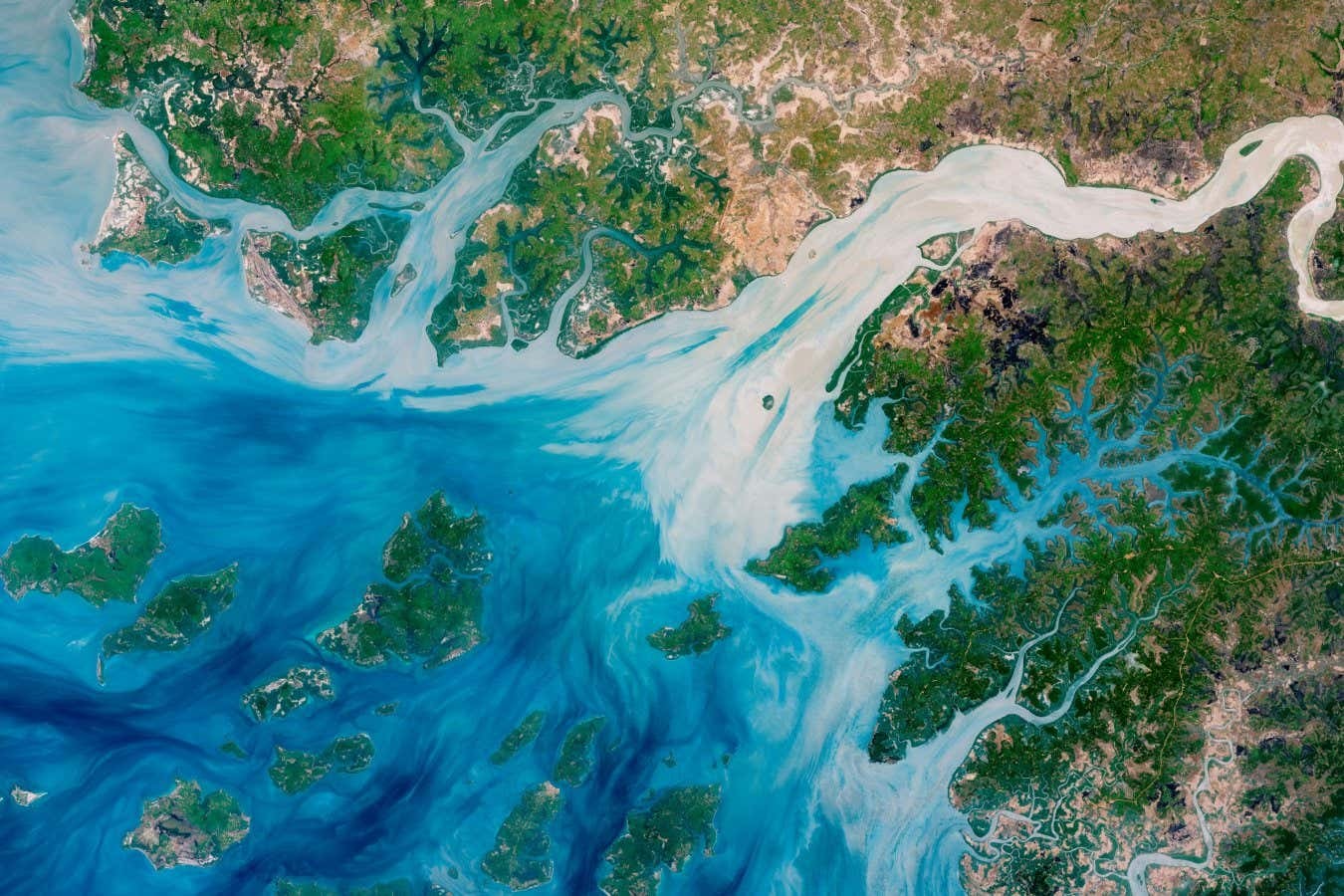
Researchers at the Plymouth Marine Laboratory, led by marine scientist Tim Smyth, have identified a concerning trend using 20 years of satellite data. Their findings reveal that roughly one-fifth of the world’s oceans have darkened, forming large, connected regions of murky water rather than isolated patches.
This darkening is occurring in two distinct ways:
1. Coastal Darkening: The Impact of Land Use
In coastal regions, the change is driven largely by what happens on land. As forests are converted to agricultural land, the runoff into rivers changes.
– Nutrient Loading: Industrial fertilizers wash into rivers, fueling massive blooms of phytoplankton.
– Sediment and Organic Matter: Floods and land changes carry more suspended particles and “tea-colored” dissolved organic matter into the sea.
– Result: These substances absorb light, making the water cloudy and preventing sunlight from reaching deeper layers.
2. Open Ocean Darkening: The Climate Connection
In the deep, open ocean, the cause is more complex and likely linked to global warming. Rising temperatures and shifting salinity levels are altering ocean circulation. Increased stability in surface water layers (stratification) can trap nutrients and light in the upper layers, promoting intense phytoplankton growth that further obscures the water below.
The “Vertical Squeeze”: Ecological Consequences
The loss of light penetration isn’t just a visual change; it is a structural shift in the marine habitat. Scientists describe this as a “vertical squeeze.”
“It’s a bit like squeezing the population of London into the size of Hyde Park,” explains Tim Smyth.
When the usable habitat is compressed, several critical biological processes are disrupted:
- Habitat Compression: Organisms that rely on specific light levels to hunt, hide, or reproduce are forced into a much thinner layer of water. This increases competition for resources and can make it easier for certain predators to find prey, potentially unbalancing the food web.
- Disrupted Migrations: Many creatures use the faint glow of moonlight to navigate their nightly journeys. As the water becomes murkier, this lunar guidance becomes less effective, potentially reshaping how species interact in the dark.
- The Carbon Cycle at Risk: This is perhaps the most significant concern for the planet. Normally, zooplankton transport carbon to the deep ocean when they die and sink. If darkening forces them to stay in shallower waters to avoid predators or find food, they will be less efficient at “locking away” carbon. Instead of being buried on the seafloor for centuries, that carbon may return to the atmosphere more quickly.
Is There a Path to Recovery?
While the darkening of the open ocean is a slow-moving process tied to global climate trends, there are actionable ways to mitigate the damage, particularly in coastal zones.
Improving Land Management:
Programs like AgZero+ in the UK are working to bridge the gap between science and farming. By promoting smarter fertilizer use and “nature-based solutions” like agroforestry, it is possible to reduce the amount of pollutants and organic matter washing into the sea.
Expanding Marine Protected Areas (MPAs):
Evidence suggests that marine ecosystems are remarkably resilient. In areas where habitats are protected, such as California’s kelp forests, species have shown a surprising ability to bounce back after heatwaves and environmental stress.
Conclusion: The darkening of our oceans threatens the fundamental rhythms of marine life and our planet’s ability to regulate carbon. While the open ocean’s changes are difficult to reverse, smarter land management and the expansion of protected marine zones offer vital hope for restoring the ocean’s natural balance.