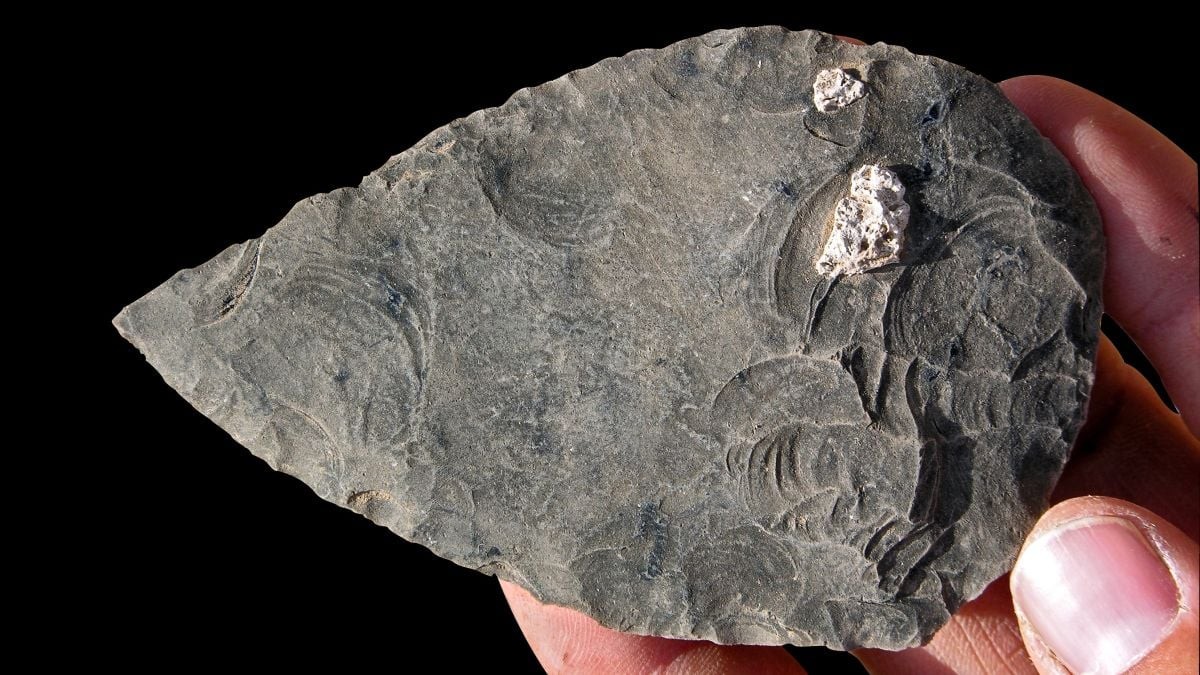
A major archaeological breakthrough in Ethiopia’s Afar Rift region is providing a rare, unfiltered glimpse into the lives of Homo sapiens living 100,000 years ago. Unlike many prehistoric sites found tucked away in the safety of caves, the Halibee site offers an “open-air” window into a dynamic, resource-rich landscape that was as dangerous as it was bountiful.
A Snapshot of a Moving World
Recent excavations led by archaeologist Yonas Beyene and his team have uncovered thousands of stone artifacts and animal remains. These findings suggest that the area was not a permanent settlement but a frequent stop for early humans.
The landscape was once a wooded refuge amidst a wild savannah, characterized by seasonal floodplains. This environment created a unique preservation method:
– Rapid Burial: Frequent flooding deposited silt over abandoned tools and remains, “freezing” moments in time.
– High Resolution: Because these visits were sporadic rather than continuous, archaeologists can distinguish between different periods of occupation more easily than in cave sites, where layers of debris often blend together.
– Resource Utilization: Most tools (65% to 82%) were crafted from local basalt, though the presence of obsidian —which is not native to the area—suggests these early humans were already part of wider networks of movement or trade.
The Brutal Reality of Survival
The site has yielded the remains of three different individuals, each telling a distinct and sobering story about the risks faced by early humans in the Middle Pleistocene.
1. The Rapidly Buried
The first individual, likely a male, was found with his skeleton largely intact. The condition of the bones suggests he was covered by sediment very shortly after death, while soft tissue was still present. While this could theoretically point to an early funerary rite, researchers believe it was more likely a natural event, such as a sudden seasonal flood.
2. The Charred Remains
The second individual was identified only by a molar and small bone fragments showing signs of charring. This discovery leaves a haunting question: was this person a victim of a natural wildfire, or was fire used by other humans in a way that left these traces behind?
3. The Scavenged
The third individual provides the most visceral evidence of the perils of the savannah. The bones show extensive perimortem damage —injuries occurring at or near the time of death—including tooth scores, pitting, and fractures caused by carnivores. Whether these predators killed the individual or simply scavenged the body afterward remains a mystery, but it highlights a world where humans shared the ecosystem with large predators, including feline species similar to modern lions.
Why This Matters
The Halibee site is shifting our understanding of how early humans interacted with their environment. The lack of butchery marks on the animal bones found at the site—which include monkeys, antelopes, and various birds—suggests a complex relationship with the local fauna that is still being decoded.
By studying these “snapshots” of life and death, scientists are not just learning about ancient tools; they are reconstructing the social behaviors, dietary patterns, and environmental pressures that shaped the ancestors of modern humanity before they dispersed into Eurasia.
“The surface and subsurface resources embedded in Ethiopia’s Halibee member will last for generations,” the research team noted, emphasizing the site’s role as a cornerstone for future paleoanthropological study.
Conclusion
The discoveries at Halibee reveal a high-stakes existence where early humans navigated a rich, fertile landscape defined by both resource abundance and the constant threat of predation and natural disasters.