The United States’ space strategy is increasingly shaped by commercial companies, notably SpaceX, which now controls a disproportionate share of launch capabilities and crewed missions. While this shift has driven down costs and restored domestic space access, it also creates structural vulnerabilities. The question isn’t whether the current model works now, but whether Washington has a viable Plan B if the interests of private power and national strategy diverge.
The Rise of Commercial Space: From Necessity to Dominance
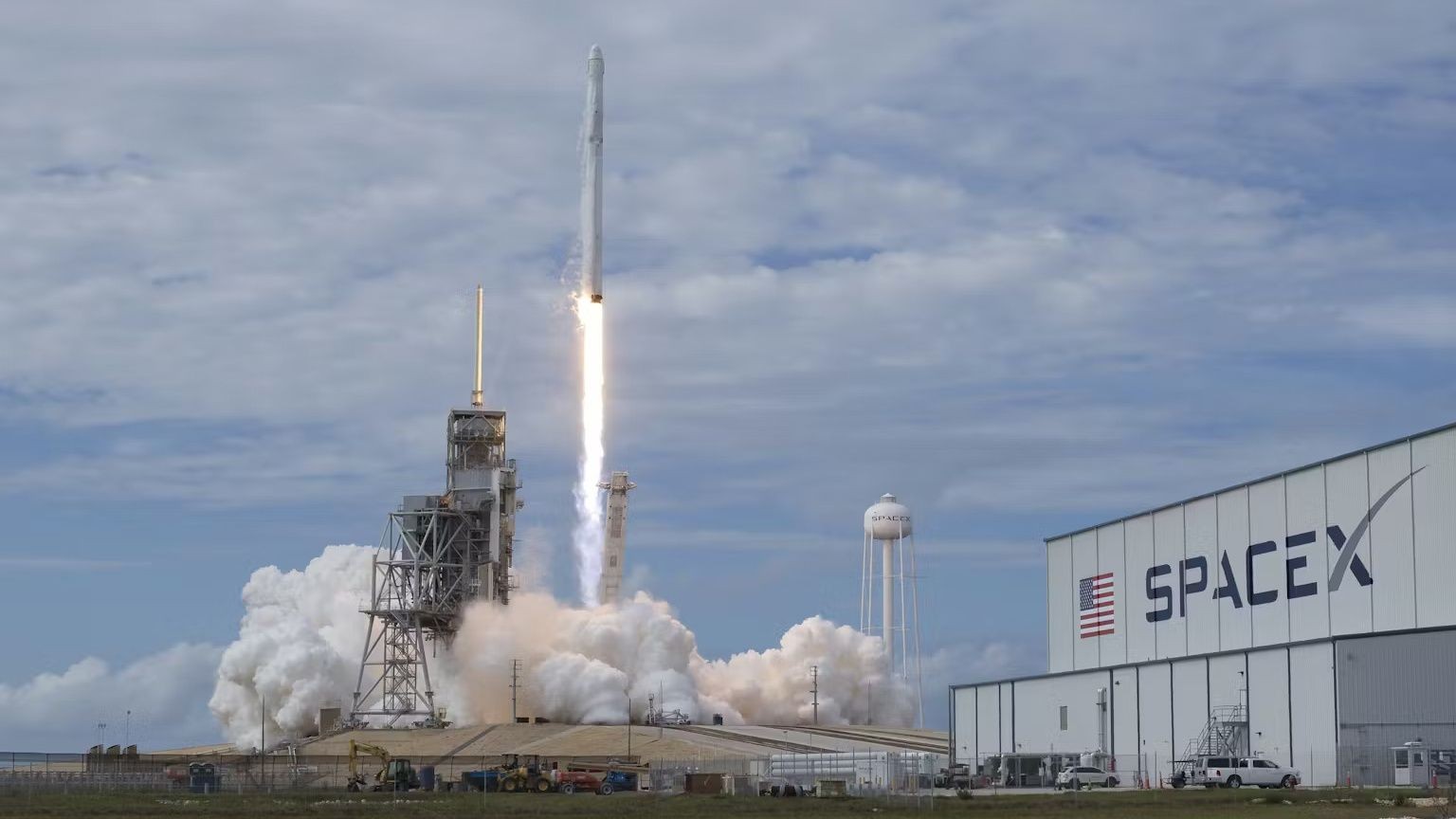
After losing independent human spaceflight capabilities following the Space Shuttle’s retirement in 2011, the U.S. turned to commercial providers like SpaceX through programs designed to reduce costs and restore domestic launch capacity. This worked: SpaceX’s Falcon 9 rocket now dominates U.S. launches, and its Crew Dragon spacecraft carries most NASA astronauts to orbit. However, the high costs and capital intensity of space infrastructure mean few companies can compete, leading to consolidation and increasing leverage for SpaceX.
This isn’t necessarily malicious; it’s a natural outcome of market forces. But strategic infrastructure – military operations, communications, critical national systems – isn’t a typical consumer market. Dependence on a single company introduces risks from financial troubles, technical failures, or even leadership disputes.
The Elon Musk Incident: A Warning Sign
In 2025, Elon Musk briefly threatened to decommission the Dragon spacecraft during a public dispute with the government. While the threat was retracted, it exposed the fragility of U.S. access to space; at the time, Boeing’s Starliner capsule was still delayed, leaving no immediate alternative.
This highlighted a critical dependency: the U.S. now relies heavily on the stability of a single firm, and its unpredictable leadership.
Congressional Action: A Push for Diversification
Congress has responded by attempting to diversify providers, particularly for lunar landers, through legislation like the NASA Reauthorization Act of 2026. The intent is to build redundancy into the system, making it more resilient to disruptions. But maintaining parallel systems requires sustained funding and political commitment, which markets alone won’t guarantee.
The legislation signals awareness, but its implementation remains uncertain. For now, SpaceX remains central to U.S. access to space, especially for crewed missions.
Strategic Permanence: The Need for Options
As the U.S. expands into cislunar space and aims for a sustained lunar presence, reliance on commercial providers will only deepen. The current commercial model has revitalized American leadership, but also revealed critical weaknesses.
Durable systems don’t rely on a single point of failure. Just as James Madison argued for competing forces in governance, economic resilience in space requires balance, not concentration. The U.S. must prioritize multiple providers for critical services, overlapping capabilities, and alternatives robust enough to withstand shocks.
Commercial space can underpin American leadership, but only if access to orbit — and beyond — never rests solely on one indispensable company. The future of U.S. space strategy depends on building a resilient system that isn’t vulnerable to the whims of a single entity.