


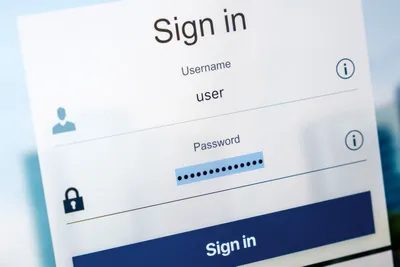
A password is a series of characters used to authenticate your identity and grant access to a digital system. Linked to your username to verify who you are. Password lengths vary. May contain numbers, uppercase letters, lowercase letters and special characters. When it’s just a number, it’s often called a passcode or PIN.
This concept comes from ancient customs. Soldiers used spoken language to protect their groups. Locations were protected by a phrase known only to insiders. Today, such digital codes are everywhere. These can be quite complex and burdensome to record. Many people have trouble remembering them.
This has sparked a debate about cyber security. Should passwords be replaced? Some people favor biometric analysis. Fingerprint scanning is one way. Facial recognition is another method. These are validated using human characteristics. The ideal password is easy to remember and hard to guess. Personal information should be avoided. Do not use your child’s name. Don’t use nicknames. Don’t use your hometown. Social media makes this information easily available.
To reduce the number of passwords, experts recommend using a password manager. This program saves and stores and deploys all your passwords. Enter your master password. It does the rest.
Early Uses of Passwords
Identification has a long history. The Hebrew Bible mentions spoken password. It is called a “shibboleth”. Used by the soldiers of Gilead in the 11th century BC Their enemies, the Ephraimites, had a different pronunciation. This can be an effective way to distinguish between friend and foe.
Mottoes were used in the Roman Empire. The soldiers said these words to the night watchman: During Prohibition in the United States, boots required special passwords. These are illegal bars. Access requires knowledge of this phrase.
Development of Computer Passwords
Computer historians agree on the origins of digital passwords. It was used by the American computer scientist Fernando Corbató in 1961. He acquired the Compatible Time-Sharing System (CTSS). This operating system allowed multiple users to share access rights. Each user needed individual access, and a way to differentiate between users was required.
The solution was simple. Each user was assigned a unique password, which CTSS compared to the master password file.
In 1974, Robert Morris Sr. came up with “hashing”. This step involved converting the string into a numeric code. Passwords no longer need to be stored in a database; an unreadable hashinged version can be saved instead.
The National Bureau of Standards published the Data Encryption Standard (DES) in 1977. This encryption algorithm improves the security of passwords. Use a 56-bit code key.
Morris and Ken Thompson strengthened passwords in 1979. They designed “salting”. This adds random information to the hashinged password, confusing potential hackers.
In 2005, DES was replaced by the Advanced Encryption Standard (AES). The AES algorithm has a flexible code key length and can be extended as needed. This means that AES-encrypted passwords are impervious to cryptanalysis, and hackers cannot decrypt them with their processing power alone.
Multi-factor authentication was introduced in the late 2000s. During this period, the phenomenon of identity theft increased. Two-factor authentication has also become more common. AT&T patented two-factor authentication in 1995. This requires two types of proof. Multi-factor authentication requires at least two authentication factors, making it harder for cybercriminals to access your information. Examples are security questions, one-time codes sent to e-mails or smartphones, biometric factors, etc.


