There is a glaring contradiction in our current understanding of physics.
On one hand, the Universe is getting messier. The second law of thermodynamics demands it. Total entropy in an isolated system must rise. Chaos should win.
On the other hand, the cosmos is building incredible things. Galaxies. Stars. Planets. You.
How does structure emerge from disorder? It shouldn’t be possible. Or so we thought.
A new paper published in Physical Review D suggests the puzzle isn’t a contradiction at all. It’s a perspective problem. Queen Mary University of London mathematician Ginestra Bianconi has applied a framework called Gravity from Entropy to show that while total entropy grows, local entropy can actually drop. This allows complex structures to form without breaking any laws.
It changes how we look at gravity, time, and the very fabric of spacetime.
The Second Law vs. Cosmic Complexity
Einstein didn’t mess around. He called the second law of thermodynamics the most fundamental principle in nature. It’s simple. Systems move toward disorder. Heat spreads. Ice melts.
Cosmologists have been stuck on this for decades.
The early Universe was a low-entropy soup. Smooth. Hot. Featureless. Over billions of years, that smoothness broke down into clumps of matter. These clumps collapsed under gravity to form stars and galaxies. This is increasing organization. It looks like entropy is decreasing.
But the math says entropy must increase.
So where did the disorder go?
The standard answer involves black holes and information loss, theories pioneered by Jacob Bekenstein and Stephen Hawking in the 1970s**. They showed black holes have entropy. They emit thermal radiation. This linked spacetime geometry to heat and information. It was a start. But it didn’t fully explain the emergence of complex, life-supporting structures in an expanding universe.
That’s where Bianconi’s work comes in.
How Gravity Emerges from Information Tension
Gravity from Entropy (GfE) isn’t just another gravity theory. It’s an attempt to derive gravity itself from statistical mechanics.
Think of gravity not as a fundamental force, like electromagnetism. Think of it as a side effect. An emergent property.
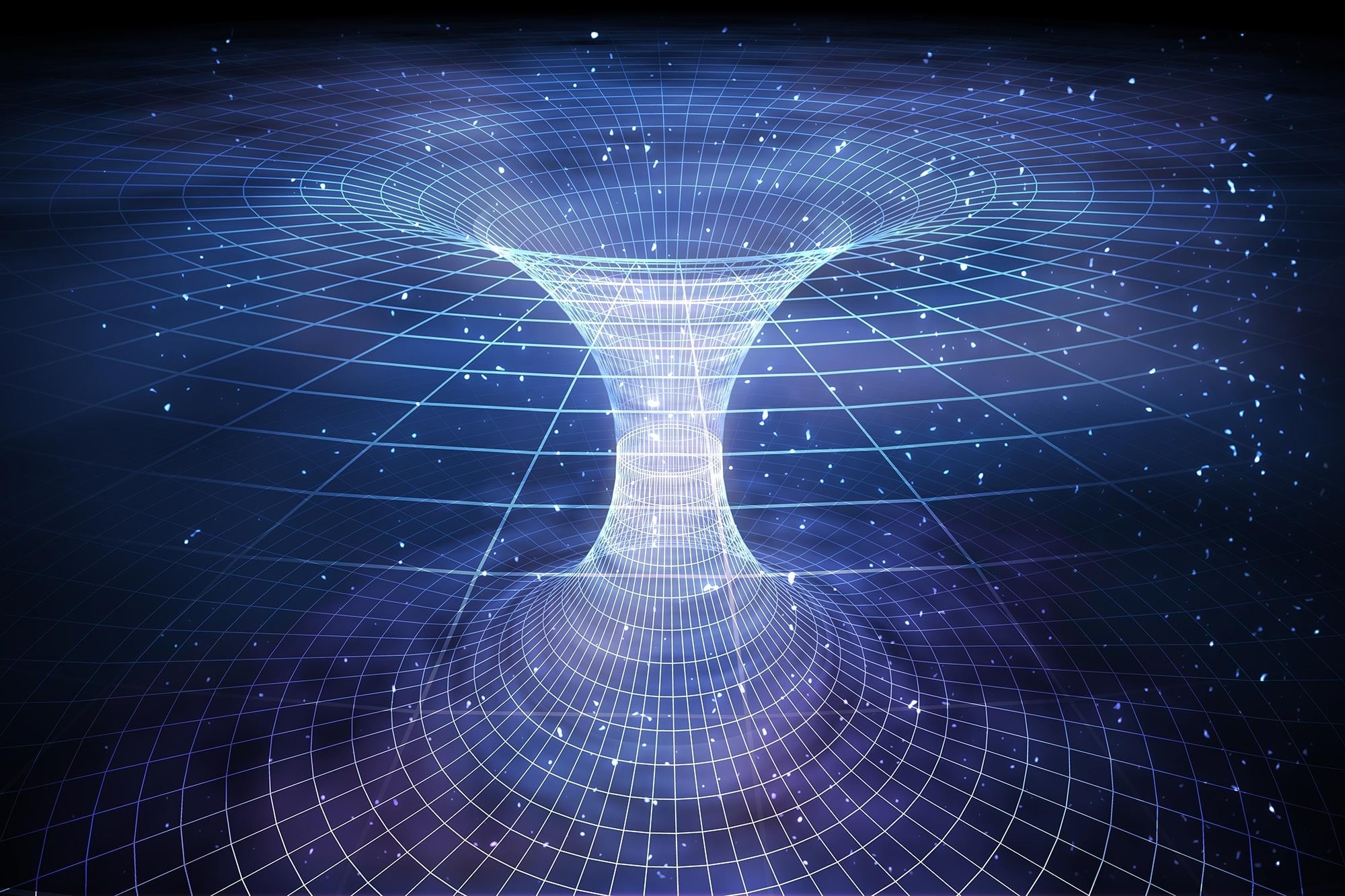
In this framework, gravity arises from an information-theoretic tension. There are two metrics at play here:
- The physical spacetime metric (how we measure distance).
- A metric produced by matter fields and curvature (how matter warps space).
The theory uses a measure called Quantum Geometric Relative Entropy (QGRE) to calculate the relationship between these two metrics. When curvature is low and energy is weak, GfE equations reduce to Einstein’s General Relativity. We see what we expect.
But under stronger conditions? The equations diverge. They generate a dynamical dark energy term. This isn’t a constant value like in standard models. It changes over time. This makes the theory testable. If we can measure this fluctuation, we might prove or disprove the model.
Why Local Entropy Drops While Total Entropy Rises
Here is the key insight that resolves the paradox.
Bianconi applied GfE to Friedmann–Robertson–Walker spacetimes. These are the mathematical models describing an expanding, uniform Universe.
The results showed a split.
Total entropy increases. This satisfies the second law. The Universe as a whole is indeed becoming more disordered in terms of information content.
However, entropy per unit volume declines.
As the Universe expands, the physical volume element grows. The total entropy rises with it. But because the space is stretching, the amount of Quantum Geometric Relative Entropy inside any specific local volume falls.
This separation is crucial. It means local systems can become more organized—stars forming, life evolving—while the global system becomes more entropic. You can have order locally. Chaos globally. No law broken.
In this view, the dynamical dark energy acts as internal energy. QGRE acts as local entropy. Effective temperature and pressure emerge naturally from the quantum state. Gravity, in a way, is thermal. It’s the heat death of the universe playing out on a cosmic scale.
Can This Bridge General Relativity and Quantum Mechanics?
We don’t know if this is right yet.
The framework remains theoretical. It’s early days. But it offers a potential bridge.
Physics has a divorce problem. General relativity (gravity, big things) and quantum mechanics (particles, small things) don’t get along. They speak different languages. They ignore each other’s rules.
GfE suggests they might be speaking the same language all along. Information. Thermodynamics.
If gravity emerges from the microscopic degrees of freedom of spacetime geometry, then gravity, thermodynamics, and information are fundamentally connected. This could explain why complexity emerges at all.
“This work reveals how the Gravity from entropy theory can tackle the challenging question to reconcile the second principle of thermodynamics with the emergence of complexity in our universe.” — Professor Ginestra Bianconi
It’s a bold claim. That gravity isn’t just pulling things together. It’s sorting information. It’s managing the heat.
The next step is observation. The dynamical dark energy term in GfE predicts specific deviations from General Relativity in strong fields or at large scales. Astronomers need to look for those signals.
Until then, the paradox stands. But it looks less like a dead end and more like a map.
The Universe isn’t fighting disorder. It’s using it to build itself.