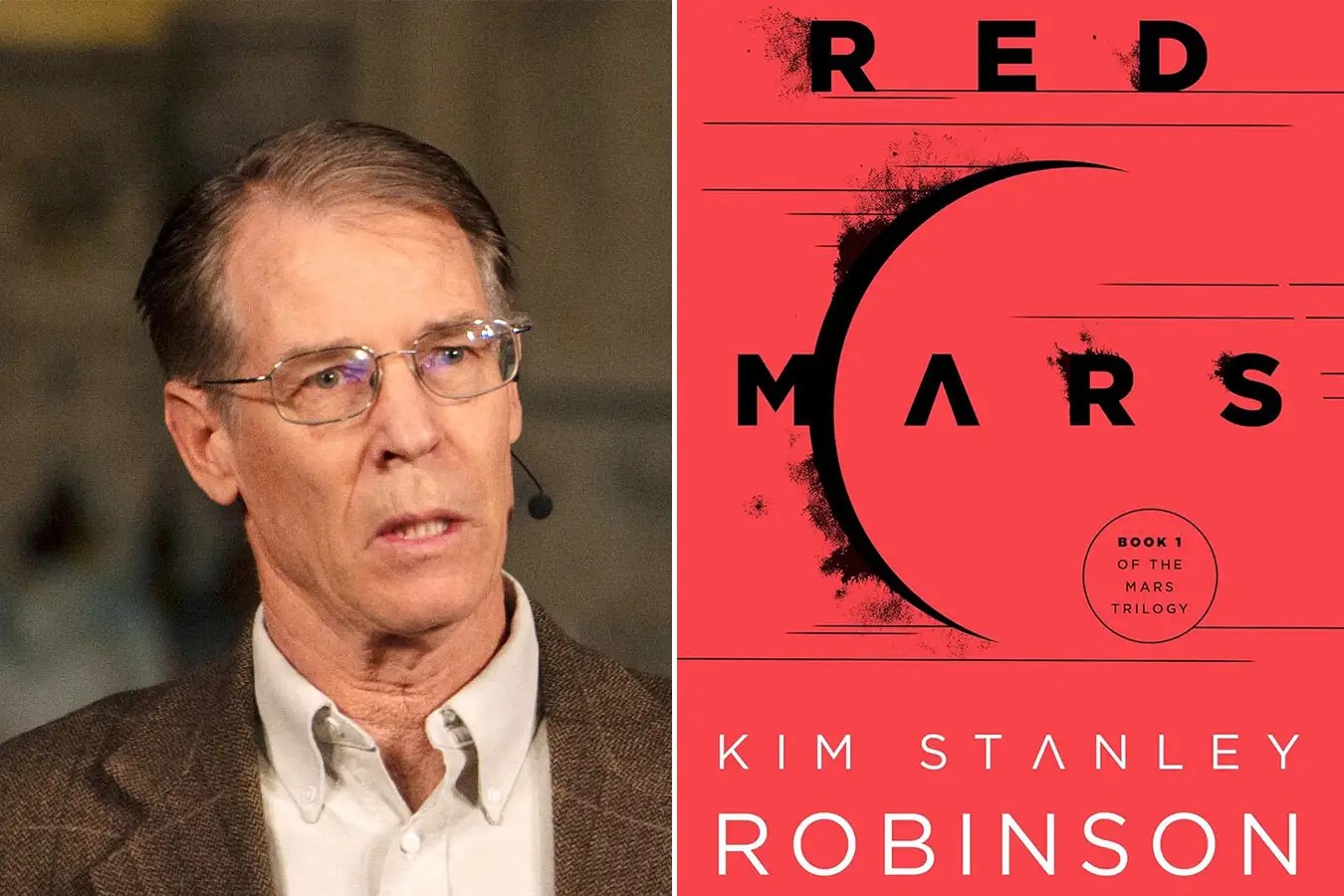
Kim Stanley Robinson’s Red Mars is not merely a novel; it is a monumental exercise in speculative engineering and political philosophy. Recently, the New Scientist Book Club challenged its community to tackle this 600-plus page epic within a single month. The resulting discussion on their Discord channel revealed a fascinating divide: while readers universally praised Robinson’s depiction of the Martian environment, opinions on the human drama remained sharply polarized.
This re-evaluation of a science fiction classic highlights a enduring tension in the genre: can hard science and human emotion coexist without one overwhelming the other?
The Allure of the Alien World
For many readers, the planet itself is the true protagonist. Robinson’s ability to render the vast, alien beauty of Mars is widely regarded as his greatest strength. First-time readers were often captivated immediately by the prose. One member noted that the opening phrase—“But all of that happened in mineral unconsciousness” —set a tone of authority and depth that promised a rigorous journey through the next 600 pages.
The novel chronicles the first century of human settlement on Mars, beginning in 2026. Through shifting perspectives, we witness the ideological battles that define the colony:
- The Reds: Led by Ann, who believes Mars should remain untouched, preserving its ancient, pristine state.
- The Greens: Championed by Sax, who is obsessed with terraforming the planet as quickly as possible to make it habitable.
- The Pragmatists: Represented by Nadia, a no-nonsense engineer focused on survival and infrastructure.
Robinson’s nature writing is dense, scientific, and evocative. It transforms the Red Planet from a backdrop into a character with agency, history, and danger. For readers seeking “competence porn”—stories where experts solve life-threatening problems with skill and logic—these sections are compelling and meticulously researched.
The Structural Gamble: A Murder in Chapter One
Robinson employs a bold narrative device: the book opens with a flash-forward to a murder. We see Frank arrange the death of his friend John, driven by intense anger and desperation. Only after this shocking event does the narrative rewind to the beginning of the colonization effort.
Some readers found this structure disorienting or even frustrating. “I’m not loving the concept of spoiling the end with the first chapter,” one member commented, preferring the mystery of not knowing where the story was headed.
However, Robinson has explained that this choice is intentional and critical to the novel’s tension. “Building a town on Mars is not inherently dramatic,” Robinson noted in an interview. “But if… you know that someone’s going to end up so angry at the end of it that they are going to arrange the murder of one of their best friends, you therefore see every little incident of building the town as having a fraught significance.”
This technique forces the reader to view every engineering challenge, political debate, and interpersonal conflict through the lens of inevitable tragedy. It raises the stakes of mundane tasks, suggesting that even the smallest decisions in the colony’s early days ripple outward to cause catastrophic personal consequences.
The Human Element: Soap Opera or Social Commentary?
While the science and setting received universal acclaim, the character dynamics sparked significant debate. Several readers felt disconnected from the cast, describing the interpersonal plots as a “soap opera” that undermined the novel’s intellectual rigor.
“I started expecting competence porn… and instead got a mix of human politics, greed, callousness, and lack of foresight,” wrote one reader. The central love triangle involving John, Frank, and Maya was frequently cited as a source of irritation, with critics arguing that these characters suffered from “Main Character Syndrome” and lacked the complexity found in the ideological figures like Nadia or Arkady (a Russian anarchist engineer).
Others, however, appreciated the idea-driven nature of the story. One reader admitted they needed “relationship drama” as a palate cleanser after finishing the book, noting that while the characters were diverse, they felt less emotionally complex than the ideas they represented. This suggests that Red Mars is not designed as a traditional character study, but rather as a sociological thought experiment. The characters serve as avatars for different political and ethical positions regarding colonization, environment, and governance.
A Critique of Modern Ambitions
Robinson’s relevance extends beyond the page. In recent years, he has publicly criticized contemporary plans for Mars colonization, particularly those led by figures like Elon Musk. Robinson argues that the idea of colonizing Mars to “save Earth” is “crap” and demonstrates a fundamental lack of foresight.
This critique resonates with the novel’s themes. Red Mars does not present colonization as a straightforward triumph of technology, but as a messy, contentious process fraught with ethical dilemmas. The characters’ failures and conflicts serve as a warning against simplistic views of space exploration. Robinson suggests that without careful consideration of social structures and environmental ethics, human expansion into space may replicate the worst aspects of Earth’s history rather than offering a fresh start.
Conclusion
Red Mars remains a landmark of science fiction, celebrated for its scientific depth and philosophical ambition. While its pacing and character dynamics may not appeal to every reader, its exploration of the tension between human ambition and planetary integrity is more relevant than ever. As we move closer to real-world Mars missions, Robinson’s novel offers not just a story, but a crucial framework for asking the right questions about what we hope to build—and who we hope to become—in the process.