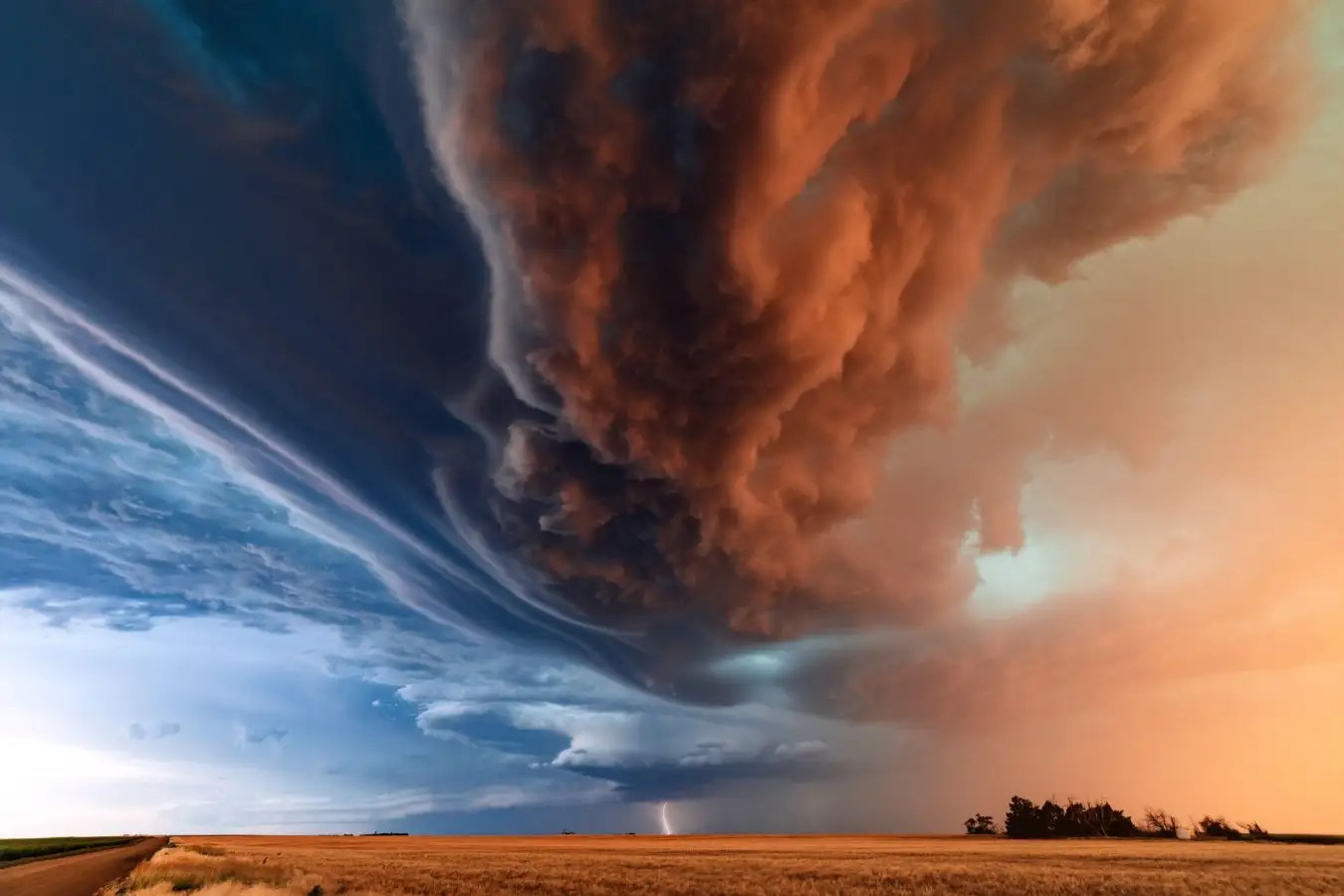
In November 2025, a quadcopter drone ascended 4,000 meters above the Bannock Mountains in Utah. Its mission was stark: to combat deadly dust storms and refill the shrinking Great Salt Lake. The drone dispersed silver iodide powder—a technique known as cloud seeding—into thick clouds, hoping to trigger precipitation. This operation, conducted by the startup Rainmaker under state contract, represents a growing global trend. As water scarcity intensifies, nations are investing hundreds of millions of dollars in weather modification technology, betting that humanity can engineer its way out of a “water bankruptcy” crisis.
However, while the desire to control nature is powerful, the scientific reality is far more complex. Cloud seeding is not a magic bullet for drought. It raises critical questions about efficacy, geopolitical stability, and whether technological fixes distract from the root causes of water scarcity.
The Science and History of Weather Control
The dream of mastering the weather is ancient, but the scientific basis for cloud seeding emerged accidentally in 1946. Vincent Schaefer, a researcher at General Electric, discovered that dropping dry ice into a freezer created ice crystals from supercooled water droplets. Shortly after, his colleague Bernard Vonnegut found that silver iodide particles could serve as seed crystals, encouraging water droplets to freeze and grow heavy enough to fall as rain or snow.
The potential for military application was immediate. The U.S. military attempted to redirect hurricanes and later used cloud seeding to disrupt supply lines during the Vietnam War. These efforts sparked public outrage and led to an international ban on hostile environmental modification in 1977. Consequently, government funding for such research dwindled due to a lack of convincing proof that the technology worked effectively.
The Global Renaissance of Cloud Seeding
Today, climate change has revived interest in weather modification. With over 50 countries investing in these programs, the drive is no longer military but existential. Four billion people face water shortages for at least one month a year. From Iran’s five-year drought to the extreme water stress in the United Arab Emirates (UAE), governments are turning to cloud seeding as a desperate measure.
- The UAE: Facing severe aridity, the UAE conducts hundreds of missions annually using salt flares. Since silver iodide is less effective in warm clouds, scientists use salt particles to absorb moisture and build raindrops.
- China: Operating the world’s largest program, China employs rockets, planes, and even anti-aircraft cannons to fire seeding materials into the sky. The ambitious “Sky River” project aims to intercept atmospheric rivers and divert moisture from the Indian monsoon to the Yellow River basin.
- Iran: Both civilian authorities and the Islamic Revolutionary Guard Corps have launched aircraft seeding campaigns to break prolonged droughts, which have previously fueled civil unrest.
The Efficacy Debate: Hope vs. Reality
Despite the scale of these operations, scientific consensus on their effectiveness remains elusive. The core problem is variability: no two clouds are identical, making it difficult to establish a control group to prove that precipitation was caused by seeding rather than natural weather patterns.
Early trials suggested precipitation increases of up to 20%, but rigorous studies have yielded underwhelming results. A randomized study in Wyoming (2007–2014) found only a 1.5% increase in precipitation—statistically insignificant. However, a breakthrough came in 2017 with the SNOWIE experiment in Idaho. Researchers dropped silver iodide flares from an aircraft in a zigzag pattern, perpendicular to the wind. Radar later detected ice crystals forming in the exact same pattern, proving definitively that cloud seeding can alter cloud evolution.
Yet, proof of concept does not equal practical solution. Katja Friedrich, who led the SNOWIE study, notes that while seeding can generate precipitation, the volume varies wildly based on location, season, and atmospheric conditions. Many clouds simply lack the moisture required to produce meaningful rainfall.
Geopolitical Risks and Conspiracy Theories
The ability to modify weather carries significant geopolitical risks. If one nation can redirect water flows, it creates potential for conflict. India has accused China of causing floods by diverting monsoon rains, while Iran has alleged that Israel and Turkey are “stealing” clouds. Although rainfall is not a zero-sum game—clouds often release only a fraction of their moisture before moving on—the perception of water theft fuels tension.
Furthermore, cloud seeding has become a magnet for conspiracy theories. The debunked idea of “chemtrails” persists, with nearly a third of the U.S. population believing aircraft contrails are government plots for population or weather control. In 2024, rumors circulated that the Biden administration used cloud seeding to cause hurricanes in politically conservative states. Similarly, in Texas, a congressional hearing was held after a cloud-seeding company operated near an area that later suffered deadly flooding, despite no evidence linking the two.
The Distraction from Real Solutions
Startups like Rainmaker are attempting to modernize the industry using AI, satellites, and radar to target specific pockets of supercooled water. Rainmaker claims it can stop the drying of the Great Salt Lake and potentially the Colorado River within six years. Other innovations include electrifying natural particles and firing lasers into clouds.
While these technologies may help build snowpack or mitigate minor droughts, experts warn they are not a cure-all. Friedrich emphasizes that cloud seeding cannot refill large bodies of water or solve systemic scarcity. The primary driver of water crises is overconsumption, not a lack of rainfall. Policies that encourage waste, such as “use it or lose it” water rights for agriculture, exacerbate the problem.
“It’s not the Holy Grail that solves all the problems,” says Friedrich. “It might help lessen the impacts of drought… but it could distract from simpler and more effective solutions.”
Conclusion
Cloud seeding offers a tantalizing glimpse of human control over nature, but it remains a limited tool with unproven large-scale benefits. While it can technically induce precipitation, it cannot manufacture water out of thin air or offset the effects of climate change and overconsumption. Relying on weather modification risks diverting attention and resources from the urgent need to manage water demand, update infrastructure, and address the root causes of global water scarcity.