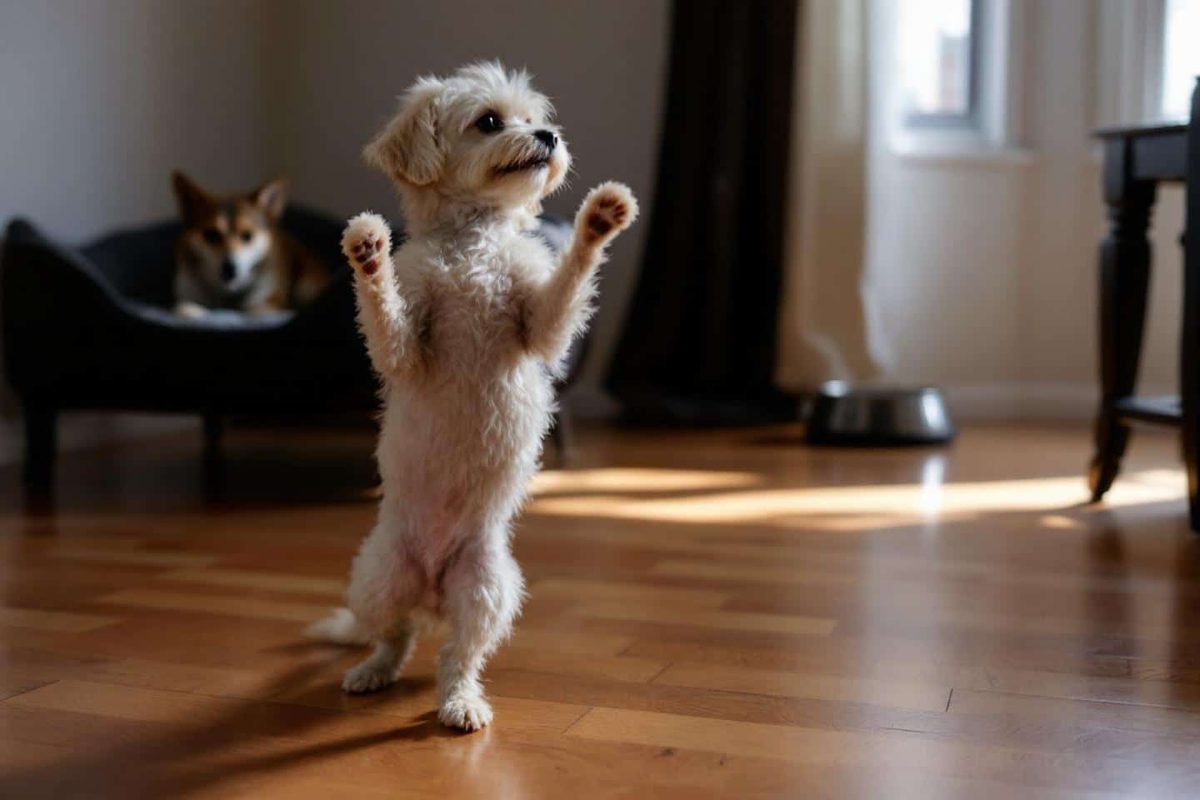
Dogs are open books. But only if you can read them.
In France, dogs are part of the family. No pets. Family. That’s why it’s important to understand what their paws are saying. It’s not just about good behavior. It’s about their well-being. It’s about a peaceful home.
Their language is subtle. Much less innocent than it seems. Breaking these habits can prevent health problems. It can also deepen your bond. What do these everyday gestures really mean?
When lifting, scratching or stretching, reveals mood
The instinct behind raising a paw
Who hasn’t seen their dog raise its paw while walking? Or at home?
Some think it’s just a habit. That’s not it. This gesture carries a whole series of messages.
Lifting the paw to urinate is an instinct. It’s a way of marking territory. Very easy. But outside of this context? A raised paw tells a different story. It can betray hesitation. discomfort. Or a request for comfort and attention.
Puppies do that too. It means submission. Or out of curiosity.
Is this behavior concerning? Usually not. But pay special attention. If it recurs or is accompanied by other physical signs, note it. Don’t ignore it.
Scratching and licking: comfort, communication or warning?
You can’t ignore a dog that digs in the ground. Or licks his paws frantically.
Scratching often means a desire for comfort. Or a way to release energy. This often happens with very dynamic dogs.
But be careful. If licking becomes compulsive or causes redness, it hides something deeper. There may be discomfort. Allergy. Parasites. Or even boredom.
Sensitive or anxious breeds often use these behaviors to calm themselves. It is one form of self-regulation. Extra vigilance is required. Especially if these habits continue.
Stretching: relaxation or hidden stress?
There is nothing cuter than a dog that yawns when it wakes up. This is relaxation. This is well-being.
But what about during the day?
Repeated stretching, especially when stressed – such as the arrival of a guest or chaos in the household – can be a sign of anxiety. Or even worse: joint or muscle pain.
A dog that is constantly stretching may be trying to relieve physical or mental tension. Every detail counts. You have to adapt your environment. Or go to the vet. If necessary.
These gestures hide unexpected needs
Distinguish well-being from boredom
At first glance, it’s hard to tell if the dog is happy. Or there are simply no distractions.
A dog that sometimes scratches his bed. Alternate stretching with appropriate licking. Is generally consistent with his daily life.
It’s the other way around. Repetitive and compulsive gestures usually reflect boredom. Or stress.
Keeping the dog busy helps. Play. Versatile walks. Shared moments. This can significantly reduce problematic behavior.
Understanding cravings for attention and frustration
Dogs use their paws to get your attention. Often.
A paw on your leg. furrowed muzzle. A light tap. These are invitations to play. Or cuddle.
But sometimes these repeated requests hide frustration.
Lack of action? Too predictable a routine? Unresolved need (walk, meal, pet)?
Paying attention to these signals will help you respond appropriately. It prevents the development of behavioral disorders.
Identify the underlying need
Gestures such as scratching the tile, lifting a paw for no apparent reason, or compulsively stretching should trigger alarms.
Sometimes it’s a simple request. To go out. To eat. Change the activity.
However, these movements can also mask physical discomfort. Indescribable pain. Dogs often hide their weaknesses. They don’t want to worry the pack.
Analyzing the context is essential. Time? A new environment? Disturbed habits? Every hint helps to identify the real need.
The real question is…
Are you listening?
Or just waiting for them to stop?
Recognize the subtle signals of dog discomfort
Your dog doesn’t speak with words. It speaks in shifts. A sudden change in routine is rarely just a change in mood. It’s a distress signal. First, pay attention to subtle tics. Licking a paw until it is raw. Scratching until the skin bleeds. Lameness after getting up. Refusing to stretch its back. These aren’t quirks. They are symptoms.
A constantly raised paw is a big warning sign. This also applies to localized hair loss, redness or swelling. These physical clues point to underlying problems. Infection. Allergy. Chronic pain. A hidden injury. Even the toughest and most durable dogs rarely hide significant physical strain for a long time. They hide it badly. You just have to know where to look. Prevention is always better than cure. It’s cheaper, easier and friendlier.
Preventative habits for long-term well-being
The strategy is simple, but requires consistency. Check the paws regularly. Check the pads for softness or cracks. Keep nails trimmed short so they don’t hit the floor. Make sure the coat is clean and free of parasites. Those are the basics. But prevention goes deeper.
Adapt the feeding routine. Change the bowl if it causes neck strain. Provide puzzle toys that activate the brain. Vary the walking routes to keep your mind fresh. Guarantee high-quality sleep. Boredom creates tension. Tension leads to bad behavior. If in doubt, offer a decompression session. A calm brush. A quiet play session. These small interventions work wonders. They are especially important as the dog ages. Older dogs develop special sensitivities. You have to adapt to their changing needs.
When to call the vet and build trust
Unusual behavior requires a visit to the veterinarian. Don’t wait. Rule out injury or health issues immediately. The faster you act, the better the result. But the observation is more than just a medical triage. It builds a bond. The more you observe, the better you can spot weak signals. This involvement arises in daily grind. It becomes an asset.
When you take care of your dog, you take care of him. It is also caring for the household’s harmony. in the household. Trust grows from these seemingly small gestures. The home becomes safer and quieter. Once you understand this “paw language”, you can immerse yourself in your dog’s intimate world. You anticipate needs. You recognize problems in time. You ensure lasting well-being.
Daily gestures are not random ticks. They are a communication system. Decode them. Respect them. The relationship you build on this mutual attention is unique. It is based on kindness. And it lasts.