You’ve probably heard the cliché that the brain is a muscle. You exercise it, you get stronger. Most of us know this through the lens of study sessions or professional training, relying on flashcards and repetitive drills to lock in facts. The entire ed-tech and corporate training industries exist to make that painless. They want you to learn coding or a new language without feeling the grind.
But there is another way to build mental stamina. It doesn’t happen in a classroom. It happens at the dinner table.
We rarely pause to consider how leisure activities—the games we play for fun—act as cognitive weightlifting. Language trainers and memorization apps are essentially trying to replicate the natural, engaging friction of these games. When you play a card game, you aren’t necessarily trying to remember every card you’ve held for weeks. You won’t recall the exact position of the ace of spades from three sessions ago. Yet, you are still working your short-term retention and pattern recognition. You’re pumping iron for your neurons.
Let’s look at how different types of games challenge specific cognitive functions. We start with one of the oldest and simplest tools for building focus.
5: Concentration
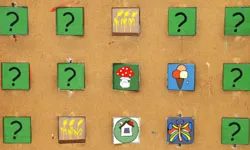
Concentration (also known as Pelmanism or Memory) is the ultimate test of visual recall. It requires players to flip over cards in pairs, keeping them face-up only if they match. If they don’t match, you must flip them back down and try to remember their location for the next turn.
This game is deceptively simple. It forces your brain to encode spatial information rapidly. You aren’t just seeing a king of hearts; you are storing its position relative to the other cards in your mental grid.
Why does this matter? Because it trains working memory and attention span. In a world defined by constant digital distraction, the ability to hold multiple pieces of information in your head while filtering out noise is a rare skill. Concentration demands that you stay present. You cannot zone out. If you lose focus for even a second, you might flip a card you already knew was there, or you might forget where the matching pair is hiding.
The game scales with difficulty based on the number of cards used. A small set of 20 cards is easy. A full deck of 52 cards is a marathon. It’s not just about luck. It’s about creating a mental map. And unlike passive scrolling, this active retrieval strengthens the neural pathways responsible for memory consolidation.

The Incentive Loop in Classic Matching Games
The game some call Memory and others Concentration is one of the oldest and most basic memory games. In it, we have to remember the location of objects or cards and either match them or find them in sequence. This simple mechanic makes use of the sequential memory we normally use to put on underwear and grab our keys before leaving the house every morning. But playing it also increases our skill at remembering exactly where those things are.
The same memory function in play with Concentration is what we use when studying vocabulary or other facts with flash cards. The way we play Concentration — turning up cards, looking at them, and turning them facedown again — strengthens our memory throughout the game the same way that studying with flashcards does. It provides reinforcement of the information itself. And there is the promise of reward. Progress matters. When you get the answer right, you feel it.
As any student can tell you, it’s always better to work with the promise of incentive. Not only does it motivate you to keep playing the game and improving, but it also assigns meaning to the fact or card. You form an emotional attachment to the information it contains. In this case, winning the game or acing an exam. Without a personal meaning, no single fact or object will remain in your memory for long. Which is why incentives are such a powerful study tool.
4: Visual Memory
While not all of us are artists, we all use complicated visual and locational memory in our daily lives. Kid games like “spot the difference” pictures bring this skill to the forefront. We’re using the visual cortex to scout and remember facts about a visual object that we can later recall. Artists of all kinds use this kind of memory too. Even dancers and other physical performers rely on it. It’s essential to most art that we be able to visualize our subject.
Because these skills are so important, we use a lot of games to teach children this kind of visual memorization. The game that starts with “I spy …” is one example. Visual and object memory are a huge part of many parlor games, reaching back to Victorian times. In recent years, the popularity of the “Elf on the Shelf” book (and the elf-on-the-move game that goes with it) has given families the opportunity to bring a little memory game fun to the house at Christmas time. It’s not just tradition. It’s training.
3: Physical Memory

The Physical Side of Remembering
Dance routines, video gaming, and other repetitive physical tasks tap into a third category of memory: kinesthetic memory. Toys like Simon or Boppit force you to blend visual and spatial recall with rapid motor reflexes. You aren’t just processing data; you are mirroring sequences with your body. Think of it like a grueling dance class where speed and repetition build muscle strength. You are training your mind and body simultaneously.
Video games have long championed this type of recall. The cliché that gaming improves hand-eye coordination is rooted in this reality. It is your brain translating stored information into physical action. Recent full-body systems using infrared motion tracking have pushed this even further.
Titles like “Wii Fit,” “Dance Dance Revolution,” and the “Just Dance” series prove that movement-based gaming has tangible benefits. They highlight how physical play can sharpen cognitive function.
Facial Recognition Games
Memory championships often feature a daunting task: matching hundreds of face photographs to first and last names. Many people struggle with this. Some are genuinely bad at it. But facial recognition, like any skill, varies from person to person. It is also a critical ability to develop.
Socially and professionally, putting names to faces matters. It is essential from childhood through adulthood. Teaching children to spot facial features and expressions does more than help them memorize. It aids in reading emotions, both subtle and overt.
Verbal communication dominates today, making non-verbal cues even more important. Some kids take longer to connect expressions with internal feelings. But those subtle physical signals are part of their social arsenal. A strong grasp of these cues leads to better intuition in adult interactions. Fewer misunderstandings. Less interpersonal friction. More room for fun and profit.
Sequence Memory
Sequence memory is the backbone of learning complex tasks. It allows us to break down large actions into manageable steps. Consider learning to ride a bike. You don’t think about balance, pedaling, and steering separately. Your brain strings them together. This chaining process is sequence memory in action.
It is why we can play a piano piece without looking at every key. It is why drivers can navigate familiar routes on autopilot. The brain stores the order of events, allowing for smooth execution. Without it, every simple task would require intense, step-by-step conscious effort. This type of memory is heavily reliant on practice. Repetition solidifies the neural pathways. The more you engage with the sequence, the more automatic it becomes.
We tend to categorize games. There are memory games. Then there are everything else. The latter group rarely gets credit for brain training, but that is a mistake. Most classic games you play for fun actually strengthen recall. They often give sequential memory a serious workout.
Take card games. True “card counters” are rare. They are also generally distrusted. Yet almost any card game requires you to remember which cards have already been played. It is a basic form of recall. You track the deck. You adjust your strategy. The memory aspect is always there.
But what about games like Clue, 20 Questions, or even chess?
In each case, remembering what has been played, guessed, or ruled out is essential. You cannot move forward without knowing what is out of bounds.
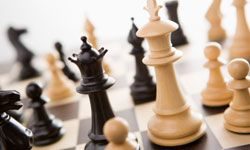
On a more sophisticated level, the best chess players amass an understanding of their opponent’s behaviors as the game is being played.
Chess is not just about moves. It is about behavior. It is about patterns. The top players see more than pieces. They see intent. This requires a different kind of memory. It is cumulative. It builds over time.
Consider the Rubik’s Cube.
You might look at it as using complicated locational memory. You remember where each square on the outside is located. You know how to move them correctly. But in practice, the cube is more like chess.
Remembering where you have been matters more than anything else. You hit a brick wall. You need to get back to a previous state. That takes up more mental power than any other aspect of the game.
It is not just visual. It is not just physical.
It is a complicated mixture. Physical memory. Sequential memory. Visual memory. All games help us strengthen these faculties. If you are having fun, you might not even notice.