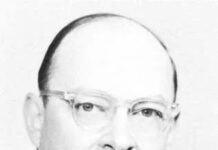
Biochemistry didn’t happen overnight. It was built on the backs of tenacious scientists willing to stare at cloudy liquids until they turned into clear crystals. John Howard Northrop was one of these people.
Born in Yonkers, New York in 1891, Northrop became a central figure in defining what enzymes really were. Before his work, enzymes were mysterious biological catalysts. People knew they existed because life depended on them. But no one knew their chemical structure. Was it the protein? A lipid? Something completely different?
Northrop spent his life trying to answer this question. He died in Wickenberg, Arizona, in 1987, but his 1946 Nobel Prize in Chemistry remains his defining legacy. He shared it with James B. Sumner and Wendell M. Stanley. The quote was spot on: for the successful purification and crystallization of enzymes. This act alone proved their chemical nature.
The war years and the search for structure
Northrop’s path was not linear. He received his doctorate in chemistry from Columbia University in 1915. Then World War I broke out. He served as a captain in the US Army Chemical Warfare Service.
The focus of his military research was fermentation. Especially acetone and ethyl alcohol manufacturing processes. It was practical work. War needed fuel. It needed precursors to explosives. But it also introduced him to the mechanics of biological reactions.
This experience changed his focus. He turned to enzymes important for digestion and respiration. These were the engines of life. Nevertheless, their chemical identity remained a black box. Northrop’s research proved a hard fact: enzymes obey the standard laws of chemical reactions. They weren’t magic. They were matter.
Crystallizing the Unknown
The breakthrough occurred in 1930. Northrop crystallized pepsin. Pepsin is a digestive enzyme found in gastric juice. It breaks down proteins. Before this moment, pepsin was a messy, dissolving blob. By forcing it into a crystal lattice, Northrop showed it to be a protein.
This settled a huge scientific controversy. If it could be crystallized like salt or sugar, it had a defined molecular structure. It was a solid chemical entity, not a vague biological force.
He didn’t stop there. Using similar chemical isolation methods, he achieved another first in 1938. He isolated the first bacterial virus, the so-called bacteriophage. He proved that it was a nucleoprotein. This was the crucial difference. It bridged the gap between simple proteins and complex genetic material.
Precursors and the pancreas
Northrop’s work extended to inactive forms of enzymes. These are biological time bombs waiting for the right trigger.
He helped isolate and produce pepsinogen in crystalline form. Pepsinogen is an inactive precursor of pepsin. It sits harmlessly and dormant. When it encounters hydrochloric acid, it turns into active pepsin. This mechanism protects the stomach lining from its own digestion.
He also worked on pancreatic digestive enzymes. Trypsin and chymotrypsin play a key role in breaking down food in the small intestine. Northrop isolated their inactive precursors: trypsinogen and chymotrypsinogen