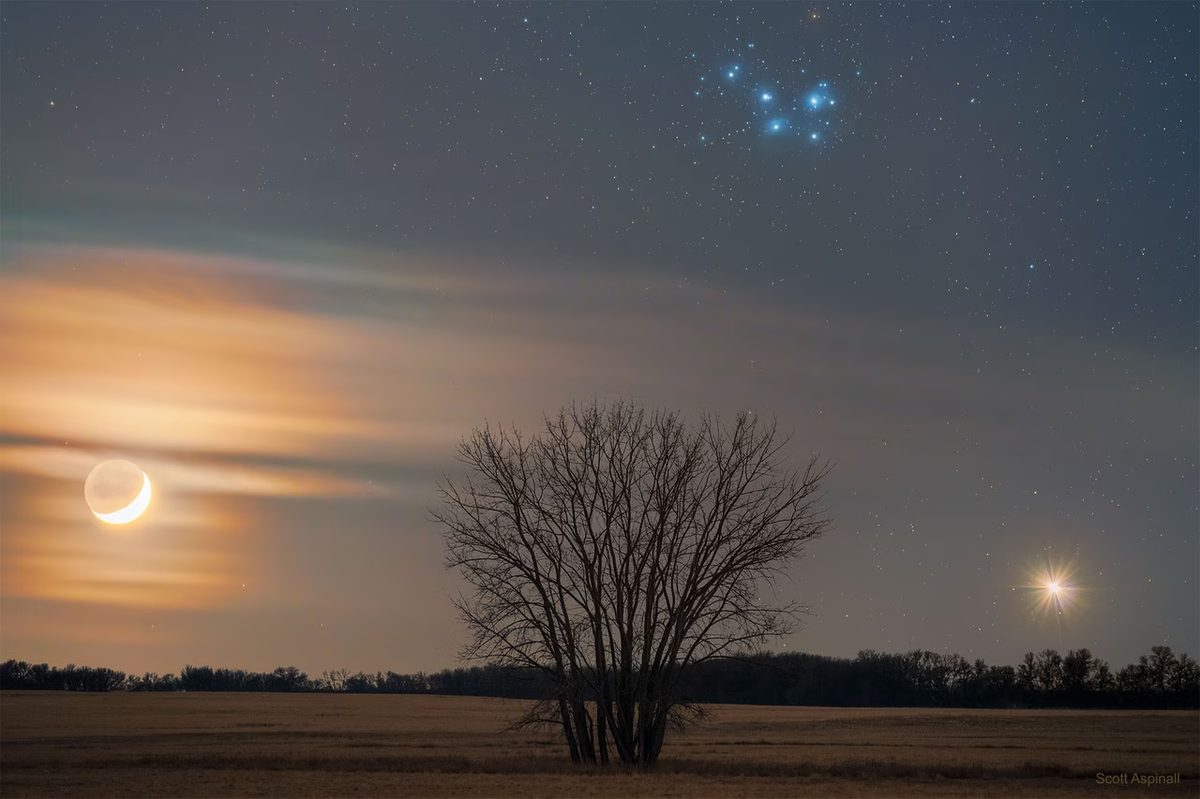
You don’t need a degree in astrophysics to enjoy the spectacle of the sky. You just have to be awake when it happens.
If you’re the type to stare at the stars while the rest of the world sleeps, mark your calendars for April 15th and 16th. This is not a daytime show. The best views are in the second half of the night, just before dawn.
The moon is waning. It descends deeper into the sky and undergoes a series of cosmic handshakes with the three major planets. First it passes Jupiter. Then Saturn. Finally, Mars.
These are not distant, abstract events. They are visible to the naked eye. Look southeast and then south. Two hours before sunrise, these bodies shine brightly. The Moon is in its last quarter phase. It cuts through the darkness like a sharp scythe.
What does this mean for you?
That means you have a front-row seat to the celestial alignment that doesn’t require expensive equipment. Binoculars help. A telescope is even better. But you can see the drama with your own eyes. All you need is a clear line of sight between the southeast horizon and the south.
Location is not as important as you might think. Whether you’re trapped in a city apartment with a view over the rooftops or standing in an open field, the sky is the same. The planets still exist. The moon is still moving.
“Three conjunctions with the three planets, which, as seen from Earth, flicker between the southeast and the south two hours before the first rays of the sun.”
The real limitation is not geography. It’s the timing. You have to look up. You must be awake. The universe broadcasts a free show. All you have to do is tune in.
Why are these conjunctions important? They remind us that we are small. The planets are billions of miles away. Nevertheless, they share our field of vision. It creates a moment of perspective that no screen can replicate.
So if you can’t sleep, get out. Watch the moon pass Jupiter. Wait for Saturn. Then look for the red dot of Mars. It’s a simple act. Rare. Don’t miss it.
The sky does not wait.
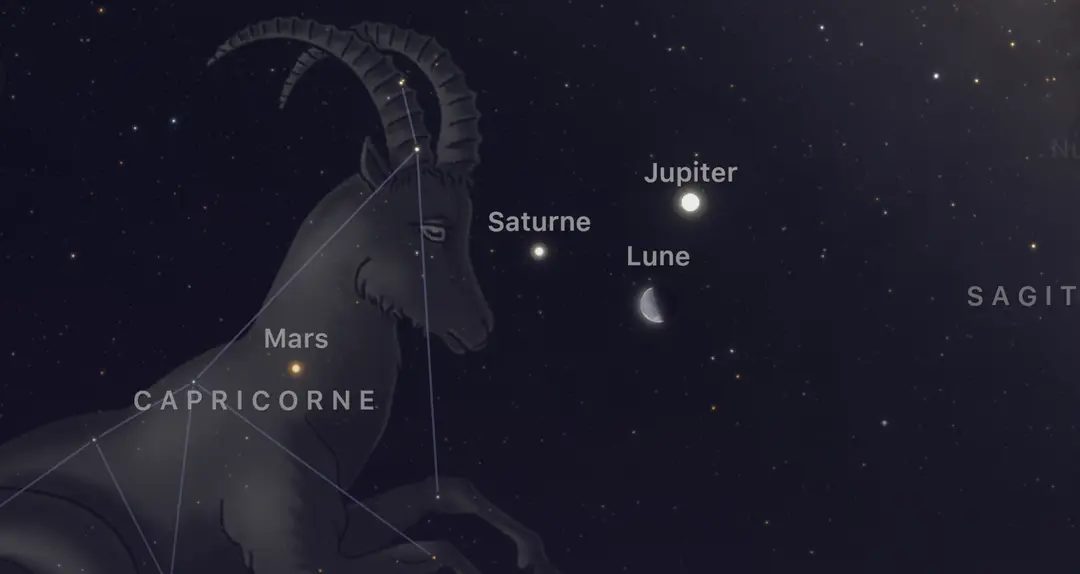

The moon is waiting. It is our nearest neighbor, just 1.3 light seconds away. On April 15, there will be a cosmic meeting with the two largest planets in the solar system. Distance seems abstract until you look at the numbers. Jupiter is currently about 763 million kilometers from Earth. That’s 42.5 minutes of light travel. Saturn is twice as far away. It is 1.5 billion kilometers away and it takes 1.5 hours to cross this gap.
Does that sound like a lot? It shouldn’t. Astronomically, it’s practically next door.
The real scale shock comes when you look past them. Look in the same direction towards the Capricorn and Sagittarius constellations. The stars there won’t blink back in minutes or hours. They are tens, hundreds or thousands of light years away. The difference between the planets and these distant suns is not just distance. It’s depth.
Understanding the planetary scale
We often treat space as a flat sheet. The map makes it look like this. The planets are lined up on paper. In reality, space is three-dimensional and vast. The moon is a rock. Jupiter is a gas giant. Saturn is an ice giant. They are all separated by millions of kilometers of empty space. But compared to stars, they are tightly packed together.
Think of it this way. If you stood on the moon and looked at Jupiter, you would see a bright point of light. But you would also see the stars behind it. These stars are not just background decorations. They are other suns. Some are closer. Most are far away. The planets of our own system are mere specks against this background.
Why this is important
Understanding this scale will change the way you see the night sky. It puts our solar system in context. We are not lost in the infinite void. We are in the neighborhood. The moon is a neighbor. Jupiter and Saturn are the next houses down the street. The stars are cities on the other side of the continent.
This perspective helps us appreciate the precision of orbital mechanics. Planets move in predictable orbits. They align. They oppose. They pass each other in the dark. It is a dance that has been going on for billions of years. We’re just watching it happen in real time.
View from Earth
When you look up on April 15, you see layers of time. The moon can be seen as it was 1.3 seconds ago. Jupiter is seen as it was 42.5 minutes ago. Saturn can be seen as it was 1.5 hours ago. the stars? You see the light that left these suns long before you were born. Some of it left before the earth existed.
This is not just a trivia. It’s a reminder of how small we are. And how connected we are. The same sky that contains the Moon also hosts Jupiter. They share the same frame. The same darkness. Same light.
So the next time you see a bright object in the sky, pause. Ask yourself: How far is it? Is that a neighbor? Or a distant star? The answer changes everything.
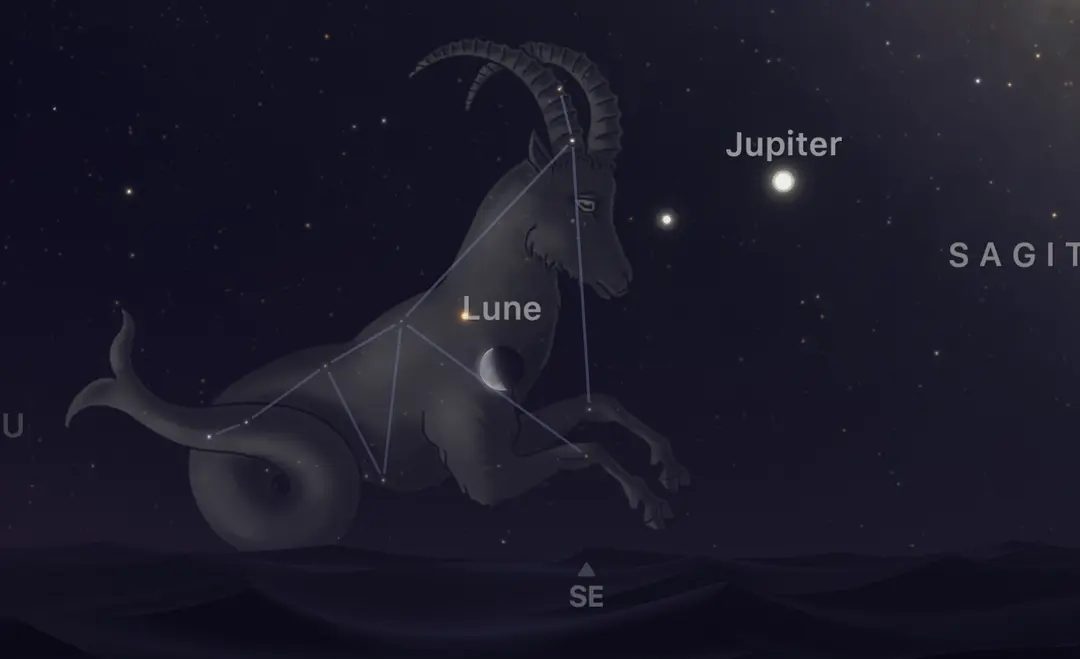

Mars and the Moon in Capricorn: Sky Show on April 16
If you manage to get out of bed before sunrise, you’re in for a show. Keep your eyes on the eastern sky between 5:00 a.m. and dawn on April 16. The Moon moves through Capricorn and hangs just below red Mars.
Looks close, right?
Don’t let the apparent closeness fool you. Mars is a stubborn neighbor. It is currently 202 million kilometers from Earth. It’s not a typo. It’s such a distance it makes your head spin. Sunlight reflected from the surface of Mars takes more than 11 minutes to travel to your eyes.
If you look up, you’ll see Mars as it was more than eleven minutes ago.
This delay emphasizes the enormous size of the solar system. Space is often talked about abstractly, but this concrete distance – 202 million kilometers – grounds the experience. It reminds you that the red dot you see is not just a light in the sky. It is a distant and silent world that reflects the light that comes from the sun, bounced off its rusty soil, and then runs through the void to reach you.
For sky watchers, this conjunction offers the perfect opportunity to capture the moment. The glow of the moon against the background of Capricorn creates a natural frame for the planet. It is a rare opportunity to photograph two different celestial bodies that share the same patch of twilight.
The sky doesn’t care about our schedules, but it rewards those who show up. Grab a tripod. Set a timer. Capture the moon dancing below Mars. Then share these pictures. Let others see the red dot and the crescent moon that sharing the pre-dawn sky.
The universe is constantly moving. The moon changes. Mars continues its slow arc. But on April 16, they are together in the frame for a few minutes. Use this alignment.


Follow us on WhatsApp
and Google News
This way you won’t miss out on the latest science and technology news.