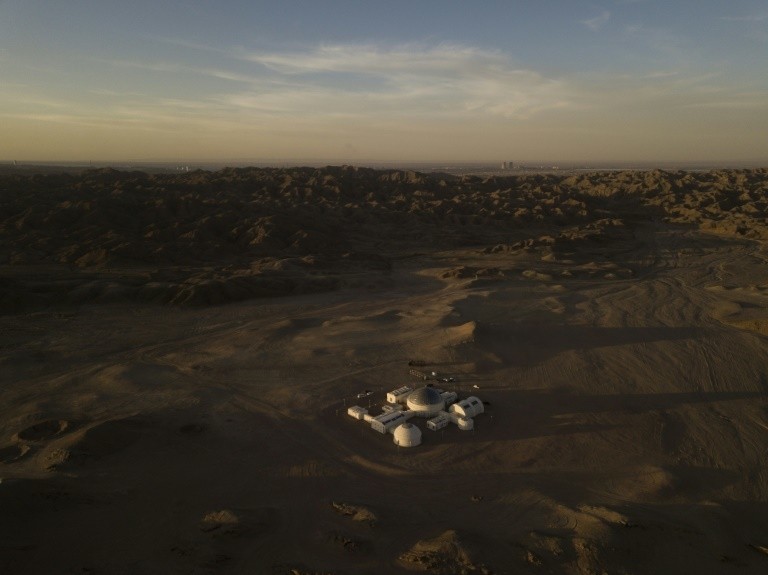
The wind howls across the Gobi Desert in Gansu province. It’s harsh. It’s remote. And for the first time this April, it’s home to a science project that feels like it belongs on another planet.
On April 17, “Mars Base 1” opened its doors to the public.
There are no green aliens here. No Hollywood-style astronauts in gleaming suits. Just stark white buildings rising out of ochre sand and dry hills. The result looks less like a sci-fi movie set and more like a high-tech survival experiment. The goal is simple. Simulate life on Mars for Chinese students.
Who Gets to Visit the Red Planet Replica?
The first wave of visitors wasn’t celebrities or seasoned scientists. It was teenagers.
They zipped up pressure suits before heading out. The terrain is rugged. Rock formations and cave systems mimic the Martian surface closely enough to fool the eye. Kids walked through this alien landscape. They learned what living in isolation might actually look like.
This isn’t just a playground. It’s an educational facility designed to popularize space science. But it’s also ready for tourists.
Organizers confirmed that the site will serve a dual purpose. It trains the next generation of explorers. It also shows paying visitors what interplanetary living entails.
The Hardware of Isolation
The base itself is a study in minimalism and function.
Nine modules form the core of the complex. They are connected by a central silver dome. Inside, life is structured around survival and research.
Key features include:
– Living quarters for extended stays
– A central control room for monitoring systems
– A greenhouse for growing food in controlled environments
– An airlock system to maintain pressure integrity
Every element serves a specific purpose. The design prioritizes efficiency over comfort. It mimics the constraints real astronauts would face on Mars.
Why China Is Building a Mars Simulator Now
This opening arrives at a specific moment.
China is closing the gap with the United States and Russia in space exploration. Historically, those two nations led the charge. Now, Beijing is making aggressive moves to catch up.
Next year, China plans to send a remote-controlled rover to the Red Planet. This is no small feat. It requires precise engineering and deep understanding of planetary conditions.
Building a base on Earth helps solve those problems. It tests technologies in real-world conditions. It helps engineers understand how habitats function under stress.
The base is specifically designed to popularize space knowledge among students while preparing for future robotic missions.
The Real-World Value of Fake Martians
Why simulate Mars in a Chinese desert instead of waiting to go there?
Because Mars is expensive. And dangerous.
By building a replica here, scientists can test life support systems without leaving Earth. They can study how young people handle isolation. They can refine the protocols for rovers and habitats.
It’s a training ground. A testing lab. A classroom.
The Gobi Desert provides the closest terrestrial analog to Mars available. The soil. The aridity. The isolation. It’s perfect for preparation.
As China ramps up its space ambitions, facilities like Mars Base 1 become more than tourist attractions. They become essential infrastructure.
The first teens walked through the caves. They
If you want the latest in science and tech without wading through clickbait, follow Futura on WhatsApp and Google News. It’s that simple.
Why this matters now
The noise floor in digital media has never been higher. Algorithms favor outrage over accuracy. By opting into direct feeds, you bypass the noise. You get the signal.
How to stay updated
- WhatsApp: A direct line to curated alerts. No scrolling. Just facts.
- Google News: Aggregated coverage. Searchable. Persistent.
It’s not about being first. It’s about being right. And being present.
The alternative
Ignore it. Miss the breakthrough. Wonder why your world changed overnight.
We’re here if you’re ready.