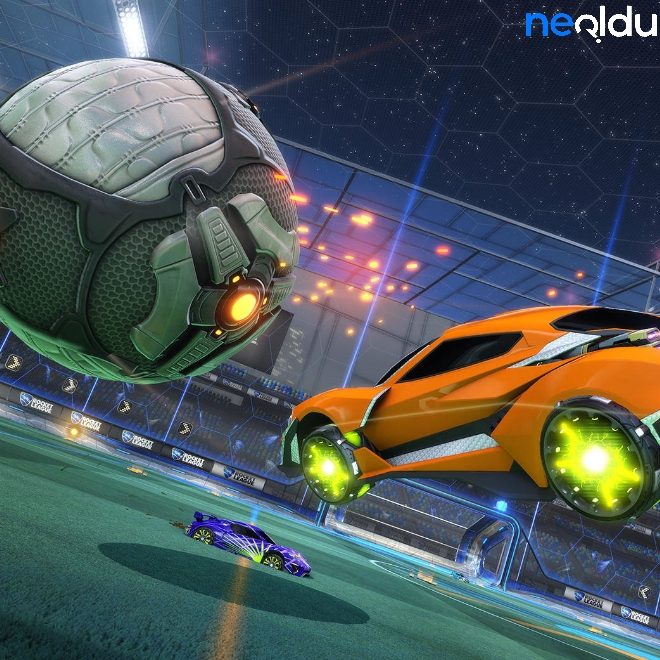
Rocket League is not your typical soccer match. There are no legs. No grass stains either. Just metal beasts slamming in an arena that defies physics. Developed and published by Psyonix, the game removes the human element and replaces it with a modified car chasing a giant ball. You can adjust your ride, jump, boost and spin it into the net. It is chaotic. It’s competitive. It is online-first.
But before you join the chaos, you need to know if your rig can handle the load. It’s not just frames per second that matters. It’s all about storage. Can your drive fit the beast?
Storage Question: How many GB?
The most common question from new players is simple: How many GB is Rocket League?
The short answer is that the game is surprisingly lightweight compared to modern AAA games. You don’t need a terabyte drive dedicated solely for this sport. However, “lightness” is relative. Over the years, installation size has grown in size as customization options, playlists, and engine updates were added.
According to current estimates, the game requires about 30-40 GB of free space. This is not a static number. Psyonix updates the game regularly. These updates add new car bodies, sticker designs, and in some cases gameplay tweaks. leave a buffer if you plan to install it. Make sure you have 50 GB of free space. This allows the game to download future patches without filling up your drive during the update process.
Why size matters for performance
You might think that storage is only related to whether the game is installed or not. it is not. It’s about how the game runs.
SSDs (Solid State Drivers) are the standard for modern gaming. If you install Rocket League on an older Hard Disk Drive (HDD), you may experience longer loading times when joining a match or loading into the garage. The pace of the game is fast. A slow drive does not directly reduce FPS, but it does make the experience sluggish. The transition between the menu and arenas is a hurdle than a blink of an eye.
For the best experience, an SSD is recommended. This allows you to quickly stream game assets. This is important if you are boosting toward the ball and need the texture to pop instantly.
Minimum vs. Recommended Specs
The storage question is simple, but the hardware requirements vary depending on the resolution and target frame rate. Rocket League is well optimized. It runs on a modified version of Unreal Engine, so it scales well even on older machines.
** Minimum requirements:
* Operating system: Windows 10 64-bit (or higher)
* Processor: Dual core 2.4 GHz
Memory: 4 GB RAM
* Graphics: NVIDIA GeForce 660 or AMD Radeon HD 7970
* Network:** Internet broadband connection
This setup you can start the game. In some cases, you may need to reduce the quality of shadows or textures. You might not to achieve 60 FPS in online matches. But it works.
Recommended Requirements:
* Operating system: Windows 10 64-bit (or higher)
* Processor: Quad core 3.0+ GHz
Rocket League isn’t just a skin-changing soccer game. It’s a physics-based, fast-paced combat game where vehicles replace players as the protagonists on the field. The premise sounds pretty simple, but the execution requires reflexes that feel almost superhuman. You don’t kick the ball. You throw a heavy metal object into the air, hit it on the ground, and guide it towards a target while avoiding collisions with opponents who have the same target.
The learning curve is steep. Driving these cars in three-dimensional space is significantly more difficult than navigating a track on the ground. Speed, air control and boost control become second nature only after hundreds of hours of failure.
Customization and rank progression
While the core loop revolves around scoring goals, the engine allows for deep personalization. Players can customize their vehicles extensively. Rim colors change. Decals – unique stickers applied to the car’s body – are becoming digital fashion. Some decals glow. Others have complex animations. These cosmetic changes don’t affect performance stats, but they define identity in a crowded lobby.
The main goal remains the same: score more goals than the opposing team within the allotted time.
Success is measured using a ranking system. This is not a casual matchmaking pool. It’s a ladder.
- Bronze represents the starting level.
- Diamond indicates high-level mechanical skill.
- Champion and Grand Champion tiers separate the elite from the rest.
Matchmaking pairs players of similar skill levels. This ensures that the games remain competitive and not one-sided. Losing points hurts. Gaining them feels like progress.
Collision physics and nitro strategy
There are no fouls in Rocket League. This rule fundamentally changes the way players interact. Blocking a shot is not only allowed; it is encouraged. Hitting an opponent to disrupt their aim is a common strategy.
Nitro, the boost fuel, adds another layer of complexity. When you press the boost button, your car accelerates quickly. If you use nitro while colliding with an opponent, the impact can temporarily destroy their vehicle.
The affected player is knocked out of the match for about five seconds. Their car reappears on their side of the field, but they miss important moments. This mechanic creates dramatic swings in momentum. A single well-timed boost hit can change the outcome of the game.
Players learn to read trajectories. They predict where the ball will be in three seconds. They manage their boost reserves carefully. Running out of nitro at the wrong time is fatal.
The game rewards creativity. Air dribbles. Flip resets. Ceiling shots. These are not just flashy moves. They are essential tools for survival in the higher ranks. A physics engine supports these movements, allowing cars to stick to the ball mid-air or bounce off walls at a precise angle.
It’s a sport where the rules are minimal, but the possibilities are almost limitless.
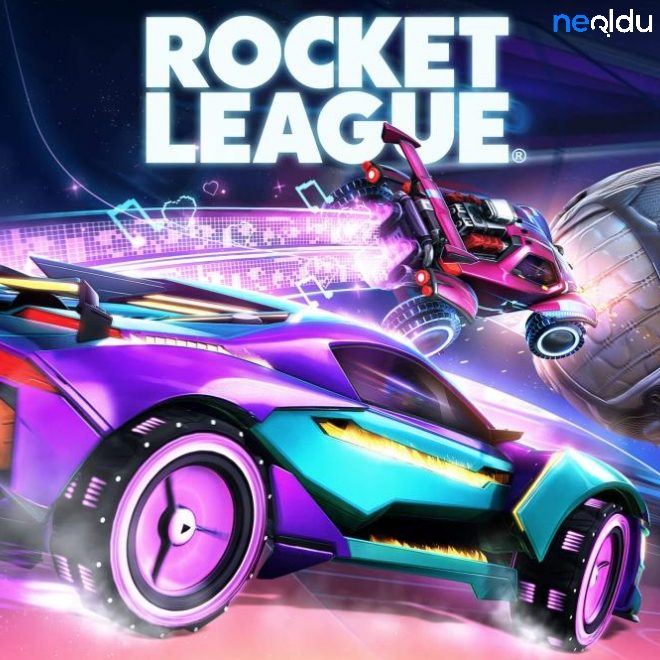
When you are staring at your hard drive, wondering if you have enough room to install Rocket League, the short answer is that the space requirement is surprisingly modest. The game needs about 20 GB of storage space to run. For many players, especially those with older hardware or limited SSD capacity, this is a relief. It is not a 100 GB monolith like some modern open-world shooters. It is lightweight.
Why the Low Space Requirement Matters
The 20 GB figure includes the core game files and necessary updates. Since its initial release, the title has received countless updates, adding new cars, arenas, and seasonal content. Yet, the footprint has remained relatively stable. This is largely due to how the game handles its assets. The developers, Psyonix, focused heavily on performance and accessibility rather than hyper-realistic texture packs that bloat file sizes.
This efficiency allows Rocket League to run smoothly on a wide variety of systems. You do not need a top-tier rig to enjoy the core experience. The low storage demand is just one part of the equation. The real magic lies in the mechanics.
The Feel of the Ball
The developers significantly improved the feel of hitting the ball, creating a satisfying feedback loop that rewards precision.
In the early years, the physics were good, but they have been refined extensively. The sensation of striking the ball is now crisp and responsive. When you score a goal, the game delivers a distinct sense of satisfaction. It is not just about the net shaking. It is about the timing of your boost, the angle of your car, and the immediate visual and audio feedback that confirms a successful hit.
This mechanical depth is what keeps players coming back. The storage space is minimal, but the gameplay density is high. Every match feels different. The physics engine ensures that no two aerial challenges are exactly the same.
Updates and Longevity
Since launch, the game has evolved. It started with simple cars and soccer balls. Now, it includes a massive catalog of customization options, competitive seasons, and crossover events. Despite this growth, the core file size has not exploded. This suggests a deliberate design choice to keep the game accessible.
For players considering a return or a first-time download, the 20 GB requirement is a minor hurdle. The real investment is time. The game’s mechanics are deep enough to master over thousands of hours. The low system requirements mean that almost anyone can start that journey without needing to upgrade their hardware immediately.
The balance between graphical fidelity and performance is maintained. You get clean visuals without the storage penalty. This approach has helped Rocket League remain relevant years after its debut. It is a testament to good engineering. The files are small. The experience is expansive.
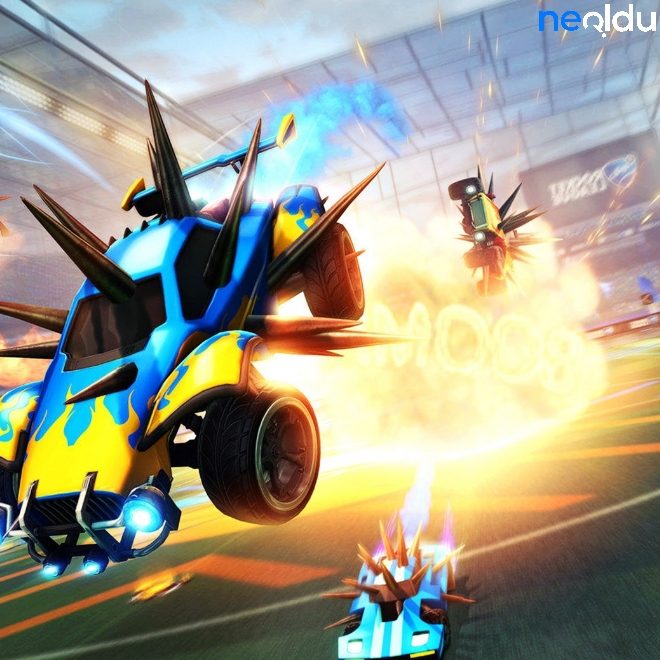
您想了解火箭联盟系统要求 吗? 它是目前最受欢迎的车辆足球游戏之一,是的,您需要一台能够真正处理物理引擎而无需变成幻灯片的 PC。 我们汇总了运行它所需的确切规格,分为两个明确的类别。 一种用于最低限度,另一种用于推荐设置(如果您想要流畅的游戏)。
Rocket League System Requirements (Minimum)
If you want to know how to run Rocket League on an older machine, you need: These are the minimum specifications allowed for the game.
- OS: Windows 7 (64-bit) or higher. Note that it must be 64-bit. The 32-bit version does not work.
- Processor: 2.5 GHz dual-core processor.
–RAM: 4 GB memory. - Graphics Card: NVIDIA GeForce 760, AMD Radeon R7 270X or higher.
- DirectX: version 11.
These specs are surprisingly low for a modern game. The reason is that the game is well optimized. However, “Minimal” means that you may experience frame drops during chaotic moments when there are a lot of players or cars on the screen. It is playable but not perfect.
Rocket League System Requirements (Recommended)
Now, if you want to know the Rocket League Recommended System Requirements to reliably hit 60 FPS or more, you need to beef up your hardware. This is the sweet spot for competition.
- OS: Windows 7 (64-bit) or higher. Again, 64-bit is non-negotiable.
- Processor: 3.0+ GHz quad-core processor. The move from dual-core to quad-core is important here.
–RAM: 8 GB memory. At least 4 GB
It’s tight. 8GB gives your system more space.
– Graphics Card: NVIDIA GeForce GTX 1060, AMD Radeon RX 470 or higher. These cards handle particle effects and lighting better.
– DirectX: version 11.
The difference between the minimum and recommended specs isn’t that big, but it’s noticeable. RAM and CPU core jumps prevent stuttering when the ball hits the post or when multiple booster pads are activated at the same time. The graphics card upgrade will help you see the action clearly without reducing the frame rate.
Why is this important?
You might be wondering why the specs are so modest compared to other recent games. Rocket League is built on the Unreal Engine, which makes it powerful and efficient. This game relies more on CPU speed for physics calculations than raw graphics processing power. This is why a decent quad-core processor can sometimes beat a weaker card with a faster processor.
Also note that these are for the base game. If you want to stream while gaming or use other apps in the background, you need the recommended data or higher data. A stable frame rate is very important in competitive gaming, where split-second reactions can determine the outcome.
The hardware requirements haven’t changed much since the game was released, which is proof that the game is well optimized. You do not need a high
The hidden costs of cloud efficiency
The cloud is not just electricity. It’s water. Lots of it.
Data centers are thirsty beasts. They don’t just use electricity; they demand cooling. And cooling, especially in hyperscale facilities, is highly dependent on water evaporation. You scroll through a feed. You stream a video. You store a photo in the cloud. Servers work hard behind the scenes. They get hot. Cooling systems spray water to lower the temperature. The water evaporates. It never returns to the grid. It’s gone.
This creates a disconnect. We think of digital consumption as clean. In the air. Weightless. But the underlying physical infrastructure is heavy. Wet.
Water scarcity meets digital demand
Where these data centers are built is important. A lot.
Companies often choose locations with cheap land and cheap electricity. Low electricity rates are a primary driver. But there is a secondary factor. Water availability. If a region has abundant water, this is an easy choice for the tech giant. The problem? These regions are often already under stress.
Consider the Northern Virginia region of Virginia. It is known as “Data Center Alley.” Thousands of facilities cluster there. The water demand is immense. Local authorities have raised alarms. The Potomac River and the Shenandoah River Basin are under pressure. Not only about data centers, but also about agriculture and urban growth. The math doesn’t always add up. You can’t easily add servers without affecting the local ecosystem.
Then there’s Arizona. Las Vegas. The desert Southwest. Water is scarce. Yet, tech companies build there. Why? Power. Solar and wind power resources are abundant. And land is cheap. But the water cost is externalized. It’s borne by local communities. From farmers. Residents pay more for water because the tech industry has drawn it down.
An efficiency paradox
Increasing technological efficiency often leads to more consumption. This is the Jevons paradox.
With the energy efficiency of the servers, operating costs are reduced. So, companies build more of them. They store more data. They offer higher resolution video streams. The total energy use goes up. The same goes for water.
Cooling systems are getting better. Recirculating water. Using air cooling instead of wet towers. These technologies reduce water consumption per server. But they don’t reduce the total number of servers. In fact, AI models are changing the game.
The hungry appetite of artificial intelligence
Artificial intelligence is not just software. It’s a physical load.
Training a single large language model can consume as much energy as hundreds of homes use in a year. But the water footprint is often overlooked. AI data centers operate 24/7. They generate intense heat. They require constant, aggressive cooling.
The ratio of water to compute is rising. As artificial intelligence integrates into everyday tools – from search engines to customer service bots – the water demand spikes. It’s not just about storage. It’s about counting. Complex calculations generate heat. Heat requires cooling. Water is needed for cooling.
It is a linear chain.
Where the industry is going
Tech giants know this is a PR risk. And regulatory risk.
Amazon, Google, Microsoft – they’ve all publicly committed to water positivity or water neutrality. What does that mean? That means for every drop he uses