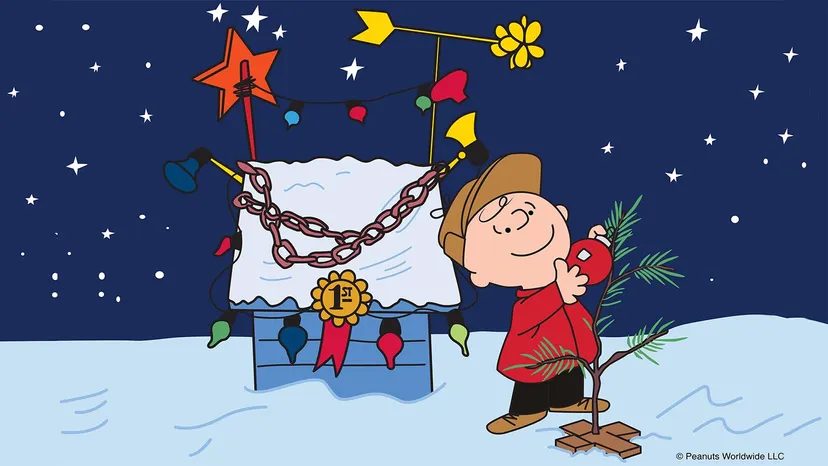
It was a heavy crown that set the standard for all subsequent holiday specials. Scott McGuire, respected historian of the Peanuts world, put it simply in 2020. He talked about “A Charlie Brown Christmas.”**
It won an Emmy. It won a Peabody Award. First broadcast on December 9, 1965, it has been broadcast every year for over 50 years and people still watch it.
Animation expert and author Charles Solomon explains why it’s so popular. It set the template. It turns out that a half-hour special can become a network staple.
But without the action of baseball player Willie Mays, this special might not have existed.
“Say Hey Kid.”
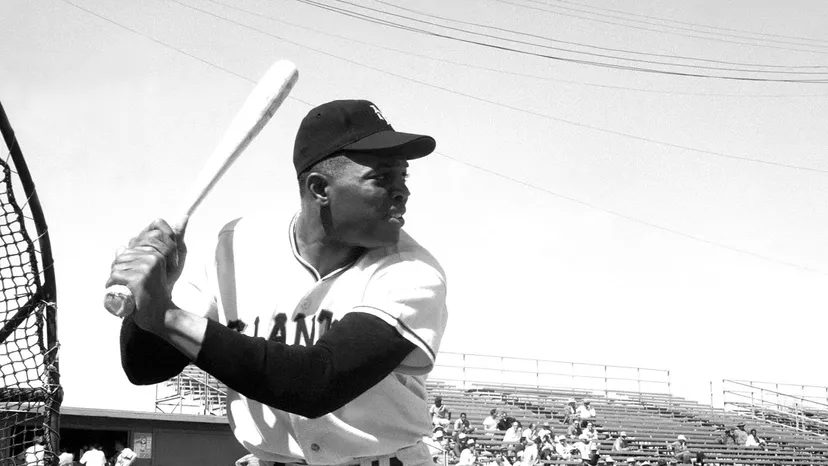
That’s what they called him. Born in Alabama on May 6, 1931, Mays played with pure passion.
He made his debut with the New York Giants in 1951. By 1954, his team beat Cleveland in the World Series.
The first game is still legendary. In the eighth inning, in front of an enthusiastic Manhattan crowd, Mays caught the ball 425 feet. He spun around. He threw to second base. He stopped a potential 5-2 lead.
“The Catch” has gone down in history as one of the greatest moments in World Series history.
However, the Giants’ attendance remained unchanged. The demographics of New York are changing. The Yankees were crosstown competition. The team was moving.
After the 1957 season, they packed up. They traveled more than 2,500 miles to San Francisco. Mays went with them.
Another famous transplant soon took place in Northern California. “Peanuts” author Charles Schulz has arrived.
Schulz’s self-taught pitching
The cartoon was published on October 2, 1950 and appeared in seven newspapers. No one thought that characters like Charlie Brown and Snoopy would become American icons. By the time of Charles Schulz’s death in 2000, approximately 2,600 newspapers carried a daily “Peanuts” column.
Schulz didn’t expect that. He researched. If Schroeder needed to play Beethoven, Schulz included the actual sheet music. He consulted real lawyers on legal jokes. He asked doctors about medical jokes. But what about baseball? He figured that out himself.
“Charles Schulz played baseball as a kid,” McGuire noted. “In fact, in St. Paul (where Schulz grew up), he organized the neighborhood boys into team.”
He’s not just on the roster. He managed it. He also pitched.
Giants Connection
In June 1958, Schulz and his growing family moved to the San Francisco Bay Area. He also brought his obsession with baseball.
“I don’t think I’ve ever seen Schulz directly name the San Francisco Giants as his favorite team, but at least he was a San Francisco Giants fan,” McGuire said. “He said … Willie Mays was one of his idols, and Mays was mentioned several times in Peanuts.”
The best baseball player and the worst baseball player
Schulz’s baseball knowledge wasn’t just about fandom. It’s about the mechanics of the game. He understands the burden of pitchers. The weight of the mound.
Charlie Brown’s struggles mirrored Schulz’s own experiences. It’s not about fame. The pressure. It has to be perfect when everyone is watching.
Schulz didn’t just draw baseball. He lived it. Through the neighborhood teams of St. Paul. Through the Giants games in the Bay Area. Through the characters he created.
Comics aren’t just comics anymore. It became a reflection of a man who loved the game. Understood its joys and its failures.
Who would have thought that a kid from St. Paul would eventually drawing baseball into millions of homes?
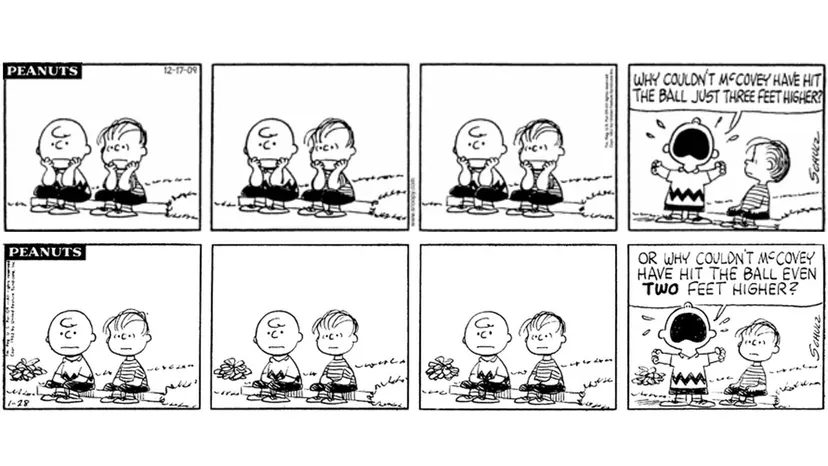
The 1962 World Series ended sourly in San Francisco. In the bottom of the 9th inning of Game 7, Willie McCovey hit what looked like a home run. It wasn’t. Yankees second baseman Bobby Richardson caught the ball and defended New York’s championship.
Charlie Brown hated it. After the series ended, in the cartoon he exclaimed, “Why can’t McCovey hit the ball two feet higher?”
Willie Mays hasn’t returned to the Fall Classic in 11 years. But in 1963, he landed at NBC.
Television producer Lee Mendelson had an idea. He produced the hour-long documentary A Man Named Mays, which explores the giant’s life on and off the diamond. Viewers ate it up. The special received 28 shares. It was a ratings hit.
A few months later, Mendelsohn read a Peanuts comic. The connection clicked. Mays was the best player on the planet. Charlie Brown is the worst. Why not make a documentary about Schulz’s eternally hapless hero?
Charles Schulz hesitated. He doesn’t trust the process. But Mendelson mentioned the Mays project. Schulz changed his mind.
“If Willie can trust you with his life, maybe I can,” Schulz said.
Peanuts animation
The contract was signed. Animation began. The style is flat. minimalistic. It looked nothing like the Mays documentary. It’s like a cartoon come to life.
Mendelsohn quickly attracted interest from CBS. They want holiday content. A Charlie Brown Christmas wasn’t the first attempt, but it was the one that stuck. Vince Guaraldi’s music replaces traditional orchestral music. The jazz vibe fit the melancholy tone of Schulz’s work.
Critics are skeptical. A jazz score in a cartoon? Unheard of. Not enough laughs? Dangerous. However, the animation style depends on the simplicity of the source material. Thick lines. Solid colors. There are no shadows. It felt authentic.
When it was released in 1965, it became an instant sensation. Ratings skyrocketed. This special program has become an annual tradition. It defined the holiday for a generation.
But the road there is not easy. Schulz fought for creative control. He insisted on the jazz music. He rejected the idea of adding commercial breaks in the middle. Mendelsohn stayed put. The tension was real.
The result is a cultural artifact. This is not just a TV special. This is a statement. This shows that animation can handle complex emotions. This kind of humor can coexist with sadness.
Mr. Schultz never looked back. He produced more specials. But the first one changed everything. It paved the way for a new era of television.
Today, the Mets documentary is largely forgotten. Niche fans might remember it. But the Charlie Brown legacy? That’s cemented. Baseball tragedy led to cartoon triumph.
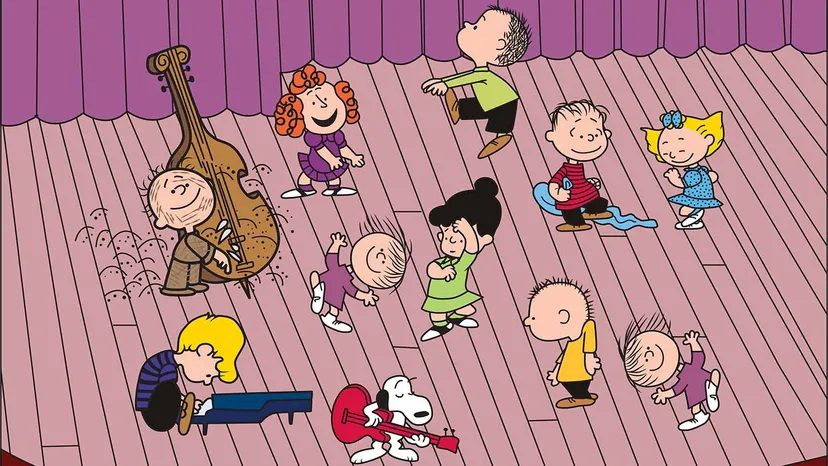
The documentary A Boy Named Charlie Brown is a tender but informative half-hour focusing on Charles Schulz and his iconic cartoon. The title was later reused in the 1969 theatrical film Peanuts, but this early TV special did the heavy lifting first.
The San Francisco Giants are also participating in this effort. They held a “Charlie Brown Appreciation Day” at Candlestick Park, with Willie Mays and his team in attendance. In this video, Charlie Brown stands on the pitcher’s mound before the right pitcher arrives. Then the heavens opened. The rain fell right on him.
The first Peanuts animation
This project marked the beginning of Peanuts animation. Bill Melendez’s studio added short animated segments between the live-action segments. Highlight? A familiar metaphor. The group was playing baseball. When Charlie Brown tries to kick the ball, Lucy pulls it away. Snoopy steals Linus’ blanket.
Jazz score by Vince Guaraldi
Music is important. A Boy Named Charlie Brown was Vince Guaraldi’s first Peanuts-related show. If you know anything about this franchise, you know Guaraldi. He composed the de facto theme song, a jazz piano riff called “Linus and Lucy”.
You must have heard about it.
A Charlie Brown Christmas is an all-star show
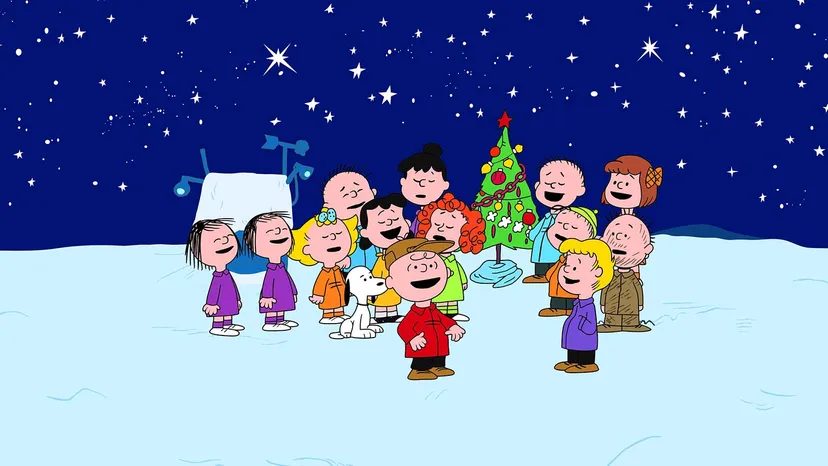
How Time Magazine Saved A Charlie Brown Christmas
Lee Mendelson is trying to sell a new documentary. He assembled a top-notch creative team. This project is stable. It just doesn’t sell.
Next, Time magazine.
Producer Andrew Solomon said the change happened quickly. Time magazine published a cover story about peanuts. That reporter’s single action changed everything.
“After Time magazine published the Peanuts cover story, McCann Erickson asked Lee Mendelson, Charles Schulz and Bill Melendez to create an animation sponsored by Coca-Cola.”
The agency took less than a week to prepare. The proposal has been accepted.
The rest is history.
Schulz, Mendelson, Melendez and Vince Guaraldi received six months. They worked until the deadline. The result was “A Charlie Brown Christmas.” It wasn’t just a success. It launched a series of animated Peanuts television specials.
The Baseball Connection
Willie Mays retired in 1973 and finished his career with two years with the New York Mets. Today, sportswriters consider him the greatest all-around player in Major League history. Only six MLB players have hit more home runs.
Mays gave Charlie Brown a helping hand to Charlie Brown. Without this cultural influence, the special might not have taken off. Every Christmas after that got better.
Where to stream A Charlie Brown Christmas
Ownership has been transferred. In October 2020, Apple TV+ acquired the classic Peanuts television specials. This includes the holiday classic.
PBS previously aired the special in 2020 and 2021, but starting in 2022, it will air exclusively on Apple TV+.
If you are not a subscriber, Don’t declare good grief.
Apple is making its iconic holiday special available for free. It will be on view from December 22nd to December 25th. No login required. No credit card. Just the special.
This is a rare window. One year it was on PBS. Next is the paid ecosystem. Then suddenly it’s free again.
Why are the networks fighting over who gets to control nostalgia? It doesn’t matter. You can see it. The snow falls. Schroeder plays the piano. Charlie Brown looks for the true meaning of Christmas.
It’s still there.